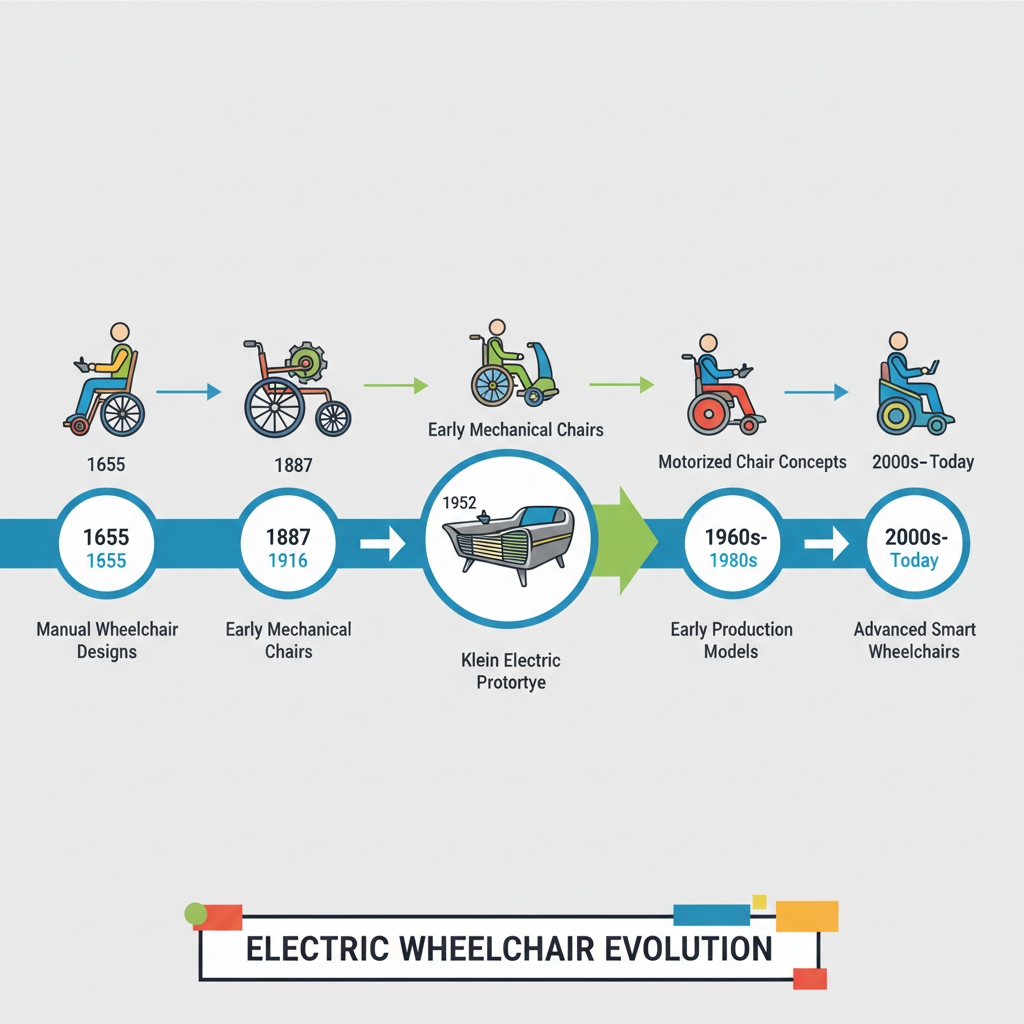
After the Second World War, penicillin saved thousands of badly wounded soldiers who would never have survived before. Many came home with severe paralysis. A regular wheelchair was useless to them.
So Canada went to work. Canada gave the world the electric wheelchair, and gave it away for free.
In the early 1950s, George Klein, an engineer from Hamilton, Ontario, and his team at the National Research Council in Ottawa built the world’s first practical electric wheelchair for quadriplegic veterans. Klein never patented it.
He worked side by side with the veterans and designed it around them:
1. A joystick control, decades before video games.
2. A separate motor on each wheel, so it could turn in tight spaces. 3. Enough power to be used indoors and outdoors.
4. One chair steered by cheek pressure, for a veteran who could not use his hands.
In 1955, Canada handed a prototype to the United States so manufacturers could build it for everyone who needed one.
That chair spent decades at the Smithsonian in Washington.
Today it is back home in Ottawa, at the Canada Science and Technology Museum.
The power wheelchairs that give countless people their independence today trace back to that lab in Ottawa.
Klein also worked on Canada’s first nuclear reactor and the Canadarm. Most Canadians have never heard his name.
And that was the evolution of the electric wheelchair.
You must be logged in to post a comment.