Tag: wheelchair privilege

  • Waterproof vs Splash Resistant Wheelchairs

    Splash-resistant wheelchairs can handle light exposure to water such as rain, while waterproof wheelchairs are designed to prevent water ingress even during full submersion, offering much higher protection for both manual and electric models.


    Splash-Resistant Wheelchairs

    Splash-resistant (or water-resistant) wheelchairs are built to withstand minor, incidental contact with water. For electric wheelchairs, this typically means they have an IP rating around IPX4, which protects the device from water splashes coming from any direction but does not protect against full immersion in water.


    Features include:
    Sealed or partially sealed motors and batteries to resist light rain or accidental splashes.
    Suitable for use on damp streets or light showers for short periods.
    Requires immediate drying if exposed to significant water to prevent corrosion, rust, or electrical failure.

    Accessories like rain covers, joystick guards, and waterproof ponchos are often recommended for additional protection.


    Manual splash-resistant wheelchairs may be made from water-resistant materials or have coated frames, but they still rely on careful avoidance of deep puddles or prolonged water exposure.


    Waterproof Wheelchairs

    Waterproof wheelchairs offer a much higher level of protection. In this context, waterproof implies the device is impervious to water, capable of being fully submerged without damage.

    Key points:
    Waterproof wheelchairs are often manual models specifically designed for aquatic or beach use, made of corrosion-resistant materials such as marine-grade aluminum or PVC.


    They may include buoyant or floating components, allowing safe use in pools, lakes, or on wet sand.
    Electric waterproof wheelchairs are extremely rare due to the complexity of sealing electrical and battery components, but innovations like air-powered PneuChairs exist to allow waterproof operation.


    Fully waterproof designs prevent any water from reaching sensitive parts, making them suitable for prolonged exposure in pools or wet outdoor environments.


    Practical Implications
    Intended use: Splash-resistant models are suitable for everyday activities with occasional rain or splashes, while waterproof models are for aquatic therapy, beach, or pool access.

    Maintenance: Splash-resistant wheelchairs require drying and care after exposure to water, whereas waterproof wheelchairs can tolerate repeated submersion without corroding or short-circuiting.

    Material choice: Waterproof models use corrosion-resistant materials and sealed components, spanning manual, lightweight, or specialized designs; splash-resistant models prioritize partial water protection while retaining comfort and mobility.


    Legal and warranty considerations: Exposure beyond splash resistance (e.g., heavy rain or puddle submersion) may void warranties on electric wheelchairs.

    In summary, splashes versus submersion is the key difference: splash-resistant wheelchairs handle light water exposure safely, while waterproof wheelchairs are designed to be impervious to water, capable of safe use in fully wet environments. Choosing between them depends on how and where the wheelchair will be used.

  • Fitting In vs Belonging

    Disability, belonging, fitting in, and inclusion are all important concepts that relate to creating a more equitable and inclusive society. While they are related, they each have distinct meanings.

    Disability refers to a physical or mental impairment that limits a person’s ability to perform certain tasks or activities. It is important to recognize that disability is not a personal failing, but rather a natural part of human diversity. This usually makes people ‘stand out’ by default.

    Belonging, fitting in, and inclusion are all important aspects of creating a positive and productive work environment. According to a report by Bain & Company, building inclusive teams improves performance and is the right thing to do. It also pays off in recruitment, retention, and better teamwork. People describe what being included looks and feels like in remarkably similar ways. Helping everyone feel included is deceptively difficult, but organizations can navigate the complexities by marrying systemic change with more inclusive behaviours.

    In summary:

    • Fitting in means conforming to group norms.
    • It can lead to suppressing one’s true identity to gain acceptance.
    • People may prioritize conformity over individuality.
    • Being included celebrates diversity and uniqueness.
    • It promotes a sense of belonging based on shared values of respect and empathy.
    • Allows individuals to feel valued for their authentic selves.

    https://www.forbes.com/sites/forbesbusinesscouncil/2023/08/08/inclusion-vs-belonging-how-to-foster-true-diversity-in-the-workplace/

    https://www.bain.com/insights/the-fabric-of-belonging-how-to-weave-an-inclusive-culture/

    Belonging vs. Inclusion: What’s the difference, and why is it important? – Peter Barron Stark Companies (peterstark.com)

    Diversity Equity Inclusion and Belonging | DEIB Culture (inclusiveleadership.com)

  • Wheelchair Privilege?

    “Privilege is not having to add the extra steps to make the recipe taste good.” – Jon Stewart

    Let’s think about that by looking at the concept of privilege. Privilege, from a sociological perspective is defined as: “Unearned access to resources only readily available to some people as a result of their advantaged social group membership.”

    What does this mean?

    Instead of taking it from a black/white paradigm, let’s look at it from a able/disabled paradigm.

    If you do not have to live life from a wheelchair, you normally don’t think about NOT having to be in a wheelchair. You don’t think about the access you get to have. You don’t think about how you will get from Point A to Point B on a daily basis. You don’t think about whether or not you will be able to get into Building One or Building Two. You don’t have to know how to evacuate the building in the case of a fire, as a wheelchair user.

    If you DO have a wheelchair, you can’t NOT think about these things. You always have to be aware of where you CAN and CANNOT go, the places you DO and DO NOT have access to.

    How am I privileged for being in a wheelchair when I was born unable to walk? I need it for mobility. These places aren’t wheelchair accessible!

    How am I privileged for getting extra help in class or exams? I have learning difficulties. Or if I apply for learning support, I have to pay for it?

    How am I privileged if I sign up to join a ministry team at church and the leader insist that I get supervised even after being trained?

    How am I privileged if my parents get asked to supervise me in class, because the Ministry of Education refuses to provide a Para-educator due to personal prejudices, preferences and opinions?

    You don’t have to walk up these hills. You don’t have to climb the stairs. You’re lucky.

    Attention both positive and negative

    Wheelchair users have to deal with dirty looks people through their way, especially when driving to a wheelchair parking space. Social stigmas are very evident as you’ll see frequent glares, discrimination in public transportation, public ridicule, and pinpointing as one drives to disabled parking spots.

    Even positive attention isn’t necessary as even well intended comments can get overwhelming.

    The race for getting into the elevator

    Wheelchair users find themselves competing with the rest to get to the elevator first. This is never fair since other people can climb the stairs fast and get into the elevator first.

    Some people are confident to ask wheelchair users to wait and go last as the wheelchair will take more space in the elevator. This is very hurtful.

    The struggle for parking the vehicle

    Nowadays, most places, especially public areas, have parking for the disabled. These parking spots are near the entrance/exits and are bigger than standard park spaces. This hurts some non-disabled people, and they think it’s a privilege that wheelchair users don’t deserve; sometimes, you’ll find them discussing this.

    Parking in accessible parking areas isn’t that easy as it sounds. Non-disabled people often park their vehicles in these spaces. Whereas they may find it enjoyable, it greatly inconveniences actual wheelchair users.

    The other challenge is people parking too close to cars parked in the accessible parking spaces. This limits the use of the wheelchair ramp, which is very inconvenient.

    The grass only looks greener on the other side. Sometimes the wheelchair makes it look ‘easy to get by.’ We’ve simply been misunderstood.

    These days, the term “privilege” might be used to explain at least some of these hugely varied outcomes. The term is often poorly understood and sometimes misused. But it’s also often based on a solid base of real-life experience. This is certainly true for people with disabilities. Disability is most often a social and financial disadvantage. But that doesn’t mean people with disabilities can’t have and enjoy what in current parlance we call “privilege.”

    https://exploreaccess.org/disability-as-diversity-postsecondary/ableism-and-non-disabled-privilege/,

    https://www.forbes.com/sites/andrewpulrang/2023/01/25/4-ways-people-with-disabilities-can-have-privilege-too/?sh=30d3aaad7f3a

    https://www.linkedin.com/posts/florabazie_linoratechinclusion-webaccessibilityexpertcoach-activity-7049376544066068481-Nf5c?utm_source=share&utm_medium=member_desktop

  • THE PROS AND CONS OF USING MOTORISED WHEELCHAIRS!

    When buying a new wheelchair, there are many types to consider. Wheelchair assessments can be quite stressful when applying for a new wheelchair as frequent as every four years. It makes it worse when able bodied assessors are trying to tell what you need and don’t need. In fact the only reason why I got one in the first place is because the college I attended, made it mandatory for me to have one in order to study there. I was told that Bradford was too hilly so I got a motorised wheelchair to get through college. This is one of the many times that a wheelchair user has to advocate for themselves.

    One of the most popular varieties is an electric wheelchair. Before you commit to this purchase, make sure it is the right option for you. Here are some pros and cons to help you decide.

    PROS

    Pro: They are more comfortable

    One of the top reasons people choose an electric wheelchair over a manual one is that they tend to be more comfortable. These chairs are often custom-made to fit the person’s size and body shape. You will find that the seat of the chair is cushioned to provide extra support and has a headrest at just the right height. It might also have additional back support. Also, the pads of the seat sit more securely than manual wheelchair seat pads. In general, electric wheelchairs will have more custom options for comfort than the manual wheelchairs have.

    Pro: There are a lot of great features

    You also have a wider range of features when you choose an electric wheelchair. Not only is the wheelchair motorized so you can go farther faster, but you can go in reverse without too much effort. You can also add a lot of different features since the larger wheelchairs provide ample space for extras. For example, if you don’t have good use of your arms and hands, you can get an electric wheelchair that moves when you change your head positions or get a voice-controlled wheelchair. Some models also add built-in heat just in case you are out on a cold day. You can get one with a seat that rises to help you get items on a higher shelf. This feature encourages pressure relief and independence. The newer models even have extra security features to prevent it from being stolen.

    Pro: You have more independence

    Perhaps most of all, you have more independence with an electric wheelchair. As someone who is a wheelchair user, it can be hard requiring someone to move the wheelchair for you, even when you do not have the energy to use your arms for turning the wheels of a manual chair. If you want to be able to get around freely without someone else’s help, an electric wheelchair is your best option.

    CONS

    Con: The wheelchair is large and heavy

    On the downside, electric wheelchairs are large and bulky, not to mention heavy. Nobody will be able to lift this chair on their own to get it into a vehicle or into your home. You must have a proper ramp or a wheelchair-friendly vehicle. Manual wheelchairs are light enough to lift and fold to fit just about anywhere.

    Con: They are more expensive

    Naturally, electric wheelchairs are considerably more expensive. You are paying for all those extra features, the motorized function, and the overall size of the new chair. It is possible that your insurance policy will cover some of the costs, so you should check with them before you decide not to get this type of wheelchair. Charities, government and personal fundraisers may help but there’s no guarantee they will cover the costs.

    Con: It impedes on your cardiovascular strength.

    Upper body strength is important for a wheelchair user, especially when you have little to no use of your lower extremities.

    Con: It is hazardous to use them in rain, ice, mud, sand and snow.

    The traction from the wheels gets stuck in ice, mud, sand and snow. It can also be slippery when it rains. It is also tricky to charge them in a power cut.

    http://theresumexpert.com/2015/06/01/pros-and-cons-of-electric-wheelchairs/#:~:text=Pro%3A%20There%20are%20a%20lot%20of%20great%20features,the%20larger%20wheelchairs%20provide%20ample%20space%20for%20extras.

  • Disability Representation

    Disability Representation

    Disability has a negative connotation that extends beyond its definition, which includes impairments, activity limits, and participation restrictions. Disabled people’s attitudes and the degree of social exclusion they experience are manifested in actions that vary greatly depending on the kind of impairment and various social, community, and familial factors. The impact of an individual’s position, as well as the type and degree of his or her handicap, and, in particular, his or her gender, can be tremendous.

    People with Disabilities have been fighting for their right to be heard, both in their own lives, as well as in the greater community. This fight continues to this day, and I want to bring their voices and needs to the forefront. Having direct input in one’s life has a clear effect on overall health, well-being, and quality of life.

    People don’t come with labels.

    ‘You don’t look ill’! Just because you can’t see it doesn’t mean it isn’t there. A diagnosis should never define anyone.

    The skills of handicapped individuals are generally undervalued in society.

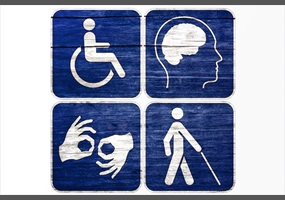
    Why is the wheelchair the only emblem used to represent disability?

    This gives a distorted view of disability. We need self respect and mutual respect.

    Wheelchair Privilege

    It is hard to acknowledge our own privilege because privilege is the other side of oppression. Some people are against talking about privilege because they don’t want to be framed as the aggressors or complicit in a system that gives them an advantage at the expense of others. Other critics of the word ‘privilege’ mistake it for a blanket term that suggests that, if you have a privilege, your whole life has been easy.

    Ultimately, privilege is not a concept designed to make people feel guilty or to diminish their achievements. Instead, waking up to how you may have certain privileges is an essential first step towards being able to decisively act, in small and large ways, to use your privilege and make the systems we were born into fairer. One example of this is wheelchair privilege.

    For example, some taxis are only equipped for manual wheelchairs, not electric ones. The physically impaired may be entitled to more benefits than any other disability group.

    In order to use your own privilege for good and to be a good ally you have to be aware, listen and speak up. Focus on equity instead of equality so that everyone is given what they need to be successful. https://www.hivelearning.com/site/resource/diversity-inclusion/5-main-types-of-privileges/

    What about the speech impaired?

    Just because you can’t speak doesn’t mean you don’t have anything to say. The Purple Vote Campaign in Wales is good at doing this. Advocating for yourself is important. Speak with me, not for me!

    Freedom of speech

    Article 21 – Freedom of expression and opinion, and access to information

    People with disabilities should be able to exercise the same rights to freedom of expression and information as other people and through all forms of communication of their choice. The UN Convention on the Rights of Persons with Disabilities (CRPD) also protects freedom of expression and the right to information. https://www.article19.org/resources/disability-and-information-what-are-your-rights/#:~:text=People%20with%20disabilities%20should%20be,and%20the%20right%20to%20information..

    States Parties shall take all appropriate measures to ensure that persons with disabilities can exercise the right to freedom of expression and opinion, including the freedom to seek, receive and impart information and ideas on an equal basis with others and through all forms of communication of their choice, as defined in article 2 of the present Convention, including by:

    a) Providing information intended for the general public to persons with disabilities in accessible formats and technologies appropriate to different kinds of disabilities in a timely manner and without additional cost;

    b) Accepting and facilitating the use of sign languages, Braille, augmentative and alternative communication, and all other accessible means, modes and formats of communication of their choice by persons with disabilities in official interactions;

    c) Urging private entities that provide services to the general public, including through the Internet, to provide information and services in accessible and usable formats for persons with disabilities;

    d) Encouraging the mass media, including providers of information through the Internet, to make their services accessible to persons with disabilities;

    e) Recognizing and promoting the use of sign languages. https://www.un.org/development/desa/disabilities/convention-on-the-rights-of-persons-with-disabilities/article-21-freedom-of-expression-and-opinion-and-access-to-information.html.

    The colour purple is used to represent the disabled community because it means royalty, status and importance.

    Purple Tuesday and the Purple Pound are business initiatives to improve customer service for people with disabilities.

    Paralympic Games is a global sports competition for people with disabilities. It is a modified version of the Olympics for people with disabilities. Highlighting abilities and maximising potential.

    International Day of People with Disabilities showcases wheelchair access, history of disability in education, disabled icons, disabled political figures and celebrates diversity. Celebrated on 3rd December every year, the International Day of Persons with Disabilities aims to promote an understanding of disability issues and to mobilise support for the dignity, rights, and well-being of persons with disabilities. Each year the day focuses on a different issue.

    Advocacy

    Advocacy includes speaking up on other people’s behalf. This could also cover unemployment amongst people with disabilities.

    ‘Disability equals diversity not disadvantage.’

    We should be accepted without having to ‘fit in’.


    Tips for Advocacy

    • Be Persistent
    • Build Effective Coalitions

    Self-Advocacy Skills

    • Be assertive vs Aggressive
    • Be direct
    • Be intentional
    • Be accurate
    • Healthcare
    • Relocating
    • Emotional Needs- Social Isolation

    Advocacy usually includes petitions, protests, lobbying, placards, propaganda, elections, party politics, and pressure groups. Being an advocate makes you an agent of change.

    The importance of rejecting society’s toxic value system

    It’s about dignity. This is important especially when fighting microaggressions. https://www.bustle.com/articles/186060-13-microaggressions-people-with-disabilities-face-on-a-daily-basis.

    At the heart of it, representation matters because people matter. Disabled persons exist in every nation and community across the world. It is essential that we respect human rights for all humans no matter their abilities or disabilities.