Tag: Spina Bifida

  • WHAT IS AN ASBAH AMBASSADOR?

    WHAT IS AN ASBAH AMBASSADOR?

    By: Daniella Jade Lowe

    The Association for Spina Bifida and Hydrocephalus is a charity that was founded in 1967. ASBAH is the local association and does peer support, activities and events to bring the Spina Bifida and Hydrocephalus community together.

    Katy Raven is the Project Manager for ASBAH. This charity is comprised of volunteers, parents/carers, children, adults and committee members.

    This organisation covers North and West Yorkshire which includes Cheshire, East Riding of Yorkshire, Greater Manchester, Halton-Runcorn, Halton-Widnes, Kingston Upon Hull, Lancashire, Merseyside, Middlesbrough, North East Lincolnshire, North Lincolnshire, North Staffordshire, North Yorkshire, Redcar/Cleveland, Shropshire, South Yorkshire, Wakefield, Warrington, West Yorkshire, Wigan and Wirral.

    ‘Supporting you to flourish and thrive’ is the slogan for the ASBAH foundation. By supporting, informing, and campaigning, North & West Yorkshire ASBAH is continuing to help promote individual choice, control, and quality of life for all the people who use their services.

    It is very important for people who are born with a developmental disability to have a good support network through peer support and befriending, especially if they are excluded from mainstream education and employment and always have to push for inclusion. It helps them to thrive and flourish.

    For the past 13 years, I have been a recipient of this charity’s services. They’ve helped me with medical support, educational advice, Spina Bifida clinics, job-searching assistance, interviews, companionship, advocacy, applying for financial support and wheelchair services. They also played a role in helping me get my first electric wheelchair during my first year of college.

    It all started back in the summer of 2009, when I originally moved to Bradford to start college. Upon arriving at the student accommodation, I met Miss Joan Pheasant, a chairman from the board of the ASBAH foundation. I found out about this charity through online research while still living in Bermuda. My case was slightly unusual because, I think I am the only international ASBAH member.

    For the sake of awareness, this organisation has decided to start an initiative called ASBAH Ambassadors and I’ve chosen to join in to advocate for others with Spina Bifida and Hydrocephalus.

    For example, one way that they do this is by celebrating Spina Bifida Week from October 25th to the 29th annually. During this week, they have campaigns and forums to educate people on the subject.

    In my opinion, being an ASBAH Ambassador is about disability representation, not just sharing information and advocating. It’s also about raising awareness. For me, being an ASBAH Ambassador is also about networking. This is why we have a befriending initiative too.

    I strongly feel that this charity has helped me to mature and properly manage my disability related issues. I definitely found it difficult to prioritise my medical affairs, finances, social life and education, especially during my first year of college.

    When I first started college, I remember participating in the Go Folic Campaign with ASBAH for Spina Bifida Week (https://www.totalhealth.co.uk/blog/importance-folate-prior-conception-go-folic-you-frolic). These campaigns and forums taught me how to improve the way I take care of myself, especially in diet and personal hygiene. ASBAH has definitely helped me to flourish and thrive in my health, education, social life and finances.

    Joan Pheasant has even helped me with transportation to and from appointments and legal advice (https://www.keighleynews.co.uk/news/12965951.keighley-group-takes-taxi-overcharging-campaign-district-wide/.)

    I’ve also been to various annual social events like afternoon tea at the Clevedon House in Ilkley and Christmas dinners in Leeds, as a member of the ASBAH Association. One Sunday, we even went to lunch at the Cow and Calf in Ilkley.

    I appreciate this and feel it was beneficial to me because I know what it is like to live in a country that does not provide these services. I’ve learned a lot from this charity, like how to approach interviews and applying for benefits. I also feel that my social skills have improved. This charity is definitely needed and a great asset to the community especially for the expectant families and parents with Spina Bifida and Hydrocephalus. When I grew up I didn’t have access to these services. I went to private nursery and preschool because not everyone was willing to take on a child with a disability.

    For more information, you can check out their Facebook page: https://www.facebook.com/ASBAHNWY.

    You can also log onto their website: https://www.nwyasbah.org/?fbclid=IwAR3GIzZsOSyRXiRwD7l-qiVaDIle0ezgXHk7puKhBNDnh_PEPTT6cuVuBP4.

  • Interview with Lwazi Ncube Foundation

    Interview with Lwazi Ncube Foundation

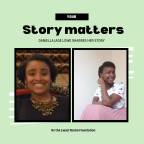
    I was given another wonderful opportunity to be interviewed by another disability oriented organisation called the Lwazi Ncube Foundation. The Lwazi Ncube Foundation is an organisation created to build, encourage and inspire others with disabilities.

    Hello, Introduce yourself – Name and what you do. My name is Daniella Jade Lowe. I do not work for anyone, but I am working on marketing myself as an Accessibility Consultant. Journalism and Politics are my passion. I have a BA degree in History and Politics.

    What type of disability do you have? At birth, I was diagnosed with Spina Bifida and Hydrocephalus which are neurological conditions. As a result, I use a wheelchair for mobility.

    What is disability to you? The only disability is a bad attitude. I have a disability. It doesn’t completely define me; it just enhances me in a way which differentiates and strengthens me. My disability should be viewed as an ability: to see the world in a different way. I don’t really like the term because sometimes it indirectly implies someone is dysfunctional or helpless. The most important thing is to never make assumptions. Someone with a disability can be very, physically, fit and strong, highly intelligent and articulate.

    What has been your experience from the time you remember till now? – positive and negative experiences. My life as a wheelchair user has been generally okay. Wheelchair Accessibility is frustrating. I was teased a little in school. Other than that, life is great.

    How do you cope with: -daily activities – your disability, do you have times when you are down – people’s reactions towards you. I have carers, a Social worker, District Nurses, a GP, and extended family in this country. I am also in contact with a local disability charity in Yorkshire. I also have a friendly landlord.

    How do you keep yourself motivated? I must stay organised and practice good time management. I also prioritise my plans. When it comes to religion, what is your belief in terms of how you were created? – do you blame God – do you trust God?

    No, I do not blame God for the way that I was born/created. Yes I’ve been prayed over before about healing but I do love my life.

    When it comes to the African society what has been your experience – if you have visited Africa what has been your experience? No experience

    Compare the UK experience with the Caribbean experience. The weather is warmer in Bermuda than the UK. The UK is bigger than Bermuda. Wheelchair Accessibility and Disability Rights is better in the UK than Bermuda. What is your word or advice to those with disabilities? Don’t let people put you in a box. You have a voice, use it. What is your word or advice to the society?

    Don’t give up on people with disabilities. Give them a chance at life. Don’t discriminate, neglect and push them to the side. Strive for inclusion for all.

    Tell us about your platforms if you have any- Blog: The View from Where I Sit Facebook: Daniella Jade Lowe Instagram: @daniellajadelowe/@theviewfromwheresitblog To follow and support the Lwazi Ncube Foundation, you can stream their YouTube channel https://www.youtube.com/channel/UCep8lS9TmXP8GPZ3oRABhYA. They can also be found on Facebook: https://www.facebook.com/lwazincubefoundation/videos. Thank you!
  • Substitute Teaching with Spina Bifida

    By: Daniella Jade Lowe

    This weekend I had the wonderful privilege of interviewing a substitute teacher named Sarah Alley who also happens to have Spina Bifida like me. Here is what she had to say:

    1. 1. What is your profession?

    I am a substitute teacher, and my degree is in the Family Science (counseling) field, although

    2. What is your educational background?

    I also have about 2 years of education credits.

    3. Where do you work?

    I work at a small, private special education school that specializes in language learning differences like dyslexia, dysgraphia and dyscalculia (math).

    4. What sparked your passion for it?

    I have always loved children and have worked with them in multiple ways over the years (nursery/children’s ministry at church, daycares and schools on Latin American mission trips, volunteering at a Spanish immersion school in my city, subbing, etc.), and all of that confirmed that I want to do something in this field to help kids.

    5. What is the difference between adaptations made for disabled teachers vs adaptations made for disabled students?

    I think the main differences between the two are that for students there are actual educational support services (tutoring, technology services–hearing devices and technology programs/platforms, etc.), but for teachers, while there may be technology services like headphones/microphones or walking aides to help navigate classrooms or hallways, there are not official support services like with students. I may not be aware of all that there is available for each, since I am only a substitute teacher working at one school. I do not see what is available at public schools or other school systems.

    6. What is the difference between substitute teaching and fully accredited teaching?

    Substitute teaching is only “as needed”, so it isn’t even part time. Also, as far as accreditation, one thing that I have learned from the specific school that I work at is that they do not require their subs to be accredited/licensed or even to have the special training that all accredited teachers are required to have in order to teach students who have dyslexia (Orton-Gillingham, a hands-on, multisensory approach). It is highly encouraged because it really helps the sub to relate better to students, but they don’t have to have it. Also, we are not required to have a teaching license, whereas accredited teachers are.

    7. Are you training to be a fully accredited teacher?

    I am not training right now to be a fully accredited teacher, although I have thought about it. If God leads me down that path, I might do it in the future, but for now I’m not sure I want to spend more time in school to get that degree/accreditation, and I feel that I can make the most difference as a substitute teacher.

    8. What is it like being a substitute teacher with Spina Bifida and Hydrocephalus?

    For me, being a substitute teacher with Spina Bifida and Hydrocephalus has been a good experience. I have not had problems with Hydrocephalus, and although I do occasionally have a hard time with comprehension or processing the information that I am asked to review or with questions I am asked, it isn’t usually a problem.

    Also, in my specific school, I have a lot of support from the faculty and staff, as well as students, so if I need help with anything I don’t have a problem getting it. I often even have students offer to help me carry my lunch to my room or pass out papers/assignments.

    One really good example of this support was one time when I got a call from a teacher at about 7am to sub for her that day because she had a family emergency. I told her I would love to, so I got to school by the time school started and went to look at the plan and figure out what we were doing.

    However, because the teacher had a family emergency and had to leave town at the last minute, she did not have time to leave lesson plans for me. I spent some time trying to think of activities and looking through books to figure out what the class was working on. When I could not come up with much, I walked next door and told another teacher, who has always been very supportive of me, about my dilemma and asked him what I should do. He told me to go back to my room and he would write something up with “some activities”. He ended up writing up an entire lesson plan for the day! It was easy for me to follow, and I don’t remember having much trouble even with comprehension.

    9. How do you cope being a teacher with Spina Bifida and Hydrocephalus while substitute teaching students with Dyslexia?

    When I was in school (all throughout grade school and college), my favorite subjects were reading, English/grammar and spelling. The reason for this is because I am much more right-brained (creative/speech/etc.) than left-brained (logic/reasoning). I have always been good at those subjects and love to read.

    Wow Sarah Alley! I’ve really learned alot. Thank you for your time.

  • Dealing with Disability in the Church: Third edition of series (Three Perspectives)

    Dealing with Disability in the Church: Third edition of series (Three Perspectives)

    By: Daniella Jade Lowe

    Dealing with Disability in the Church hasn’t been all that bad for me. First of all, I’d like to start out by saying, I’ve attended church all my life. I love church. I get involved in church services mainly by serving on the Audiovisual/Technical Team. I enjoy this.

    While living in Bradford I noticed that their churches have their own private buses to pick up and drop off their members.

    Now I’ve got one ‘bone to pick.’ Why are public buses in England expected to be wheelchair accessible but not private buses? Just an observation.

    However, whenever I asked to use it instead of taxis, I was told they do not take wheelchairs for liability reasons. Also I noticed the church I first attended, had a wheelchair section for easy access in case of a fire. I also attended a university campus church in Bradford.

    On the other hand, while living in Ilkley, there is one church that has a disability ministry for those with intellectual disabilities called the Ark, which meets the first Sunday of every month from 3pm to 6pm. Some other churches may even have Sign Language interpreters for the hearing impaired.

    In relation to handling disability, churches should take on The Good Samaritan Approach.

    Prayer

    I appreciate prayers. I have been asked to be prayed for and gladly accepted such. It can be slightly frustrating when your expectation for a change is so high and it doesn’t come which has discouraged me at times. But I do believe in miracles.

    However, I also know someone who has autism of a different persuasion. Her experiences in the church have almost never been positive. Many times, Christians have prayed for her to be healed of autism.

    She does not personally want to be “healed” of autism, because she believes that God intentionally allows some people to be born with autism or Down Syndrome for his own good reasons, and that these people are fearfully and wonderfully made in the image of God, and perfect just the way they are. They do not need to be healed; God made them like that.

    She feels that her autism is an integral part of who she is, and is not a negative thing, but rather a positive one. She does not feel that autism holds her back.

    When church people pray for her to be healed of autism, without asking her first whether she wants healing, or despite my objections to what they’re doing, that does not empower me. They are deciding on my behalf what direction they think my life should take, but they do not have that right; it’s my life. People with disabilities deserve to be in control of their own lives.

    Instead of being “healed,” all she wants is to be accepted by the church for the peculiar, wonderful, autistic person who she is. She needs acceptance and inclusion.

    When people pray for her to be healed of autism, she perceives them to be indirectly saying,

    “I want God to change you into a normal person, for my own comfort, because I can’t handle that we have a disabled person in our church. I don’t want to deal with having to include disabilities, so it’s easier if I can just try to heal them instead.”

    She fully believes that God does have the power to heal people. But she also believes that when church members wish to pray for a disabled person’s healing, they need to first ask that person whether he or she wants healing or not. If the disabled individual declines the offer, church members need to fully respect this, and not keep pushing healing on the person.

    It is good to be content and happy with life. I do agree to some extent. There is also a way of embracing disability without accepting it as if there’s no hope.

    In other words exhibit faith, despite the odds! Don’t glorify the problem, glorify the problem solver.

    Stating the facts about one’s medical condition isn’t necessarily claiming it but acknowledging that something is different about the way a person functions. We shouldn’t live in denial and shame, especially if people ask genuine questions out of curiosity.

    The Stigma around Medical Intervention

    Another subject I don’t understand is the notion that surgery or taking medicine isn’t faith. I believe God can heal through medical science. Sometimes medical intervention is part of the process. There is also nothing wrong with prayer and a psychologist, social worker or carers.

    Besides, faith without works is dead. I also notice that people tend to judge by appearances. I’m not looking for pity but inclusion.

    Wheelchair Accessibility: Functioning in Dysfunction

    Some churches in England have a health and safety policy where they have designated seating for the physically challenged. They’re also wheelchair accessible for the most part too.

    Wheelchair Accessibility and mobility issues are just some of the problems that the physically challenged face. Access alleviates the amount of limitations and restrictions on wheelchair users. Failing to ensure wheelchair accessibility is neglecting to provide reasonable adjustments. It is like functioning in dysfunction.

    I get really annoyed with drivers who park across dropped kerbs. Dropped kerbs are meant to make it easy for wheelchairs to enter and exit sidewalks. I think that drivers should either be fined or vehicles towed. Alternatively, if the church building isn’t wheelchair accessible, there is the option of watching services online, but then the problem with that is, one can’t mix and mingle with other believers. I suppose this will always be an issue depending on where one lives. There are many other issues that this subject can cover but this video should do the job. Why should your church be Disability Friendly?

  • Dealing with a Disability in the School (Mental vs Physical): Fourth edition of series

    By: Daniella Jade Lowe

    In this article, my friend and I are going to share our experiences in dealing with both mental and physical disability in the school.

    Dealing with physical disability in my life has been interesting and quite a learning experience for my family and I. My educational career has been interesting because I’ve lived and studied in Bermuda and England.

    Bermuda deals with disability in schools differently to England. England is more advanced, probably because it is much bigger and there’s more access to resources.

    For example, I attended private Nursery and Preschool in Bermuda, because it was hard to find someone to take disabled kids for liability reasons. There are currently no charities dedicated to Spina Bifida and Hydrocephalus in Bermuda. ‘Teach Us All!’

    From primary school to high school, since I claimed disability, I got Paraeducators, nowadays, known as shadow teachers in Bermuda. In Bermuda, I also got extra exam time, an exam scribe, a separate room and exam invigilator. I experienced the same in England.

    During my first year of primary school, my mother visited everyday just to make sure that the school was doing their job. However, the principal threatened to put a restraining order on her, so she stopped.

    In England, exam scribes and note takers aren’t expected to know anything about the subjects, they’re just expected to make notes and write exams for the student. This holds the students accountable for their own education and success. Students must choose between extra time or an exam scribe, not both to prevent cheating. These exam scribes and notetakers come from an external agency called Clearlinks. Clearlinks employs them, not the university. Students also get Study Coaches and specialist equipment. Ergonomic Assessments are also required for wheelchair users.

    Discrimination

    During my educational career, there was one recurring issue that I encountered at every school I attended. This was ‘the right to an education’.

    The Human Rights Act protects the right to education within all existing educational institutions. It applies to primary, secondary and higher education. So why did my parents have to fight to make sure I got into mainstream, public education?

    Why were there some teachers at the schools that I attended, who refused to teach me simply because they disagreed with my rights to be there?

    As someone who has a physical disability, I never understood this. Besides, the Human Rights Act 1981 including the Universal Declaration of Human Rights and the European Convention on Human Rights applies to Bermuda too.

    My high school years were quite tricky. In Bermuda, there were two public high schools to choose from. One high school was wheelchair accessible from its inception, whereas the other one wasn’t. I was hoping to attend the wheelchair accessible high school because it was easier to get around, however I went to the alternative high school because even though the one I wanted had easy access, integration was a problem. ‘Teach Us All!’

    I felt this was unfair because I was marked down for attendance and my class participation was affected, especially when there was a wheelchair accessible alternative. In relation to specialist equipment, my parents and I invested in a Garaventa Stair Trac from Canada, which was designed to get me up and down staircases. The only staircase it wasn’t compatible with were spiral ones.

    Fortunately, after the first year, I transitioned to a newly refurbished and wheelchair accessible building equipped with ramps, lifts and flat surfaces. This made attending classes a lot easier and improved my attendance record and class participation.

    However, I went through my second year of high school without a Paraeducator because the school felt that I should be able to cope. My parents and I disagreed with this. Having a Paraeducator made it easier to transition from class to class within five minutes. Having that extra assistance of a Paraeducator also made test taking and note taking more manageable.

    Unfortunately, I had to complete summer school that year for failing Maths. Things improved after receiving a new Paraeducator the following year.

    After high school, my first year of college was quite stressful and intense. I was enrolled to complete A-Levels. I had just moved from Bermuda to England after graduating from high school. I had to familiarise myself with a new education system and a new environment. The teachers weren’t as understanding or empathetic towards my educational background, learning styles or needs. The A-Level programme was quite competitive where some lecturers only put their best cohort of students up for January and May exams leaving the weaker students out, while other lecturers put a whole class forward and let them ‘wing it’ for the experience.

    On this particular course, I felt discriminated against because, unlike the rest of my lecturers, my English Literature didn’t give me a shot at a mock exam in preparation for the real exams. She told me that I wasn’t working at the ‘A-Level standard.’ In response to this, I complained to the Directorate of the college with an unsuccessful outcome.

    Mental Health

    Alternatively, dealing with mental disability is different. My friend’s biggest problems have been, firstly, depression, which university recognised, but I don’t think most people in general have much idea of the impact of their actions and a lot are incapable of being nice, full stop.

    According to the Equality Act 2010, depression is classified as a disability, and anyone with it is covered by the Act (https://www.mind.org.uk/media-a/3123/disability-discrimination-2019.pdf). This needs to be reinforced.

    Integration in Mainstream School versus Special Education

    Even though special education has its place in society, especially for those with severe disabilities, it is better for them to be integrated into the mainstream public education because mainstream qualifications are given more value than special qualifications. Public mainstream colleges and universities recognise mainstream qualifications not special qualifications. Special education may also possibly undermine one’s full potential. ‘Teach Us All!’

    For example, I had a Canadian friend in university, who had Asperger’s Syndrome, that went to special school all his life, and had to complete his G.E.D before starting university in England, because his special qualification wasn’t accepted by the university’s standards.

    However, when I was in school, I was integrated all throughout my educational career, but two of my subjects like P.E and Maths were modified due to having a physical disability and additional learning difficulties.

    Schools are also expected to conduct risks assessments for health and safety reasons. They should also provide a Personal Emergency Evacuation Plan in case of any emergencies like fires or flooding. This is what I got during my college and university years.

    All schools have some level of a duty of care and can be held responsible for accidents.

    I am in full support of integration, but I think the best way to ensure and reinforce this is to provide extensive teacher training. Colleges and Universities in England have Student Councils and Student Unions that include Disability Officers on their teams. Also at the primary school level in Bermuda, there is a PTSA Board. I think PTSA Boards may need to include a special element specifically for disabled students, similar to British colleges and universities’ student unions and councils.

    Integration should also include modification not accommodation. When a student has an Individualized Education Program (IEP) you’ll likely hear the word accommodation. An accommodation changes how a student learns the material. A modification changes what a student is taught or expected to learn.

    Homeschooling is another viable option which may help decrease discrimination and cater to personal needs.

    Wheelchair Accessibility: Functioning in Dysfunction
    Wheelchair Accessibility and mobility issues are additional problems that wheelchair users face daily. I experienced this many times in Bermuda, especially at school. Access alleviates the amount of limitations and restrictions on wheelchair users. Failing to ensure wheelchair accessibility is neglecting to provide reasonable adjustments. It is like functioning in dysfunction. Fortunately AccessAdvisr helps to tackle this in England. I still think that people must be mindful.

    According to the British Government website, anyone can apply for a dropped kerb in England (https://www.gov.uk/apply-dropped-kerb). However, I get really annoyed with drivers who park across dropped kerbs. Dropped kerbs are meant to make it easy for wheelchairs to enter and exit sidewalks. Some drivers even park on top of the sidewalks blocking the walkway. We need to clamp down on this with a fine both in the UK and Bermuda.

    So to conclude, I think reassessing wheelchair accessibility, integration and modifications in mainstream public education are needed to improve the way disability is handled in the schools, especially in Bermuda. Schools must become Disability Confident. This is what I suggest in ‘Dealing with Disability in the School.’