Tag: Social Justice

  • What does it mean to discriminate?

    To discriminate means to recognize and differentiate between things, or, in a social context, to treat people unfairly based on specific characteristics such as race, gender, or age.


    In a social or legal context, discrimination refers to unfair or prejudicial treatment of individuals or groups based on certain characteristics that are unrelated to their abilities or merits. Common grounds for discriminatory practices include:
    Race or ethnicity: Treating people differently because of their racial background.
    Gender or sex: Making distinctions that advantage one gender over another.
    Age: Favoring or disadvantaging people based on their age.
    Religion or beliefs: Unequal treatment due to religious affiliation or convictions.
    Disability: Denying equal opportunities to people with physical or mental disabilities.
    Sexual orientation or nationality: Bias against individuals based on who they love or where they come from.


    Such discrimination is often unlawful in workplaces, education, housing, and public services because it violates principles of equality and human rights. Social and legal frameworks, such as the Equality Act 2010 in the UK, exist to protect individuals from discriminatory practices.

    Intersectionality of Discrimination
    It’s important to recognize that individuals may experience discrimination based on multiple grounds simultaneously. For example, a person who is both a woman and a member of a racial minority may face unique challenges that are not fully addressed by considering each characteristic in isolation.

    The grounds of discrimination refer to specific characteristics or attributes that are protected under human rights laws, preventing unfair treatment based on these traits.

    What are the different types of discrimination?
    The Equality Act protects people who have a disability against these types of discrimination:

    Direct discrimination
    Discrimination arising from disability
    Indirect discrimination
    Harassment
    Victimisation


    Failing to comply with duty to make reasonable adjustments

    It’s possible that you’ve experienced discrimination in more than one way. If this is the case, you can claim for multiple types of discrimination in one claim.

    You have to show that there’s a link between your disability and the way you’ve been treated. This can be difficult. But you don’t always have to give an example of a specific non-disabled person who was treated better than you. It just needs to be clear from all the circumstances that your disability was the reason why you were treated as you were.


    Discrimination arising from disability
    This is where you are treated badly because of something that happens due to your disability.

    Unlike direct discrimination, there’s no need for you to compare yourself with anyone else. You just have to show that you were treated badly. And this treatment was linked to your disability.

    You don’t need to show that the person who treated you badly was aware that the behaviour was due to your disability. But they do need to be aware that you have a disability.

    Example of discrimination arising from disability
    Nigel is the tenant of a housing association. He has obsessive-compulsive disorder (OCD). Because of this, he walks around his flat a lot. This disturbs his neighbour. His tenancy officer at the housing association sends him a warning letter. It tells him that he will be taken to court if he continues to disturb his neighbour. This may be discrimination arising from disability.


    Situations when unfavourable treatment might not be discrimination
    There are some situations in which it might be lawful for a person or organisation to treat you unfavourably. These are if they can show at least one of the following:

    There were valid intentions behind their action. For example, ensuring the health and safety of others, or keeping up staff attendance so that their business can run properly. And that it was an appropriate action to take in the circumstance. Legally this is called a ‘justification’.
    They did not know you had a disability and could not reasonably have known.
    A service provider can be held responsible for the actions of its staff or agents. For example, a waiter in a restaurant or a receptionist at the local authority.

    But the service provider may be protected if they took all reasonable steps to avoid the discriminatory act. Or if their employee or agent was acting outside the scope of what they were told to do.

    Example when unfavourable treatment might not be discrimination
    Peter experiences psychosis and hears voices, which he manages by talking to them. A member of staff in a shop asks Peter to leave when he is talking to his voices. Peter has been treated unfavourably because of behaviour related to his disability.

    Normally the company running the shop would be held responsible for the actions of its employee. But the company has issued clear instructions to staff about their obligations under equality law. And it’s provided equality training. It also regularly checks that staff are following the law. It may be able to argue that it’s taken all reasonable steps to prevent its staff from acting in a discriminatory way. The member of staff who asked Peter to leave wasn’t acting in the way he’d been told to.

    For a good reason
    Appropriate and necessary

    For indirect discrimination, it doesn’t matter whether the person or organisation knew about your disability. This means they have to plan in advance and think about how their policies and practices may affect people with mental health problems.

    But it is not indirect discrimination if the person or organisation can show these practices and arrangements were justified.

    Harassment
    Harassment is behaviour from others that you don’t want, that:

    Violates your dignity or creates an environment that is intimidating, degrading, offensive or humiliating
    relates to a disability. It does not have to relate to a disability that you have.


    Victimisation
    Victimisation is when an employer or organisation puts you at a disadvantage. It could be because of one of the following:

    You’ve made allegation about discrimination
    You’ve supported someone who has made an allegation of discrimination


    Examples of victimisation
    Sarah makes a complaint that her GP’s receptionist has discriminated against her because of her mental health problem. As a result, her GP’s practice manager tells her she must leave the practice and register with another practice. This is likely to be victimisation.

    Deb has an anxiety disorder. She genuinely believes that she has been discriminated against by an assistant in her local supermarket. The assistant made remarks about her condition in front of customers. Her friend Chris helps her to complain to the supermarket. After this, the manager says both of them should shop elsewhere.


    Failing to comply with duty to make reasonable adjustments
    The Equality Act says that employers and service providers should think about making reasonable adjustments.

    If a person or organisation does not make reasonable adjustments when it would have been reasonable to do, this will be unlawful discrimination.

    Why is the UDHR important?
    The UDHR marked an important shift by daring to say that all human beings are free and equal, regardless of colour, creed or religion. For the first time, a global agreement put human beings, not power politics, at the heart of its agenda. Communities, movements and nations across the world took the UDHR disruptive power to drive forward liberation struggles and demands for equality.

    What is the Universal Declaration of Human Rights?

    The UDHR is an enduring commitment to prevent the bleakest moments in history from happening again.
    ‘The UDHR is living proof that a global vision for human rights is possible, doable, workable.’

    When was the UDHR created?
    The UDHR emerged from the ashes of war and the horrors of the Holocaust. The traumatic events of the Second World War brought home that human rights are not always universally respected. The extermination of almost 17 million people during the Holocaust, including 6 million Jews, horrified the entire world. After the war, governments worldwide made a concerted effort to foster international peace and prevent conflict. This resulted in the establishment of the United Nations in June 1945.

    Who created the UDHR?
    In 1948, representatives from the 50 member states of the United Nations came together, with Eleanor Roosevelt chairing the Human Rights Commission, to devise a list of all the human rights that everybody across the world should enjoy.

    What are the legal aspects to be aware of?

    A legal framework is provided in the Equality Act 2010 to tackle disadvantage and discrimination, and this framework applies to job descriptions too. The Act details 9 protected characteristics which individuals cannot be treated unfairly as a result of. These are age, disability, gender reassignment, marriage or civil partnership, pregnancy and maternity, race, religion or belief, sex or sexual orientation. It is also important to note that the right to discriminate is not a legal right. Rather, it is a term that is often used to describe the ability of individuals or organizations to make decisions based on their own preferences or beliefs. However, it is important to remember that discrimination can have serious consequences for individuals and society as a whole, and that it is important to treat everyone with respect and dignity.

    The Disability Discrimination Act (DDA) of 1995 was a landmark legislation that made it illegal for employers and service providers such as shops and restaurants to discriminate against someone because they were disabled. The act was preceded by years of campaigning and protests, including incidents of civil disobedience. The DDA was later replaced by the Equality Act 2010, which provides a legal framework to protect the rights of disabled people and promote equality.

    Although it is not legally binding, the protection of the rights and freedoms set out in the Declaration has been incorporated into many national constitutions and domestic legal frameworks. All states have a duty, regardless of their political, economic and cultural systems, to promote and protect all human rights for everyone without discrimination.

    Besides, parents have the right to take their kids wherever they want to take them.

    Ally or Accomplice?

    Well then, why is it that when it comes to disability, people start cherry picking rights?

    Why am I fighting so hard for something that is already my human and legal right?

    We need to get our priorities straight!

    If you have experienced discrimination, you may be able to take legal action. The Equality and Human Rights Commission provides information and advice on discrimination and your rights. You can also contact Citizens Advice for guidance on what to do if you have experienced discrimination.

    Institutions are not solutions, and the UK has come a long way in recognizing the rights of disabled people. However, there is still much work to be done to ensure that disabled people have the same rights and opportunities as everyone else.

    In summary, while discrimination can involve mere recognition of differences, it most commonly refers to unjust treatment of individuals or groups, and understanding this distinction is crucial when discussing rights, fairness, and social ethics.

    Types of discrimination in the Equality Act

    1unicef.org

    https://www.bihr.org.uk/get-informed/what-rights-do-i-have/the-right-to-be-free-from-discrimination

    1gov.uk2gov.uk3

    https://www.citizensadvice.org.uk/law-and-courts/discrimination/check-what-type-of-discrimination-youve-experienced/making-or-telling-someone-to-discriminate/

    https://www.amnesty.org/en/what-we-do/discrimination/

    https://www.equalityhumanrights.com/human-rights/human-rights-act/article-14-protection-discrimination

    https://www.gov.uk/discrimination-your-rights

    https://www.ohchr.org/en/what-are-human-rights

    https://lordslibrary.parliament.uk/disability-discrimination-act-1995-and-now/

    Was 1995 the year that changed everything for disabled people? – BBC News https://www.nidirect.gov.uk/articles/protection-against-disability-discrimination

    https://www.bihr.org.uk/get-informed/what-rights-do-i-have/the-right-to-education

    https://www.legislation.gov.uk/ukpga/1998/42/schedule/1/part/II

    https://www.disabilitymedwaynetwork.org.uk/2019/01/19/a-history-of-disability-rights-in-the-uk/
    What is the Universal Declaration of Human Rights? (amnesty.org.uk)https://www.amnesty.org.uk/universal-declaration-human-rights-UDHR#A%20Summary%20of%20The%2030%20Articles%20of%20The%20Universal%20Declaration%20of%20Human%20Rights

    https://www.newdisabledsouth.org/?fbclid=IwY2xjawJjXkVleHRuA2FlbQIxMAABHjh3IUhjf70Kl_w8Av9JcCuuDyInZqVgfzmdd6aXo9bjWcD3AL7SkYYbGrAQ_aem_8e0g9tZq0v6fA7Xrys9o8Q

  • Interview with Access Adviser

    Q: Tell us a little bit about yourself.
    A: My name is Daniella Jade Lowe. I am a university graduate with a BA degree focused on History and Politics from the University of Bradford, England. Journalism and Politics are my passion. I am an emerging Journalist, Politician and Disability Advocate. My motive behind doing this was to be an advocate for people with disabilities. I am also marketing myself as an Access Consultant.

    Q: What is your experience of life as a disabled person?
    A: I have advocated for Wheelchair Accessibility in Bermuda, by writing various articles for numerous publications on the subject. In fact, one of the reasons why I pursued further education and started my career in England was due to Wheelchair Accessibility. During Middle School and High School, I used a Garaventa StairTrac for navigating the school for classes. I have even represented Bermuda at the London 2012 Paralympic Games as a reporter for Bermuda’s Paralympian Jessica Lewis. During the games I also assessed the level of Wheelchair Accessibility at the event.

    Q: How would you describe your disability?
    A: I was diagnosed with Spina Bifida and Hydrocephalus at birth. This condition is neurological. It comes with mobility issues and learning difficulties. As a result, I use a wheelchair for mobility.

    Q: What is accessibility like where you live?
    A
    : Accessibility is terrible in Bermuda. Accessibility is much better in England.

    Q: Where is your favourite place for accessibility & why?
    A: Bradford and Ilkley are great for Wheelchair Access because there are plenty of ramps, lifts, and flat surfaces. Leeds has Disability Confident companies too.

    Q: What is one accessibility improvement that you would like to see?
    A:
    Travelling around London can be improved especially when using the Tube or the Underground. Gatwick Airport is better for Wheelchair Accessibility than Heathrow Airport is.

    For more information about Access Adviser, please visit https://accessadvisr.net.

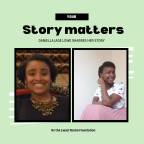
  • Interview with Lwazi Ncube Foundation

    Interview with Lwazi Ncube Foundation

    I was given another wonderful opportunity to be interviewed by another disability oriented organisation called the Lwazi Ncube Foundation. The Lwazi Ncube Foundation is an organisation created to build, encourage and inspire others with disabilities.

    Hello, Introduce yourself – Name and what you do. My name is Daniella Jade Lowe. I do not work for anyone, but I am working on marketing myself as an Accessibility Consultant. Journalism and Politics are my passion. I have a BA degree in History and Politics.

    What type of disability do you have? At birth, I was diagnosed with Spina Bifida and Hydrocephalus which are neurological conditions. As a result, I use a wheelchair for mobility.

    What is disability to you? The only disability is a bad attitude. I have a disability. It doesn’t completely define me; it just enhances me in a way which differentiates and strengthens me. My disability should be viewed as an ability: to see the world in a different way. I don’t really like the term because sometimes it indirectly implies someone is dysfunctional or helpless. The most important thing is to never make assumptions. Someone with a disability can be very, physically, fit and strong, highly intelligent and articulate.

    What has been your experience from the time you remember till now? – positive and negative experiences. My life as a wheelchair user has been generally okay. Wheelchair Accessibility is frustrating. I was teased a little in school. Other than that, life is great.

    How do you cope with: -daily activities – your disability, do you have times when you are down – people’s reactions towards you. I have carers, a Social worker, District Nurses, a GP, and extended family in this country. I am also in contact with a local disability charity in Yorkshire. I also have a friendly landlord.

    How do you keep yourself motivated? I must stay organised and practice good time management. I also prioritise my plans. When it comes to religion, what is your belief in terms of how you were created? – do you blame God – do you trust God?

    No, I do not blame God for the way that I was born/created. Yes I’ve been prayed over before about healing but I do love my life.

    When it comes to the African society what has been your experience – if you have visited Africa what has been your experience? No experience

    Compare the UK experience with the Caribbean experience. The weather is warmer in Bermuda than the UK. The UK is bigger than Bermuda. Wheelchair Accessibility and Disability Rights is better in the UK than Bermuda. What is your word or advice to those with disabilities? Don’t let people put you in a box. You have a voice, use it. What is your word or advice to the society?

    Don’t give up on people with disabilities. Give them a chance at life. Don’t discriminate, neglect and push them to the side. Strive for inclusion for all.

    Tell us about your platforms if you have any- Blog: The View from Where I Sit Facebook: Daniella Jade Lowe Instagram: @daniellajadelowe/@theviewfromwheresitblog To follow and support the Lwazi Ncube Foundation, you can stream their YouTube channel https://www.youtube.com/channel/UCep8lS9TmXP8GPZ3oRABhYA. They can also be found on Facebook: https://www.facebook.com/lwazincubefoundation/videos. Thank you!
  • Voting with a Disability in the UK

    By: Daniella Jade Lowe

    Voting with a disability can be quite a tedious but rewarding experience. We often suffer marginalised politics for a marginalised people.

    The Electoral Voting Commission in the UK offers Accessible Voting for all. They endorse voting through accessibility videos: https://www.gov.uk/guidance/accessible-voting-for-all.

    First of all, you must register to vote, but only once you’re 18 years old or older on the day of the election. In Scotland and Wales you can vote at age 16 or over.

    You can register online or by post. However, you cannot vote online in any elections.

    Physically challenged voters and wheelchair users can vote in person because all polling stations are wheelchair accessible. They also have the option of voting by post. As a wheelchair user, while living in Bradford as a student, I voted in person. I’ve also voted in person at the St. John’s Anglican church in Ilkley.

    Vision Impaired Voters

    Vision Impaired voters can vote through Tactile Audio Device Voting. The TAD is easy to use and utilize your hearing and touch senses to vote without assistance: https://bernews.com/2020/09/tad-voting-demonstration-on-saturday/?fbclid=IwAR0i7UY4PXPDUJ1uF95-w_F3QBogRtqDwOWq8jDPpgJqHn_ZmBiWyA8wF4k.

    There’s also Proxy Voting in Wales. You can do this by asking someone to vote for you. https://assets.publishing.service.gov.uk/government/uploads/system/uploads/attachment_data/file/898774/Apply-to-vote-by-proxy-due-to-a-disability-Welsh.pdf.

    Hearing Impaired Voters

    Unfortunately, according to my research, the hearing impaired want to be included in voting at the European Parliamentary Elections, through subtitles and sign language but are still fighting for recognition. https://www.eud.eu/news/real-rights-persons-disabilities-vote-european-parliament-elections/.

    Deaf voters are demanding improvements. ‘No captions, no vote’, they say! https://inews.co.uk/opinion/no-captions-no-vote-why-deaf-voters-are-calling-for-more-accessible-campaigning-this-general-election-368084. This indicates that there is more work, by way of advocacy, to be done.

    According to statistics, one in five British voters are disabled. So why does politics ignore us?

    Austerity has been bruttal for disabled people. https://www.theguardian.com/commentisfree/2019/nov/13/disabled-people-politics-brexit-election. This is why we need elections and voting.

    Most politicians like to say ‘don’t vote, don’t complain.’

    However the disabled community has every right to complain if they’ve asked for reasonable adjustments but get ignored every time.

    Voting is about getting your voice heard. Voting is the starting point for political action. It’s about sharing political concerns, expectations and solutions. Disability voting is about tackling and dismantling oppressive systems of injustice. It is also about holding our politicians accountable. Voting should reimagine law enforcement, as well as reinforce disability justice, disability rights and disability advocacy.

    The next step after campaigning and voting would be debating disability related issues. Canvassing is about relationship building. Canvassing will most likely highlight voters concerns. It is very difficult to debate sensitive subjects that you are passionate about like Euthanasia, without letting your emotions run high.

    During my high school years, I had the privilege of participating in a political group called ‘Youth Parliament Bermuda.’ While on this team, I got a chance to debate various topics in the House of Assembly with other students. http://www.royalgazette.com/article/20070517/NEWS/305179917.

    The Disability Union is also good at doing this for legal support (https://disabilityunion.co.uk/).

    Netflix even has a disability revolution movie entitled, ‘Crip Camp’, which is a documentary about a groundbreaking summer camp which galvanizes a group of teens with disabilities, to help build a movement forging a new path towards greater equality. It also shows great impacts on disability rights and advocacy.

    Also, voting and elections is about power. Purple is also associated with royalty. The reason why the colour purple is used to represent disability is because it’s about identity : https://www.bbc.co.uk/news/blogs-ouch-25767082. As a member of the Purple Vote Campaign, this is important to know.

    Disability representation is important for inclusion, equality and identity. ‘DISABILITY VOTE MATTERS!’

    Voting might be more difficult this year than at any other point in history due to global pandemic and lack of access to voting options. This is why we are raising awareness about voting resources, rights, and the importance of the disability vote. We need everyone involved to make positive change in our communities.

  • Dealing with Disability in the Home: Second edition of series

    By: Daniella Jade Lowe

    Housing and assisted living can be quite scarce for people with disabilities. Most times people with disabilities live with family where they rely on parents for support.

    While living with Spina Bifida and Hydrocephalus, I’ve had the privilege of living in two separate countries, which means I’ve had two separate homes. I was born in England, raised in Bermuda. I have dual nationality, which has resulted in dual perspectives on disability.

    I lived with my parents in Bermuda during my early school years, then I lived independently in England. I completed Primary, Middle and High School in Bermuda then completed college and university in England.

    Living in both countries has been an eye opener for me especially from the perspective of being a wheelchair user.

    Housing in England vs Housing in Bermuda

    Housing in England is completely different to Housing in Bermuda, especially for people with disabilities.

    During my college and university years, I lived in student accommodations that were modified for wheelchair users. Cultural differences impacted this. Once I completed university, I transferred to Assisted Independent Living. I live at a housing scheme called Five Oaks Housing Scheme under Sanctuary Housing Association in Ilkley. Sanctuary Housing Association is a housing corporation dedicated to the disabled community in the UK. https://www.sanctuary-housing.co.uk/.

    I have a great landlord who meets with the residents and I on a quarterly basis. She also communicates effectively, in-person, by phone and email. My bathroom is equipped with handrails to make transferring easy. I also use a profiling bed in addition to my height adjustable electric wheelchair. All counters and tables are low enough for me.

    However there are other people in my flat who require the use of assistive technology.

    Residents who are either unemployed or actively job seeking are eligible for Housing Benefit pays rent in the UK.

    One recurring issue that I’ve experienced in relation to housing is having access to showering facilities instead of bathing facilities. I personally prefer baths to showers.

    According to my research, Bermuda offers Summerhaven Trust. Summerhaven Trust is an assisted living residential complex that provides the opportunity for people with physical disabilities to live in the community. https://helpingservices.bm/listing/summerhaven-residential-home/

    The Bermuda Housing Corporation provides loans for the elderly and the disabled in Bermuda. https://www.bhc.bm/senior-disabled-loans/.

    For the last house that I lived in, before moving to England, my family sought to make the house wheelchair accessible with an escape route for me in case of a fire or flood, by the patio area, but the Department of Planning wouldn’t let us do so because it was too risky. Bermuda has legislation for this. https://planning.gov.bm/index.php/planning-legislation/.

    During my high school years, my father teamed up with a family friend to implement a lift at my house at one point because there were stairs to access and exit the house. Bermuda has legislation for this. http://www.bermudalaws.bm/laws/Consolidated%20Laws/Building%20Authority%20(Elevators%20and%20Lifts)%20Regulations%201962.pdf.

    Additionally, the Disabled Living Allowance is also available while living out here. I’ve also received additional support from Carers like Dignicare and Visioncare.https://www.dignicare.co.uk/, http://www.visioncare.co/.

    https://www.ilkleygazette.co.uk/news/10128744.ilkley-community-centre-back-in-business-after-a-two-year-closure/

    Wheelchair Accessibility: Functioning in Dysfunction

    This is one of the main reasons why I moved to England from Bermuda as a high school graduate.

    Wheelchair Accessibility and mobility issues are just some of the problems that I face as a wheelchair user. Access alleviates the amount of limitations and restrictions on wheelchair users. Failing to ensure wheelchair accessibility is neglecting to provide reasonable adjustments. It is like functioning in dysfunction.

    However, despite all of this, people with disabilities, like me, can lead independent lives even though we experience a restricted level of independence. Yes we do have preferences, goals and ambitions. We also have rights too.

    Throughout this whole ‘Dealing with Disability’ series, I’ve learned that both countries have endeavoured to make mandatory reasonable adjustments for people with disabilities through legislation and finances. Reasonable adjustments, finances and legislation enable us to live independently. This is the way we deal with life.

  • Dealing with Disability in the Church: Third edition of series (Three Perspectives)

    Dealing with Disability in the Church: Third edition of series (Three Perspectives)

    By: Daniella Jade Lowe

    Dealing with Disability in the Church hasn’t been all that bad for me. First of all, I’d like to start out by saying, I’ve attended church all my life. I love church. I get involved in church services mainly by serving on the Audiovisual/Technical Team. I enjoy this.

    While living in Bradford I noticed that their churches have their own private buses to pick up and drop off their members.

    Now I’ve got one ‘bone to pick.’ Why are public buses in England expected to be wheelchair accessible but not private buses? Just an observation.

    However, whenever I asked to use it instead of taxis, I was told they do not take wheelchairs for liability reasons. Also I noticed the church I first attended, had a wheelchair section for easy access in case of a fire. I also attended a university campus church in Bradford.

    On the other hand, while living in Ilkley, there is one church that has a disability ministry for those with intellectual disabilities called the Ark, which meets the first Sunday of every month from 3pm to 6pm. Some other churches may even have Sign Language interpreters for the hearing impaired.

    In relation to handling disability, churches should take on The Good Samaritan Approach.

    Prayer

    I appreciate prayers. I have been asked to be prayed for and gladly accepted such. It can be slightly frustrating when your expectation for a change is so high and it doesn’t come which has discouraged me at times. But I do believe in miracles.

    However, I also know someone who has autism of a different persuasion. Her experiences in the church have almost never been positive. Many times, Christians have prayed for her to be healed of autism.

    She does not personally want to be “healed” of autism, because she believes that God intentionally allows some people to be born with autism or Down Syndrome for his own good reasons, and that these people are fearfully and wonderfully made in the image of God, and perfect just the way they are. They do not need to be healed; God made them like that.

    She feels that her autism is an integral part of who she is, and is not a negative thing, but rather a positive one. She does not feel that autism holds her back.

    When church people pray for her to be healed of autism, without asking her first whether she wants healing, or despite my objections to what they’re doing, that does not empower me. They are deciding on my behalf what direction they think my life should take, but they do not have that right; it’s my life. People with disabilities deserve to be in control of their own lives.

    Instead of being “healed,” all she wants is to be accepted by the church for the peculiar, wonderful, autistic person who she is. She needs acceptance and inclusion.

    When people pray for her to be healed of autism, she perceives them to be indirectly saying,

    “I want God to change you into a normal person, for my own comfort, because I can’t handle that we have a disabled person in our church. I don’t want to deal with having to include disabilities, so it’s easier if I can just try to heal them instead.”

    She fully believes that God does have the power to heal people. But she also believes that when church members wish to pray for a disabled person’s healing, they need to first ask that person whether he or she wants healing or not. If the disabled individual declines the offer, church members need to fully respect this, and not keep pushing healing on the person.

    It is good to be content and happy with life. I do agree to some extent. There is also a way of embracing disability without accepting it as if there’s no hope.

    In other words exhibit faith, despite the odds! Don’t glorify the problem, glorify the problem solver.

    Stating the facts about one’s medical condition isn’t necessarily claiming it but acknowledging that something is different about the way a person functions. We shouldn’t live in denial and shame, especially if people ask genuine questions out of curiosity.

    The Stigma around Medical Intervention

    Another subject I don’t understand is the notion that surgery or taking medicine isn’t faith. I believe God can heal through medical science. Sometimes medical intervention is part of the process. There is also nothing wrong with prayer and a psychologist, social worker or carers.

    Besides, faith without works is dead. I also notice that people tend to judge by appearances. I’m not looking for pity but inclusion.

    Wheelchair Accessibility: Functioning in Dysfunction

    Some churches in England have a health and safety policy where they have designated seating for the physically challenged. They’re also wheelchair accessible for the most part too.

    Wheelchair Accessibility and mobility issues are just some of the problems that the physically challenged face. Access alleviates the amount of limitations and restrictions on wheelchair users. Failing to ensure wheelchair accessibility is neglecting to provide reasonable adjustments. It is like functioning in dysfunction.

    I get really annoyed with drivers who park across dropped kerbs. Dropped kerbs are meant to make it easy for wheelchairs to enter and exit sidewalks. I think that drivers should either be fined or vehicles towed. Alternatively, if the church building isn’t wheelchair accessible, there is the option of watching services online, but then the problem with that is, one can’t mix and mingle with other believers. I suppose this will always be an issue depending on where one lives. There are many other issues that this subject can cover but this video should do the job. Why should your church be Disability Friendly?

  • Dealing with a Disability in the School (Mental vs Physical): Fourth edition of series

    By: Daniella Jade Lowe

    In this article, my friend and I are going to share our experiences in dealing with both mental and physical disability in the school.

    Dealing with physical disability in my life has been interesting and quite a learning experience for my family and I. My educational career has been interesting because I’ve lived and studied in Bermuda and England.

    Bermuda deals with disability in schools differently to England. England is more advanced, probably because it is much bigger and there’s more access to resources.

    For example, I attended private Nursery and Preschool in Bermuda, because it was hard to find someone to take disabled kids for liability reasons. There are currently no charities dedicated to Spina Bifida and Hydrocephalus in Bermuda. ‘Teach Us All!’

    From primary school to high school, since I claimed disability, I got Paraeducators, nowadays, known as shadow teachers in Bermuda. In Bermuda, I also got extra exam time, an exam scribe, a separate room and exam invigilator. I experienced the same in England.

    During my first year of primary school, my mother visited everyday just to make sure that the school was doing their job. However, the principal threatened to put a restraining order on her, so she stopped.

    In England, exam scribes and note takers aren’t expected to know anything about the subjects, they’re just expected to make notes and write exams for the student. This holds the students accountable for their own education and success. Students must choose between extra time or an exam scribe, not both to prevent cheating. These exam scribes and notetakers come from an external agency called Clearlinks. Clearlinks employs them, not the university. Students also get Study Coaches and specialist equipment. Ergonomic Assessments are also required for wheelchair users.

    Discrimination

    During my educational career, there was one recurring issue that I encountered at every school I attended. This was ‘the right to an education’.

    The Human Rights Act protects the right to education within all existing educational institutions. It applies to primary, secondary and higher education. So why did my parents have to fight to make sure I got into mainstream, public education?

    Why were there some teachers at the schools that I attended, who refused to teach me simply because they disagreed with my rights to be there?

    As someone who has a physical disability, I never understood this. Besides, the Human Rights Act 1981 including the Universal Declaration of Human Rights and the European Convention on Human Rights applies to Bermuda too.

    My high school years were quite tricky. In Bermuda, there were two public high schools to choose from. One high school was wheelchair accessible from its inception, whereas the other one wasn’t. I was hoping to attend the wheelchair accessible high school because it was easier to get around, however I went to the alternative high school because even though the one I wanted had easy access, integration was a problem. ‘Teach Us All!’

    I felt this was unfair because I was marked down for attendance and my class participation was affected, especially when there was a wheelchair accessible alternative. In relation to specialist equipment, my parents and I invested in a Garaventa Stair Trac from Canada, which was designed to get me up and down staircases. The only staircase it wasn’t compatible with were spiral ones.

    Fortunately, after the first year, I transitioned to a newly refurbished and wheelchair accessible building equipped with ramps, lifts and flat surfaces. This made attending classes a lot easier and improved my attendance record and class participation.

    However, I went through my second year of high school without a Paraeducator because the school felt that I should be able to cope. My parents and I disagreed with this. Having a Paraeducator made it easier to transition from class to class within five minutes. Having that extra assistance of a Paraeducator also made test taking and note taking more manageable.

    Unfortunately, I had to complete summer school that year for failing Maths. Things improved after receiving a new Paraeducator the following year.

    After high school, my first year of college was quite stressful and intense. I was enrolled to complete A-Levels. I had just moved from Bermuda to England after graduating from high school. I had to familiarise myself with a new education system and a new environment. The teachers weren’t as understanding or empathetic towards my educational background, learning styles or needs. The A-Level programme was quite competitive where some lecturers only put their best cohort of students up for January and May exams leaving the weaker students out, while other lecturers put a whole class forward and let them ‘wing it’ for the experience.

    On this particular course, I felt discriminated against because, unlike the rest of my lecturers, my English Literature didn’t give me a shot at a mock exam in preparation for the real exams. She told me that I wasn’t working at the ‘A-Level standard.’ In response to this, I complained to the Directorate of the college with an unsuccessful outcome.

    Mental Health

    Alternatively, dealing with mental disability is different. My friend’s biggest problems have been, firstly, depression, which university recognised, but I don’t think most people in general have much idea of the impact of their actions and a lot are incapable of being nice, full stop.

    According to the Equality Act 2010, depression is classified as a disability, and anyone with it is covered by the Act (https://www.mind.org.uk/media-a/3123/disability-discrimination-2019.pdf). This needs to be reinforced.

    Integration in Mainstream School versus Special Education

    Even though special education has its place in society, especially for those with severe disabilities, it is better for them to be integrated into the mainstream public education because mainstream qualifications are given more value than special qualifications. Public mainstream colleges and universities recognise mainstream qualifications not special qualifications. Special education may also possibly undermine one’s full potential. ‘Teach Us All!’

    For example, I had a Canadian friend in university, who had Asperger’s Syndrome, that went to special school all his life, and had to complete his G.E.D before starting university in England, because his special qualification wasn’t accepted by the university’s standards.

    However, when I was in school, I was integrated all throughout my educational career, but two of my subjects like P.E and Maths were modified due to having a physical disability and additional learning difficulties.

    Schools are also expected to conduct risks assessments for health and safety reasons. They should also provide a Personal Emergency Evacuation Plan in case of any emergencies like fires or flooding. This is what I got during my college and university years.

    All schools have some level of a duty of care and can be held responsible for accidents.

    I am in full support of integration, but I think the best way to ensure and reinforce this is to provide extensive teacher training. Colleges and Universities in England have Student Councils and Student Unions that include Disability Officers on their teams. Also at the primary school level in Bermuda, there is a PTSA Board. I think PTSA Boards may need to include a special element specifically for disabled students, similar to British colleges and universities’ student unions and councils.

    Integration should also include modification not accommodation. When a student has an Individualized Education Program (IEP) you’ll likely hear the word accommodation. An accommodation changes how a student learns the material. A modification changes what a student is taught or expected to learn.

    Homeschooling is another viable option which may help decrease discrimination and cater to personal needs.

    Wheelchair Accessibility: Functioning in Dysfunction
    Wheelchair Accessibility and mobility issues are additional problems that wheelchair users face daily. I experienced this many times in Bermuda, especially at school. Access alleviates the amount of limitations and restrictions on wheelchair users. Failing to ensure wheelchair accessibility is neglecting to provide reasonable adjustments. It is like functioning in dysfunction. Fortunately AccessAdvisr helps to tackle this in England. I still think that people must be mindful.

    According to the British Government website, anyone can apply for a dropped kerb in England (https://www.gov.uk/apply-dropped-kerb). However, I get really annoyed with drivers who park across dropped kerbs. Dropped kerbs are meant to make it easy for wheelchairs to enter and exit sidewalks. Some drivers even park on top of the sidewalks blocking the walkway. We need to clamp down on this with a fine both in the UK and Bermuda.

    So to conclude, I think reassessing wheelchair accessibility, integration and modifications in mainstream public education are needed to improve the way disability is handled in the schools, especially in Bermuda. Schools must become Disability Confident. This is what I suggest in ‘Dealing with Disability in the School.’

  • Dealing with Disability on the Job: First edition of series

    Dealing with Disability on the Job: First edition of series

    By: Daniella Jade Lowe

    This is the first segment of my article series ‘Dealing with Disability’. In this article, I will cover Dealing with Disability on the Job, using examples from my personal experiences.

    Lived Experience

    How does one handle disability in the workplace?

    While living in Bermuda, I’ve had sporadic summer jobs and work experience. One paid job was working as a Junior Counselor at an inclusive Summer camp for disabled and non-disabled children.

    Another paid summer job included representing Bermuda at the London 2012 Paralympic Games as a reporter. That was fun and unforgettable.

    However, after graduating from university in 2017, my real career development and job searching began. My personal experience with job searching has been very tough.

    Job hunting can be quite frustrating for the disabled community. We have special skill sets based on level of ability.

    The problem is, we need a job to get work experience, and we need work experience to get a job. Going from interview to interview without any success can be quite discouraging.

    Nowadays, there are an increasing number of disabled people starting businesses because the job searching and interview process is proving to be difficult.

    If you desire to apply for benefits, you must be eligible for it. Before one is eligible, they must have a financial assessment. The unemployed who are actively seeking work can apply for the Jobseekers’ Allowance which is paid into their bank accounts from their local Jobcentre, fortnightly.

    There is also the Employment Support Allowance and Universal Credit that one can apply for.

    Business owners are entitled to the Income Support Scheme. All of this is provided at the local Jobcentre Plus through the Department of Works and Pensions.

    Purple Tuesday is an accessibility initiative for businesses and I am proud to know that Bermuda has joined this community. This initiative promotes inclusive marketing for the disabled shopper.(www.purpletuesday.org.uk)

    All employers are expected to make reasonable adjustments, especially for wheelchair users. They’re also expected to conduct risks assessments for health and safety reasons. They should also provide a Personal Emergency Evacuation Plan in case of any emergencies like fires or flooding.

    From personal experience, I know that, the Park Place Jobcentre in Leeds, England, definitely prioritises and values the disabled community because they take precautionary measures first.

    For example, during a placement that I completed under the Department of Works and Pensions at the Park Place Jobcentre, I had to complete a risk assessment for them to make reasonable adjustments in order for me to start the placement. This included checking the accessibility of escape routes for fire drills.

    All employers have some level of a duty of care and can be held liable for accidents.

    Employers must look at job design. Job design should play to people’s strengths. Talents and skills are important.

    Employers should not give disabled people jobs out of sympathy. Problem solving skills make disabled people good candidates because they always have to overcome barriers which could make one employable.

    Inclusive Workplaces

    Channel 4 is a Disability Confident employer and they judge job applicants on their abilities against job descriptions. They try their best to recruit from groups in society that are underrepresented.

    Job Agencies for the disabled include Remploy, Evenbreak and Scope. Remploy helps get our disabled community into cleaning jobs unless they have alternative career goals.

    There’s a consultation agency called Inclusive Employers which also does this. Inclusive Employers is an organisation created to help employers develop an inclusive workplace, avoid the pitfalls of discrimination and get more from their workforce.

    Inclusive Employers provides knowledge and networks to help build workplaces where people feel valued, and can add value. Their employer members are committed to creating an inclusive workplace, maximising the potential of all employees. They strive to lead the way in breaking barriers and building success.

    Delsion Ltd. is another inclusive employer known as the People & Development Consultancy. They’re the award winning specialists in Learning & Development, Diversity & Inclusion and all things that help people and organisations reach their true potential.

    Why should organisations employ disabled people? Why not? Political correctness is the enemy of inclusion. Political correctness is the avoidance of forms of expression or action that are perceived to exclude, marginalize, or insult groups of people who are socially disadvantaged or discriminated against.

    The alternative is working from home but it doesn’t necessarily promote inclusion or diversity neither does it clamp down on discrimination.

    Another interesting aspect is blind interviews vs physical interviews. Blind interviews are better than physical interviews because candidates are judged on skills not memory or tests.

    Using technology and specialist equipment can make workplaces more inclusive for people with disabilities too.

    Wheelchair Accessibility and mobility issues are just some of the problems that wheelchair users and the physically challenged face daily. Access alleviates the amount of limitations and restrictions on wheelchair users. Failing to ensure wheelchair accessibility is neglecting to provide reasonable adjustments. It is like functioning in dysfunction.

    According to the British Government, the British can apply for dropped kerbs. However, I get really annoyed with drivers who park across dropped kerbs. Dropped kerbs are meant to make it easy for wheelchairs to enter and exit sidewalks. The Government needs to clamp down on these drivers with a fine. The same should happen in Bermuda.

    AccessAdvisr helps to monitor wheelchair access. Disabled people going places. AccessAdvisr Board members are Rob Trent and Martyn Sibley.(https://accessadvisr.net)

    The AccessAdvisr website allows disabled people to rate and find first-hand accessibility information. Photographs can also be uploaded alongside reviews. This helps to tackle wheelchair accessibility issues. It also encourages accountability and inclusion.

    So, in ‘Dealing with Disability on the Job’, we must work towards inclusion, equality and diversity in the workplace by creating inclusion in the workplace, and inclusive workplaces. This could possibly help to improve the economy on a global scale. All jobs should be Disability Confident. I think Bermuda should also adopt this scheme to work on a better future for Bermudians.