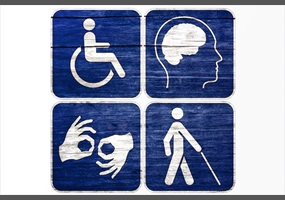
Tag: inclusion

  • Disabled People’s Action Group

    Disabled People’s Action Group

    Equality Together Bradford is a local user-led organisation for disabled people, their carers and families. Their services are currently available to people who live in the Bradford Metropolitan District. Some of their services include Self and Group Advocacy.

    Non Statutory Self & Group Advocacy is about taking control of decisions about yourself and telling others what you want.

    At Equality Together, their aim is to help you speak up and have your voice heard. They have a few ways of doing this.

    One way of doing this is through the Disabled People’s Action Group. The Disabled People’s Action Group (DPAG) is a new group of people with physical disabilities, sensory impairments, mental health issues, learning disabilities and long-term illness. 

    Their aim is to build on the work done by the Disabled People’s Forum, focusing on campaigning and highlighting issues concerning people with disabilities.

    The logo is a dark grey square with ‘Disabled People’s Action Group’ in white text down the left side. A large orange arrow symbol is on the right, pointing right. Bradford and District is in dark grey text on an orange rectangle at the bottom.

    https://www.facebook.com/DisabledPeoplesActionGroup

    Twitter – @BradfordDPAG

    http://www.equalitytogether.org.uk

  • Disabled People’s Forum in Bradford

    The Disabled People’s Forum in Bradford has officially relaunched. This is a forum which allows disabled people to have their voices heard. The forum also has a Steering Group, which I am a member of. The forum and Steering Group exist in conjunction with the Equality Together Bradford organisation. This comes after the government released its Disability Strategy, and the Bradford and District Disabled People’s Forum wants disabled people to have their say on the governments priorities, what they have missed out and any concerns they have.

    Constitution

    AIMS/OBJECTS
    1. To link disabled people and disability groups together to ensure that they have a stronger voice in the district.
    2. The forum is led by disabled people, of disabled people, for disabled people.
    3. To establish an inclusive partnership of groups bringing together representation from the widest definition of disability including people who are physically disabled, have a sensory impairment, a learning disability, who have experienced a mental health problem and people who have a long-term illness and/or limiting condition.
    4. To publicise the Forum and establish accessible ways of communicating, including a website, that will allow groups to share and exchange information and ideas.
    5. To seek to ensure that disabled people are represented on a wide range of strategic, ‘decision making’ bodies across the district.
    6. To ensure that disabled people who are ‘experts by personal experience’ are able to have a say in the
    development of services.
    7. To create a district where all disabled people can participate fully as equal citizens.

    POWERS
    1. To raise and hold funds.
    2. To obtain or lease equipment and premises.
    3. To employ staff and recruit voluntary workers.
    4. To work with other organisations.
    5. To do any other such lawful things as are necessary to achieve the aims.

    MEMBERSHIP
    Membership is open to:

    All groups of disabled people and individual disabled people who live or are based in the Bradford District and who support the aims of the Forum.

    Who have paid any annual subscription laid down from time to time by the Management Committee. Membership is currently free.
    Additionally:

    • Applications shall be made in to the Management Committee
    • Groups will nominate a named person to be their representative in all dealings with the Organisation
    • Every member shall have one vote
    • Attendees shall declare at the beginning of the meeting whether they are attending as an individual or a representative.
    • It may be that groups will have more than one representative at forum meetings – should a vote be taken groups will have only one vote,
    • The Secretary shall keep an up-to-date record of both individual and group membership

    Termination of Membership

    Membership may be terminated by the Management Committee on the grounds of a member or group acting against the objects of the Organisation or bringing the Organisation into disrepute.

    Annual General Meeting

    An annual general meeting shall be held within 15 months of the previous Annual General Meeting, the date, time and place to be determined by the committee.

    Each annual general meeting shall be convened by the Secretary who shall notify all members in writing at least 21 days before the date of that meeting.

    Any motion for consideration at the annual general meeting must be in the Secretary’s hands no later than 14 days prior to the date of the meeting.

    The business of the annual general meeting shall include:

    • adoption of annual report and accounts
    • election of the committee and its officers
    • appointment of an independent examiner

    Nominations for the committee should be submitted to the Secretary 24 hours before the annual general meeting. If there are more nominations than there are vacancies to be filled, an election will be held.

    • Every member shall be entitled to one vote.
    • Members unable to attend the Annual General Meeting

    https://www.thetelegraphandargus.co.uk/news/19647850.disabled-peoples-forum-bradford-re-launch/

  • Inclusive Communication at the Paralympic Games

    Inclusive communication is about how to produce publications that include, accurately portray, and are accessible to disabled people.

    This guidance aims to help you to:

    • communicate using inclusive language and know which words to use and avoid when writing about disability
    • include disabled people in your communications and campaigns and make sure that they’re portrayed positively and realistically
    • make sure your communications are accessible
    • choose and use appropriate communication channels to reach disabled people
    • There are over 11 million people with a long term illness, impairment or disability in Great Britain. Communicators must be confident their messages will reach everyone, including disabled people. This can be done by ensuring all communications are inclusive and accessible.

    The Office for Disability Issues wrote this guidance for government communicators but it may also be useful to others. This is predominantly used in employment, but has also been used in disability sport like the Paralympic Games.

    For example, when I represented Bermuda at the London 2012 Paralympic Games as a reporter, we were expected to use inclusive communication. We we’re expected to indicate the difference between a Paralympian and a Para-athlete.

    As per the official IPC website and catalogue on terminologies for para sportspersons, the Preferred term is Para Athlete. If however a person does compete in the Paralympics, then they become a Paralympian. If a person competes in the Paralympics once, then they will always be called a Paralympian.

    We weren’t allowed to use the term ‘disabled’, especially when writing articles and headlines. We say ‘person with disabilities’ instead of ‘disabled person’.

    This is in place to target labelling and stereotyping. It also gets rid of the stigma centred around disability.

    https://www.facebook.com/bdaparaassoc

    http://www.paralympic.org

    /https://thebridge.in/tokyo-2020-paralympics/paralympians-paralympics-tokyo-term-olympian-24595

    https://www.gov.uk/government/collections/disability-confident-campaign#become-a-disability-confident-employer

  • Disability Representation

    Disability Representation

    Disability has a negative connotation that extends beyond its definition, which includes impairments, activity limits, and participation restrictions. Disabled people’s attitudes and the degree of social exclusion they experience are manifested in actions that vary greatly depending on the kind of impairment and various social, community, and familial factors. The impact of an individual’s position, as well as the type and degree of his or her handicap, and, in particular, his or her gender, can be tremendous.

    People with Disabilities have been fighting for their right to be heard, both in their own lives, as well as in the greater community. This fight continues to this day, and I want to bring their voices and needs to the forefront. Having direct input in one’s life has a clear effect on overall health, well-being, and quality of life.

    People don’t come with labels.

    ‘You don’t look ill’! Just because you can’t see it doesn’t mean it isn’t there. A diagnosis should never define anyone.

    The skills of handicapped individuals are generally undervalued in society.

    Why is the wheelchair the only emblem used to represent disability?

    This gives a distorted view of disability. We need self respect and mutual respect.

    Wheelchair Privilege

    It is hard to acknowledge our own privilege because privilege is the other side of oppression. Some people are against talking about privilege because they don’t want to be framed as the aggressors or complicit in a system that gives them an advantage at the expense of others. Other critics of the word ‘privilege’ mistake it for a blanket term that suggests that, if you have a privilege, your whole life has been easy.

    Ultimately, privilege is not a concept designed to make people feel guilty or to diminish their achievements. Instead, waking up to how you may have certain privileges is an essential first step towards being able to decisively act, in small and large ways, to use your privilege and make the systems we were born into fairer. One example of this is wheelchair privilege.

    For example, some taxis are only equipped for manual wheelchairs, not electric ones. The physically impaired may be entitled to more benefits than any other disability group.

    In order to use your own privilege for good and to be a good ally you have to be aware, listen and speak up. Focus on equity instead of equality so that everyone is given what they need to be successful. https://www.hivelearning.com/site/resource/diversity-inclusion/5-main-types-of-privileges/

    What about the speech impaired?

    Just because you can’t speak doesn’t mean you don’t have anything to say. The Purple Vote Campaign in Wales is good at doing this. Advocating for yourself is important. Speak with me, not for me!

    Freedom of speech

    Article 21 – Freedom of expression and opinion, and access to information

    People with disabilities should be able to exercise the same rights to freedom of expression and information as other people and through all forms of communication of their choice. The UN Convention on the Rights of Persons with Disabilities (CRPD) also protects freedom of expression and the right to information. https://www.article19.org/resources/disability-and-information-what-are-your-rights/#:~:text=People%20with%20disabilities%20should%20be,and%20the%20right%20to%20information..

    States Parties shall take all appropriate measures to ensure that persons with disabilities can exercise the right to freedom of expression and opinion, including the freedom to seek, receive and impart information and ideas on an equal basis with others and through all forms of communication of their choice, as defined in article 2 of the present Convention, including by:

    a) Providing information intended for the general public to persons with disabilities in accessible formats and technologies appropriate to different kinds of disabilities in a timely manner and without additional cost;

    b) Accepting and facilitating the use of sign languages, Braille, augmentative and alternative communication, and all other accessible means, modes and formats of communication of their choice by persons with disabilities in official interactions;

    c) Urging private entities that provide services to the general public, including through the Internet, to provide information and services in accessible and usable formats for persons with disabilities;

    d) Encouraging the mass media, including providers of information through the Internet, to make their services accessible to persons with disabilities;

    e) Recognizing and promoting the use of sign languages. https://www.un.org/development/desa/disabilities/convention-on-the-rights-of-persons-with-disabilities/article-21-freedom-of-expression-and-opinion-and-access-to-information.html.

    The colour purple is used to represent the disabled community because it means royalty, status and importance.

    Purple Tuesday and the Purple Pound are business initiatives to improve customer service for people with disabilities.

    Paralympic Games is a global sports competition for people with disabilities. It is a modified version of the Olympics for people with disabilities. Highlighting abilities and maximising potential.

    International Day of People with Disabilities showcases wheelchair access, history of disability in education, disabled icons, disabled political figures and celebrates diversity. Celebrated on 3rd December every year, the International Day of Persons with Disabilities aims to promote an understanding of disability issues and to mobilise support for the dignity, rights, and well-being of persons with disabilities. Each year the day focuses on a different issue.

    Advocacy

    Advocacy includes speaking up on other people’s behalf. This could also cover unemployment amongst people with disabilities.

    ‘Disability equals diversity not disadvantage.’

    We should be accepted without having to ‘fit in’.


    Tips for Advocacy

    • Be Persistent
    • Build Effective Coalitions

    Self-Advocacy Skills

    • Be assertive vs Aggressive
    • Be direct
    • Be intentional
    • Be accurate
    • Healthcare
    • Relocating
    • Emotional Needs- Social Isolation

    Advocacy usually includes petitions, protests, lobbying, placards, propaganda, elections, party politics, and pressure groups. Being an advocate makes you an agent of change.

    The importance of rejecting society’s toxic value system

    It’s about dignity. This is important especially when fighting microaggressions. https://www.bustle.com/articles/186060-13-microaggressions-people-with-disabilities-face-on-a-daily-basis.

    At the heart of it, representation matters because people matter. Disabled persons exist in every nation and community across the world. It is essential that we respect human rights for all humans no matter their abilities or disabilities.

  • Encouraging Advocacy!

    People with Disabilities have been fighting for their right to be heard, both in their own lives, as well as in the greater community. This fight continues to this day and I want to bring their voices and needs to the forefront. Having direct input in one’s life has a clear effect on overall health, well-being, and quality of life. Learn how you can have an impact on the enhancement of individual lives, and the community, as a whole.

    What does being an ally and reducing ableism look like?

    Being an ally looks like fighting against bullies, creating awareness, being assertive, and getting your point across effectively. It’s one way of ‘amplifying community voices’. State their case like it is your case.

    While interviewing a disabled substitute teacher she said, ‘I think it is important to be able to speak up and explain our physical challenges to co-workers and others around us. As a substitute teacher, I just talk to my students and co-workers about my challenges and explain what my life is like as someone who uses crutches. I have found that people are much less likely to have “ableist” opinions if I share my story first.’

    That is what reducing ableism looks like.

    How do we get there?

    Don’t be a sceptic!

    Ask questions. Never assume.

    Think before you speak.

    Don’t judge by appearances.

    Be friendly.

    Get social workers, carers, nurses, doctors and family involved.

    http://linktr.ee/disabilityreframed

    Your Self Advocacy Toolkit

    Self Advocacy is helping you to speak up for yourself and your rights. Sometimes you just have to make them listen! http://www.advonet.org.uk/.

    In part, this is about listening to the voices of those with Disability & Chronic Illness, as they are the experts of their experiences. https://linktr.ee/ashleekelly_iammeblog?fbclid=IwAR0K_licUZMa4YuRqfTXOinH4Dn6UhBspGseLR8X1ftMd_ZUCEEKwkbHBcQ

    Self Advocacy in Goal Setting

    Effectively address self advocacy in learning or therapy programmes. Self advocacy is a learned skill.

    Unintentional Ways to Discourage Advocacy

    Bribing is one way to discourage self advocacy in childhood. Masking is another way to discourage self advocacy in adolescents. This includes:

    • Loss of identity
    • Suicidal thoughts
    • Stress and Anxiety
    • Hand controlling techniques. This makes them feel helpless. This raises concerns about consent. According to statistics, persons with disabilities are more vulnerable to victimisation than people without disabilities. Self Advocacy is a Life Saving Skill.
    • Don’t Panic

    How can we support self advocacy?

    • No means No!- Respect the No.
    • Pulling their hand away.
    • Shaking their head. Non verbal cues.
    • Communication is key. Sign language also works.
    • Follow their passions.
    • Strengths based approach. Instead of asking, ‘What’s Wrong’ ask ‘What’s working Already?’
    • Make space for them to be a decision maker.

    Include goals focussed on:

    • Boundaries
    • Emotional Regulation
    • Preferences

    Set up meetings for accountability when promises are made. This includes the education system. This includes integration in the mainstream education system instead of special schools. Special schools still have their place in society but integration is better for the sake of fairness and inclusion.

    It’s all about Empowering Yourself. I remember as a College student complaining to the directorate of college about discrimination. The learning support department didn’t seem very efficient to me. IEP meetings can also be a pain. This also encourages disability representation.

    Speak with Me Not for Me!

    I agree with this video because some people think we’re irrelevant and treat us like we’re invisible. Especially us wheelchair users. https://www.youtube.com/watch?v=sGxVz2jijK8.

    Support Self Advocacy for Loved Ones.

    Individuals with intellectual disabilities deserve a seat at the table! Just because someone can’t talk doesn’t mean they don’t have anything to say. Freedom of speech or expression shouldn’t be a challenge. Advocacy includes speaking up on other people’s behalf. This could also cover unemployment amongst people with disabilities.

    This may include:

    • Behavioural Support Plans
    • Person Centred Passports

    The service that supports you

    This should include a Recruitment Policy, Culture and Structure of an Organisation, and Consultation Process.

    There should also be a Partnership Board co-chaired by someone with a disability. It helps to change policy.

    Seniors and Self Advocacy

    Encouraging seniors to think about their needs and wants to advocate! This includes refugees.

    It raises consciousness and helps to organise seniors and local communities. Goals of advocacy should effect change in attitudes, policies, services and actions.

    Their needs may include welfare, they may want to work beyond retirement age or become an entrepreneur. Access to healthcare.

    Seniors can be or feel marginalised.

    Self Advocacy Skills

    • Be assertive vs Aggressive
    • Be direct
    • Be intentional
    • Be accurate
    • Healthcare

    Relocating

    Emotional Needs- Social Isolation

    Tips for Advocacy

    • Be Persistent
    • Build Effective Coalitions

    Advocacy also includes petitions, protests, lobbying, placards, propaganda, elections, party politics, and pressure groups. Being an advocate makes you an agent of change.

  • Interview with Access Adviser

    Q: Tell us a little bit about yourself.
    A: My name is Daniella Jade Lowe. I am a university graduate with a BA degree focused on History and Politics from the University of Bradford, England. Journalism and Politics are my passion. I am an emerging Journalist, Politician and Disability Advocate. My motive behind doing this was to be an advocate for people with disabilities. I am also marketing myself as an Access Consultant.

    Q: What is your experience of life as a disabled person?
    A: I have advocated for Wheelchair Accessibility in Bermuda, by writing various articles for numerous publications on the subject. In fact, one of the reasons why I pursued further education and started my career in England was due to Wheelchair Accessibility. During Middle School and High School, I used a Garaventa StairTrac for navigating the school for classes. I have even represented Bermuda at the London 2012 Paralympic Games as a reporter for Bermuda’s Paralympian Jessica Lewis. During the games I also assessed the level of Wheelchair Accessibility at the event.

    Q: How would you describe your disability?
    A: I was diagnosed with Spina Bifida and Hydrocephalus at birth. This condition is neurological. It comes with mobility issues and learning difficulties. As a result, I use a wheelchair for mobility.

    Q: What is accessibility like where you live?
    A
    : Accessibility is terrible in Bermuda. Accessibility is much better in England.

    Q: Where is your favourite place for accessibility & why?
    A: Bradford and Ilkley are great for Wheelchair Access because there are plenty of ramps, lifts, and flat surfaces. Leeds has Disability Confident companies too.

    Q: What is one accessibility improvement that you would like to see?
    A:
    Travelling around London can be improved especially when using the Tube or the Underground. Gatwick Airport is better for Wheelchair Accessibility than Heathrow Airport is.

    For more information about Access Adviser, please visit https://accessadvisr.net.

  • International Day of People with Disabilities

    By: Daniella Jade Lowe

    ‘Disability equals diversity not disadvantage.’

    To highlight this message, the UN has marked the International Day of Persons with Disabilities since 1992, to spread the word on disability issues and mobilise support for the dignity, rights, and well-being of persons with disabilities.

    The day also aims to draw attention to the benefits to society of including persons with disabilities in every aspect of political, social, economic, and cultural life.

    Celebrated on 3 December around the world, IDPD mobilizes support for critical issues relating to the inclusion of persons with disabilities, promotes awareness-raising about disability issues and draws attention to the benefits of an inclusive and accessible society for all. UN agencies, civil society organizations, academic institutions and the private sector are encouraged to support IDPD by collaborating with organizations for people with disabilities to arrange events and activities.

    The Australian Government has been supporting IDPwD, since 1996 and provides funds to promote and raise awareness of the day around Australia. Building on many decades of UN’s work in the field of disability, the Convention on the Rights of Persons with Disabilities, adopted in 2006, has further advanced the rights and well-being of persons with disabilities in the implementation of the 2030 Agenda for Sustainable Development and other international development frameworks, such as the Sendai Framework for Disaster Risk Reduction, the Charter on Inclusion of Persons with Disabilities in Humanitarian Action, the New Urban Agenda, and the Addis Ababa Action Agenda on Financing for Development.

    The logo of the United Nations International Day of Persons with Disabilities comprises four semi-circles of different colours representing human hands, with a solid blue circle at the centre.

    This year, in honour of International Day of People with Disabilities, WindReach Bermuda, will be hosting a Virtual Conference on 3 December 2020 with the theme of ‘Amplifying Community Voices’.

    We are hoping to address a few topics during the day including speakers on the history of disability in Bermuda, how those with disabilities are perceived, having individuals’ voices heard in their own lives. Both Employment and Accessibility will be panel discussions with Bermudian experts and those living with disabilities.

    https://www.windreachbermuda.org/donate?fbclid=IwAR22i-YNIxYvFAc4N9VqFB4x7VFmn4w4Zq4aRR1_EORJrX4ks3qBnhN52QM
  • The Equality Act: What has changed 10 years later?

    By: Daniella Jade Lowe

    What is Equality?

    Equality is the state of being equal, especially in status, rights, or opportunities. Equality is a human right. It prevents discrimination. It’s all about inclusion.

    The Equality Act 2010

    It was created in 2010. It is comprised of 115 sections, which includes the DDA. Inclusion is a key theme of this Act. It covers the workplace and society.

    Example of Unconscious bias in the Workplace 

    Historically, there has been a gender pay gap. However, this has changed, at least since 2017, according to the gender pay gap factsheet. file:///C:/Users/Daniella%20Lowe/Downloads/Gender-Pension-Gap-Factsheet.pdf. This factsheet shows evidence that people (women in particular) are now encouraged to discuss salaries with each other. This will definitely expose and clamp down on discrimination.

    For more information on how to beat the Gender Wealth Gap visit- https://www.hl.co.uk/free-guides/thank-you?SQ_DESIGN_NAME=ppc&guide=https://www.hl.co.uk/__data/assets/pdf_file/0009/16042734/Gender-Pension-Gap-Factsheet.pdf&pub=TGWG&name=on%20how%20to%20beat%20the%20gender%20wealth%20gap.

    What stayed the same?

    • Still paying lip service.
    • Disability Employment gap still remains high. But there are some improvements to this such as the Access to Work for the Self Employed. This covers disability.
    • Benefit changes have disadvantaged disabled people.

    Also, taxi drivers still overcharge wheelchair users despite the Equality Act 2010 Taxi Annexa. Well, at least that’s what my experience has been.https://www.legislation.gov.uk/ukpga/2010/15/contents.

    What does the future hold?

    • We expect more action instead of information and promises.
    • Intersectionality must be focus of progress.
    • Culture of organisations must be inclusive.
    • Inclusion cannot be bias – it means all, not our favourite parts. 

    As an overview, this means that there is still work to be done. Law reinforcement and accountability must take place. Hopefully ten years from now we can expose all inequalities and have disparities resolved.

  • Disability Crowdfunding Campaigns within the UK

    By: Daniella Jade Lowe

    I am writing this report about crowdfunding campaigning in the UK, as part of my research for the Purple Vote Campaign, in conjunction with the Legacy International Group.

    Before carrying out my research for this report, I was of the assumption that crowdfunding campaigns were only politically driven. However, to my surprise I am wrong.

    What is crowdfunding?
    Crowdfunding is a different way to raise money for good ideas. People are increasingly bypassing more traditional funding routes such as bank loans or grants and turning instead to the people around them and in their community to support their venture. It’s been around for centuries but the internet makes it possible to reach much bigger audiences than before.

    There are various types of crowdfunding campaigns such as:

    • donation-based crowdfunding
    • Reward-based crowdfunding
    • Debt crowdfunding
    • Equity crowdfunding

    DISABILITY CROWDFUNDING CAMPAIGNS IN THE UK

    Crowdfunding Campaigns are quite popular in the UK.

    SUCCESSFUL CAMPAIGNS

    According to my research, there have been some successful disability related crowdfunding campaigns within the UK.

    For example, Access Enable 1st Start Up is one disability related crowdfunding campaign, that was created to break down the social barriers disabled people face in everyday life by educating businesses about Disability, Access, and Inclusion. On 27th February 2018 they successfully raised £125 with 6 supporters in 56 days.

    Another campaign is Brainhead which was launched in 2013. BrainHead is an app developed by the Autism Diagnostic Research Centre which was successful because it ultimately led to £10,000 being raised through Crowdcube, (a crowdfunding platform) in addition to the project’s £150K grant.

    Disabled People Against Cuts in London also held a ‘Rights not Charity’ crowdfunding campaign. On 25th November 2019 they successfully raised £1,929 with 53 supporters in 28 days.

    Ability Today had a ‘Turning Disability into Ability’ campaign which was successful because they raised £6,700 on November 13th, 2019 with 160 supporters in 69 days.

    Alan Barnes Fund was successful, because they topped £300K in four days. The original target of the Alan Barnes Fund was £500. The Alan Barnes Fund was a personal appeal for health and medical reasons.

    https://fundraising.co.uk/2015/02/02/crowdfunding-campaign-alan-barnes-tops-300k-four-days/

    UNSUCCESSFUL CAMPAIGNS

    On the other hand, there have also been unsuccessful disability related crowdfunding campaigns within the UK.

    For example, Support disabled people in society. Their goal is to make websites accessible for everyone. Their vision is to support disabled people in society. Unfortunately, this project was not successful. https://www.crowdfunder.co.uk/make-websites-accessible-for-everyone

    AME Communicate offers three app-based products for people who are visually impaired, hearing-impaired, and non-native English speakers. They comprise AME Sight (an all-in-one screen magnifier, reader, and character recognition app), AME Translate (which enables users to communicate in other languages via pre-loaded phrases and words) and AME BSL (a British Sign Language interpreter and translator). This campaign was unsuccessful.

    Why?

    “Crowdfunding didn’t allow us to fully represent our goals and show the products off to their best advantage,”

    Teleford admits.

    Grippoz, an innovative wheelchair push-rim cover, crowdfunding made the prospect of developing and mass-producing the product feasible, but it failed, unfortunately, because the Grippoz Kickstarter campaign was only able to raise £5195 of the team’s £22,500 goal.

    The Peers Connection Group was an unsuccessful disability crowdfunding campaign.

    Disability Snowsport UK was also an unsuccessful disability crowdfunding campaign.

    Additional reasons why crowdfunding campaigns are unsuccessful

    Another reason why crowdfunding campaigns fail is due to the lack of momentum within the first 48 hours of launching. It is crucial that you reach a third of your target within 48 hours of launching. If you do not achieve that, studies have shown that campaigns are not likely to succeed.

    https://www.fundingcentral.org.uk/Page.aspx?SP=6549

    https://www.startups.com/library/expert-advice/crowdfunding-pros-cons

    People with disabilities should not need to crowdfund in order to afford basic independence.

    However, I suppose crowdfunding campaigns are a good alternative to charity in the face of austerity. Crowdfunding campaigns for a disability focussed political campaign sounds very effective.

    For example, Cambridge Green Party raised £300 from 10 supporters. Unfortunately, campaigning also requires money for leaflets, letters, posters, ads and more. https://www.justgiving.com/crowdfunding/VirgilGreen

    Additionally, Wales People’s Assembly against austerity, is another crowdfunding campaign that was successful. This was an anti-austerity campaign involved in organising events to protest, protect and fight austerity which negatively affects the most vulnerable. On 25th June 2015 they successfully raised £10 with 1 supporter in 28 days.

    Based on my findings, there is seemingly more successful disability focussed crowdfunding campaigns in the UK than there were unsuccessful disability focussed crowdfunding campaigns.

    As a result, I conclude that crowdfunding campaigns are the best and most effective way to make money, especially for a disability focussed political campaign. It will also be the most modern and effective way to build momentum and raise awareness for disability advocacy and political causes.

  • DANNY TURNS DOWN THE….

    DANNY TURNS DOWN THE….

    By: Daniella Jade Lowe

    Danny was a young Para-Superhero. Nobody had seen or even heard of a neurodiverse superhero. He had an adaptive costume for all occasions. His wheelchair was faster than the speed of lightning.

    Being born as a Para-Superhero, made Danny quite the ‘oddball.’ He was birthmarked to defy genetic dispositions. He demanded respect wherever he went.

    As a Para-Superhero he always wanted to prove people wrong which made him ambitious.

    ‘A superhero is supposed to save the day,’ he thought.

    ‘How can I save the day as a Para-Superhero?’ Danny thought to himself.

    Unfortunately he inherited the nickname, ‘supercrip.’

    As Danny got older he could not tolerate the stigma that came with being a Para-Superhero. Too many titles from society caused him to lose who he was. As a result, he suffered an ‘identity crisis.’

    Danny already dealt with physical limitations. He didn’t want people’s labels too. It brought intersectionality to his personality.

    The mainstream world saw Danny as ‘privileged’ but ‘abnormal’ when all he wanted was ‘acceptance’ which often led to discrimination.

    ‘What is normal?’ Danny would think to himself.

    ‘Normal is the setting on a dryer!’ he concluded.

    This one stereotype has repeated itself so much that it resounds like a broken record to Danny.

    His mother reminded him, ‘It’s not about what they call you, it’s what you answer to!’

    Stereotypes were his handicap. Danny had two options, either take life lying down or be motivated to live up to his own goals and expectations. So he started a war on stereotypes with archetypes.

    This war included fighting against exploitation of disabilities, deformities, misconceptions, and negative portrayal of disabilities. ‘Disability is not a taboo!’ he said. Inclusion is not a delusion.
    • Heroes don’t need to overcome their disabilities.
    • Wheelchairs aren’t exclusively for older people.
    • We are not “inspiration porn”.
    • Who said you need to walk in order to be a hero?
    ‘Let’s have a ‘big conversation’ on stereotypes,’ Danny exclaimed!
    ‘Stereotypes exist, definitely, but that’s why we should listen to the individual voices of disabled people over non-disabled charity voices’ Danny said!
    Danny says, ‘Let me tell you how to deal with the terrible power of stereotypes.’ ‘Disable the label!’ Assumptions are lazy. Statistics should not affect status.
    • Change the stereotypes. Challenge the ‘status quo.’ Upset the fruit basket. Walk a mile in someone else’s shoes.
    • Buffer the stereotype threat through shifting self perception to positive self affirmation.
    • Reframe the stereotype threatening task as a challenge. See a stereotype as a chance to prove people wrong instead of getting offended over it.
    • Reinterpret the anxiety that comes with stereotype threats. In other words, ‘don’t take it personal’ and make bold steps to overcome them.
    And that’s how Danny turned down the stereotypes!