Tag: identity

  • Disability Pride vs. Healing: Are We Falling into Ableism?

    The relationship between Disability Pride and healing is complex and multifaceted. While Disability Pride can be a powerful tool for self-acceptance and empowerment, it is essential to balance it with the importance of healing and recovery.

    What is disability pride?
    Disability pride is the acceptance and honoring of each person’s uniqueness, viewing it as a natural and beautiful part of human diversity. It celebrates the disabled identity and promotes self-determination, combating stigma and shame associated with disabilities.

    What is healing?

    Healing is the act or process of curing or of restoring to health. It is the process of becoming well again, especially after a cut or other injury, or of making someone well again. Wounds should be covered with a gauze dressing while healing occurs. Healing can also refer to the process in which a bad situation or painful emotion ends or improves.

    Here are some key points to consider:


    Disability Pride as a Source of Healing: Pride can foster a sense of community and connection among individuals with disabilities, which can be therapeutic. It can also serve as a reminder of the strength and resilience that come with living with a disability.

    Balancing Pride with Healing: It is important to recognize that pride and healing are not mutually exclusive. Individuals with disabilities can benefit from both aspects of the Disability Pride movement and personal healing processes.

    Addressing Ableism: The movement for Disability Pride is also a response to ableism, which can be a barrier to healing and personal growth. By challenging and countering ableism, individuals with disabilities can create a more inclusive and supportive environment for themselves and their communities.


    Seeking Professional Help: For those struggling with anxiety, depression, or other mental health issues related to their disability, seeking therapy from a professional trained in disability issues can be beneficial.

    Fostering a Culture of Healing: It is crucial to create a culture that values the healing process and recognizes the importance of personal growth and recovery alongside Disability Pride. This can involve advocating for accessible healthcare, educational resources, and legal protections that support the needs of individuals with disabilities.

    In conclusion, while Disability Pride is a vital aspect of the journey towards healing and personal growth, it is essential to maintain a balance between the two. By embracing both aspects, individuals with disabilities can work towards a more fulfilling and empowered life.

    https://www.youtube.com/watch?v=9ywYUJ8ORxI&list=PL9lUmHuFTiytByr_ZlUySjdkgUkpGojtP

    https://www.instagram.com/p/DJm0ALnNEdJ/

    https://www.psychologytoday.com/us/blog/disability-is-diversity/202008/how-disability-pride-fights-ableism?msockid=30a9b117ac516ec22315a595ad9a6fc2

    http://heartsc.org

  • The Ugly Laws

    The Ugly Laws were a series of laws passed in the United States from the 1860s to the 1970s that prohibited people with disabilities or other perceived “unattractiveness” from appearing in public.

    They continue to influence policy today, and the lives of millions of disabled Americans. The intersection between ableism, classism, & race is inseparable, and learning more about disability rights issues / history equips you to better understand social justice issues occurring globally. This is why disability pride is important.

    https://www.nationalgeographic.com/history/article/history-of-ugly-laws-america-disability?fbclid=IwY2xjawHUT6dleHRuA2FlbQIxMQABHT-H0_Y1H6DppDzMZIwA6mTxAgMhfFy7rYqoVVpquCzlv1dhCBtaZuj2Xg_aem_lOtDEhvTvCjNM1-QDCsAJA

    https://www.moderndisability.com/?fbclid=IwY2xjawHUVDtleHRuA2FlbQIxMAABHctwTw_O0DVGiF4SyEUqh2JjrC8VLulp6Ujdo6lZKQpa9y7sLdL1rlyIuA_aem_rY0LAzwS64i8IIKLby2L8A

  • What does Independence mean to me?

    All throughout life, I’ve been encouraged and trained to be independent despite being diagnosed with Spina Bifida and Hydrocephalus at birth. Independence is important to me. This pandemic has actually caused me to live at a higher level of independence, especially, in relation to self care and health care.

    Some wheelchair users prefer their own independence because receiving help makes them feel more disabled than they already are. It’s partly about dignity and respect. Other times it can be about disability pride. Their disability pride can be fuelled by entitlement, and identity. Wheelchair accessibility is one right that wheelchair users are entitled to.

    Wheelchair inaccessibility causes one to be co-dependent. I experienced this in Bermuda. I also cannot claim benefits at all in addition to relying on family. Fortunately, wheelchair accessibility enhanced my Independent Living. I experienced this in England. Wheelchair accessibility causes one to be independent because you can access things without relying on someone. I also cannot claim benefits while living with family.

    For example, when I was eight years old, I got my first manual wheelchair. From that age, I was always encouraged to push myself instead of allowing anyone to push me. This reinforced my independence.

    Another level of independence that I’ve experienced was high school. During my first year of high school, the building was nowhere near wheelchair accessible so I required hands on support. However, while in my second year of high school, it was taken away from me. I did everything on my own without a Paraeducator, because, when I transferred to the new wheelchair accessible building, it was assumed that I no longer needed support. This wasn’t a smart move because I struggled under pressure, failed two subjects and had to do Summer School to catch up on credits. This also affected my G.P.A when I graduated. This was quite stressful and frustrating for me. I cried and complained to my parents so they met with the school to sort it it out.

    However, it made me more self aware and helped me improve time management. Having an extra pair of hands helped me to navigate the school faster.

    The next example was during the first semester of my first year in college. I took classes without learning support for fear that I’d have to pay for it, because I was being treated as an international student instead of a home student. Before my January exams, lecturers raised concerns about my grades and overall progress. When this was realised, I was given assistance from learning support without paying for it. But I must admit, that it made me more organised and it improved my study skills and habit.

    Another aspect of independence that I learned, especially in college, is speaking up for myself while living independently. I had to move to another country to further my studies due to wheelchair accessibility issues.

    During my first year of college, meeting with the learning support department was very frustrating. Communication between my lecturers and the learning support department always seemed disconnected. The week or day before my exams, lecturers always asked me what was the learning support plan for my exams. This stressed me out because after every meeting, they assured me that they would share our discussion with the staff members. This almost never happened and I found myself repeating all of the information just to ensure my needs were met. This took away from my personal study time.

    However, all of these experiences taught me how to advocate for myself and cultivated the desire to advocate for others with disabilities.

    Unfortunately, due to struggling to balance studies, personal care and health I got help from disability services. This came in the form of a social worker, carers, district nurses, and a GP, after my first year of college. I received these services because I started losing weight and getting pressure ulcers. This means I had to rely on people more to help me cope with the demands of life. They helped me with cooking, cleaning, laundry and sometimes shopping. It helped me to set my priorities straight and enhanced my independence.

    Independence means taking ownership, taking responsibility, and taking action. It’s all part of maturity and putting on my ‘big girl panties.’ This is what independence means to me!

  • Disability Representation

    Disability Representation

    Disability has a negative connotation that extends beyond its definition, which includes impairments, activity limits, and participation restrictions. Disabled people’s attitudes and the degree of social exclusion they experience are manifested in actions that vary greatly depending on the kind of impairment and various social, community, and familial factors. The impact of an individual’s position, as well as the type and degree of his or her handicap, and, in particular, his or her gender, can be tremendous.

    People with Disabilities have been fighting for their right to be heard, both in their own lives, as well as in the greater community. This fight continues to this day, and I want to bring their voices and needs to the forefront. Having direct input in one’s life has a clear effect on overall health, well-being, and quality of life.

    People don’t come with labels.

    ‘You don’t look ill’! Just because you can’t see it doesn’t mean it isn’t there. A diagnosis should never define anyone.

    The skills of handicapped individuals are generally undervalued in society.

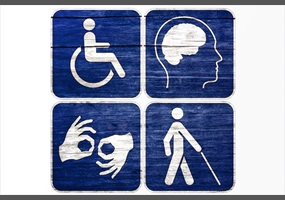
    Why is the wheelchair the only emblem used to represent disability?

    This gives a distorted view of disability. We need self respect and mutual respect.

    Wheelchair Privilege

    It is hard to acknowledge our own privilege because privilege is the other side of oppression. Some people are against talking about privilege because they don’t want to be framed as the aggressors or complicit in a system that gives them an advantage at the expense of others. Other critics of the word ‘privilege’ mistake it for a blanket term that suggests that, if you have a privilege, your whole life has been easy.

    Ultimately, privilege is not a concept designed to make people feel guilty or to diminish their achievements. Instead, waking up to how you may have certain privileges is an essential first step towards being able to decisively act, in small and large ways, to use your privilege and make the systems we were born into fairer. One example of this is wheelchair privilege.

    For example, some taxis are only equipped for manual wheelchairs, not electric ones. The physically impaired may be entitled to more benefits than any other disability group.

    In order to use your own privilege for good and to be a good ally you have to be aware, listen and speak up. Focus on equity instead of equality so that everyone is given what they need to be successful. https://www.hivelearning.com/site/resource/diversity-inclusion/5-main-types-of-privileges/

    What about the speech impaired?

    Just because you can’t speak doesn’t mean you don’t have anything to say. The Purple Vote Campaign in Wales is good at doing this. Advocating for yourself is important. Speak with me, not for me!

    Freedom of speech

    Article 21 – Freedom of expression and opinion, and access to information

    People with disabilities should be able to exercise the same rights to freedom of expression and information as other people and through all forms of communication of their choice. The UN Convention on the Rights of Persons with Disabilities (CRPD) also protects freedom of expression and the right to information. https://www.article19.org/resources/disability-and-information-what-are-your-rights/#:~:text=People%20with%20disabilities%20should%20be,and%20the%20right%20to%20information..

    States Parties shall take all appropriate measures to ensure that persons with disabilities can exercise the right to freedom of expression and opinion, including the freedom to seek, receive and impart information and ideas on an equal basis with others and through all forms of communication of their choice, as defined in article 2 of the present Convention, including by:

    a) Providing information intended for the general public to persons with disabilities in accessible formats and technologies appropriate to different kinds of disabilities in a timely manner and without additional cost;

    b) Accepting and facilitating the use of sign languages, Braille, augmentative and alternative communication, and all other accessible means, modes and formats of communication of their choice by persons with disabilities in official interactions;

    c) Urging private entities that provide services to the general public, including through the Internet, to provide information and services in accessible and usable formats for persons with disabilities;

    d) Encouraging the mass media, including providers of information through the Internet, to make their services accessible to persons with disabilities;

    e) Recognizing and promoting the use of sign languages. https://www.un.org/development/desa/disabilities/convention-on-the-rights-of-persons-with-disabilities/article-21-freedom-of-expression-and-opinion-and-access-to-information.html.

    The colour purple is used to represent the disabled community because it means royalty, status and importance.

    Purple Tuesday and the Purple Pound are business initiatives to improve customer service for people with disabilities.

    Paralympic Games is a global sports competition for people with disabilities. It is a modified version of the Olympics for people with disabilities. Highlighting abilities and maximising potential.

    International Day of People with Disabilities showcases wheelchair access, history of disability in education, disabled icons, disabled political figures and celebrates diversity. Celebrated on 3rd December every year, the International Day of Persons with Disabilities aims to promote an understanding of disability issues and to mobilise support for the dignity, rights, and well-being of persons with disabilities. Each year the day focuses on a different issue.

    Advocacy

    Advocacy includes speaking up on other people’s behalf. This could also cover unemployment amongst people with disabilities.

    ‘Disability equals diversity not disadvantage.’

    We should be accepted without having to ‘fit in’.


    Tips for Advocacy

    • Be Persistent
    • Build Effective Coalitions

    Self-Advocacy Skills

    • Be assertive vs Aggressive
    • Be direct
    • Be intentional
    • Be accurate
    • Healthcare
    • Relocating
    • Emotional Needs- Social Isolation

    Advocacy usually includes petitions, protests, lobbying, placards, propaganda, elections, party politics, and pressure groups. Being an advocate makes you an agent of change.

    The importance of rejecting society’s toxic value system

    It’s about dignity. This is important especially when fighting microaggressions. https://www.bustle.com/articles/186060-13-microaggressions-people-with-disabilities-face-on-a-daily-basis.

    At the heart of it, representation matters because people matter. Disabled persons exist in every nation and community across the world. It is essential that we respect human rights for all humans no matter their abilities or disabilities.

  • Voting with a Disability in the UK

    By: Daniella Jade Lowe

    Voting with a disability can be quite a tedious but rewarding experience. We often suffer marginalised politics for a marginalised people.

    The Electoral Voting Commission in the UK offers Accessible Voting for all. They endorse voting through accessibility videos: https://www.gov.uk/guidance/accessible-voting-for-all.

    First of all, you must register to vote, but only once you’re 18 years old or older on the day of the election. In Scotland and Wales you can vote at age 16 or over.

    You can register online or by post. However, you cannot vote online in any elections.

    Physically challenged voters and wheelchair users can vote in person because all polling stations are wheelchair accessible. They also have the option of voting by post. As a wheelchair user, while living in Bradford as a student, I voted in person. I’ve also voted in person at the St. John’s Anglican church in Ilkley.

    Vision Impaired Voters

    Vision Impaired voters can vote through Tactile Audio Device Voting. The TAD is easy to use and utilize your hearing and touch senses to vote without assistance: https://bernews.com/2020/09/tad-voting-demonstration-on-saturday/?fbclid=IwAR0i7UY4PXPDUJ1uF95-w_F3QBogRtqDwOWq8jDPpgJqHn_ZmBiWyA8wF4k.

    There’s also Proxy Voting in Wales. You can do this by asking someone to vote for you. https://assets.publishing.service.gov.uk/government/uploads/system/uploads/attachment_data/file/898774/Apply-to-vote-by-proxy-due-to-a-disability-Welsh.pdf.

    Hearing Impaired Voters

    Unfortunately, according to my research, the hearing impaired want to be included in voting at the European Parliamentary Elections, through subtitles and sign language but are still fighting for recognition. https://www.eud.eu/news/real-rights-persons-disabilities-vote-european-parliament-elections/.

    Deaf voters are demanding improvements. ‘No captions, no vote’, they say! https://inews.co.uk/opinion/no-captions-no-vote-why-deaf-voters-are-calling-for-more-accessible-campaigning-this-general-election-368084. This indicates that there is more work, by way of advocacy, to be done.

    According to statistics, one in five British voters are disabled. So why does politics ignore us?

    Austerity has been bruttal for disabled people. https://www.theguardian.com/commentisfree/2019/nov/13/disabled-people-politics-brexit-election. This is why we need elections and voting.

    Most politicians like to say ‘don’t vote, don’t complain.’

    However the disabled community has every right to complain if they’ve asked for reasonable adjustments but get ignored every time.

    Voting is about getting your voice heard. Voting is the starting point for political action. It’s about sharing political concerns, expectations and solutions. Disability voting is about tackling and dismantling oppressive systems of injustice. It is also about holding our politicians accountable. Voting should reimagine law enforcement, as well as reinforce disability justice, disability rights and disability advocacy.

    The next step after campaigning and voting would be debating disability related issues. Canvassing is about relationship building. Canvassing will most likely highlight voters concerns. It is very difficult to debate sensitive subjects that you are passionate about like Euthanasia, without letting your emotions run high.

    During my high school years, I had the privilege of participating in a political group called ‘Youth Parliament Bermuda.’ While on this team, I got a chance to debate various topics in the House of Assembly with other students. http://www.royalgazette.com/article/20070517/NEWS/305179917.

    The Disability Union is also good at doing this for legal support (https://disabilityunion.co.uk/).

    Netflix even has a disability revolution movie entitled, ‘Crip Camp’, which is a documentary about a groundbreaking summer camp which galvanizes a group of teens with disabilities, to help build a movement forging a new path towards greater equality. It also shows great impacts on disability rights and advocacy.

    Also, voting and elections is about power. Purple is also associated with royalty. The reason why the colour purple is used to represent disability is because it’s about identity : https://www.bbc.co.uk/news/blogs-ouch-25767082. As a member of the Purple Vote Campaign, this is important to know.

    Disability representation is important for inclusion, equality and identity. ‘DISABILITY VOTE MATTERS!’

    Voting might be more difficult this year than at any other point in history due to global pandemic and lack of access to voting options. This is why we are raising awareness about voting resources, rights, and the importance of the disability vote. We need everyone involved to make positive change in our communities.