Tag: disability

  • Interview with Access Adviser

    Q: Tell us a little bit about yourself.
    A: My name is Daniella Jade Lowe. I am a university graduate with a BA degree focused on History and Politics from the University of Bradford, England. Journalism and Politics are my passion. I am an emerging Journalist, Politician and Disability Advocate. My motive behind doing this was to be an advocate for people with disabilities. I am also marketing myself as an Access Consultant.

    Q: What is your experience of life as a disabled person?
    A: I have advocated for Wheelchair Accessibility in Bermuda, by writing various articles for numerous publications on the subject. In fact, one of the reasons why I pursued further education and started my career in England was due to Wheelchair Accessibility. During Middle School and High School, I used a Garaventa StairTrac for navigating the school for classes. I have even represented Bermuda at the London 2012 Paralympic Games as a reporter for Bermuda’s Paralympian Jessica Lewis. During the games I also assessed the level of Wheelchair Accessibility at the event.

    Q: How would you describe your disability?
    A: I was diagnosed with Spina Bifida and Hydrocephalus at birth. This condition is neurological. It comes with mobility issues and learning difficulties. As a result, I use a wheelchair for mobility.

    Q: What is accessibility like where you live?
    A
    : Accessibility is terrible in Bermuda. Accessibility is much better in England.

    Q: Where is your favourite place for accessibility & why?
    A: Bradford and Ilkley are great for Wheelchair Access because there are plenty of ramps, lifts, and flat surfaces. Leeds has Disability Confident companies too.

    Q: What is one accessibility improvement that you would like to see?
    A:
    Travelling around London can be improved especially when using the Tube or the Underground. Gatwick Airport is better for Wheelchair Accessibility than Heathrow Airport is.

    For more information about Access Adviser, please visit https://accessadvisr.net.

  • WHAT IS AN ASBAH AMBASSADOR?

    WHAT IS AN ASBAH AMBASSADOR?

    By: Daniella Jade Lowe

    The Association for Spina Bifida and Hydrocephalus is a charity that was founded in 1967. ASBAH is the local association and does peer support, activities and events to bring the Spina Bifida and Hydrocephalus community together.

    Katy Raven is the Project Manager for ASBAH. This charity is comprised of volunteers, parents/carers, children, adults and committee members.

    This organisation covers North and West Yorkshire which includes Cheshire, East Riding of Yorkshire, Greater Manchester, Halton-Runcorn, Halton-Widnes, Kingston Upon Hull, Lancashire, Merseyside, Middlesbrough, North East Lincolnshire, North Lincolnshire, North Staffordshire, North Yorkshire, Redcar/Cleveland, Shropshire, South Yorkshire, Wakefield, Warrington, West Yorkshire, Wigan and Wirral.

    ‘Supporting you to flourish and thrive’ is the slogan for the ASBAH foundation. By supporting, informing, and campaigning, North & West Yorkshire ASBAH is continuing to help promote individual choice, control, and quality of life for all the people who use their services.

    It is very important for people who are born with a developmental disability to have a good support network through peer support and befriending, especially if they are excluded from mainstream education and employment and always have to push for inclusion. It helps them to thrive and flourish.

    For the past 13 years, I have been a recipient of this charity’s services. They’ve helped me with medical support, educational advice, Spina Bifida clinics, job-searching assistance, interviews, companionship, advocacy, applying for financial support and wheelchair services. They also played a role in helping me get my first electric wheelchair during my first year of college.

    It all started back in the summer of 2009, when I originally moved to Bradford to start college. Upon arriving at the student accommodation, I met Miss Joan Pheasant, a chairman from the board of the ASBAH foundation. I found out about this charity through online research while still living in Bermuda. My case was slightly unusual because, I think I am the only international ASBAH member.

    For the sake of awareness, this organisation has decided to start an initiative called ASBAH Ambassadors and I’ve chosen to join in to advocate for others with Spina Bifida and Hydrocephalus.

    For example, one way that they do this is by celebrating Spina Bifida Week from October 25th to the 29th annually. During this week, they have campaigns and forums to educate people on the subject.

    In my opinion, being an ASBAH Ambassador is about disability representation, not just sharing information and advocating. It’s also about raising awareness. For me, being an ASBAH Ambassador is also about networking. This is why we have a befriending initiative too.

    I strongly feel that this charity has helped me to mature and properly manage my disability related issues. I definitely found it difficult to prioritise my medical affairs, finances, social life and education, especially during my first year of college.

    When I first started college, I remember participating in the Go Folic Campaign with ASBAH for Spina Bifida Week (https://www.totalhealth.co.uk/blog/importance-folate-prior-conception-go-folic-you-frolic). These campaigns and forums taught me how to improve the way I take care of myself, especially in diet and personal hygiene. ASBAH has definitely helped me to flourish and thrive in my health, education, social life and finances.

    Joan Pheasant has even helped me with transportation to and from appointments and legal advice (https://www.keighleynews.co.uk/news/12965951.keighley-group-takes-taxi-overcharging-campaign-district-wide/.)

    I’ve also been to various annual social events like afternoon tea at the Clevedon House in Ilkley and Christmas dinners in Leeds, as a member of the ASBAH Association. One Sunday, we even went to lunch at the Cow and Calf in Ilkley.

    I appreciate this and feel it was beneficial to me because I know what it is like to live in a country that does not provide these services. I’ve learned a lot from this charity, like how to approach interviews and applying for benefits. I also feel that my social skills have improved. This charity is definitely needed and a great asset to the community especially for the expectant families and parents with Spina Bifida and Hydrocephalus. When I grew up I didn’t have access to these services. I went to private nursery and preschool because not everyone was willing to take on a child with a disability.

    For more information, you can check out their Facebook page: https://www.facebook.com/ASBAHNWY.

    You can also log onto their website: https://www.nwyasbah.org/?fbclid=IwAR3GIzZsOSyRXiRwD7l-qiVaDIle0ezgXHk7puKhBNDnh_PEPTT6cuVuBP4.

  • Interview with Lwazi Ncube Foundation

    Interview with Lwazi Ncube Foundation

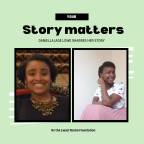
    I was given another wonderful opportunity to be interviewed by another disability oriented organisation called the Lwazi Ncube Foundation. The Lwazi Ncube Foundation is an organisation created to build, encourage and inspire others with disabilities.

    Hello, Introduce yourself – Name and what you do. My name is Daniella Jade Lowe. I do not work for anyone, but I am working on marketing myself as an Accessibility Consultant. Journalism and Politics are my passion. I have a BA degree in History and Politics.

    What type of disability do you have? At birth, I was diagnosed with Spina Bifida and Hydrocephalus which are neurological conditions. As a result, I use a wheelchair for mobility.

    What is disability to you? The only disability is a bad attitude. I have a disability. It doesn’t completely define me; it just enhances me in a way which differentiates and strengthens me. My disability should be viewed as an ability: to see the world in a different way. I don’t really like the term because sometimes it indirectly implies someone is dysfunctional or helpless. The most important thing is to never make assumptions. Someone with a disability can be very, physically, fit and strong, highly intelligent and articulate.

    What has been your experience from the time you remember till now? – positive and negative experiences. My life as a wheelchair user has been generally okay. Wheelchair Accessibility is frustrating. I was teased a little in school. Other than that, life is great.

    How do you cope with: -daily activities – your disability, do you have times when you are down – people’s reactions towards you. I have carers, a Social worker, District Nurses, a GP, and extended family in this country. I am also in contact with a local disability charity in Yorkshire. I also have a friendly landlord.

    How do you keep yourself motivated? I must stay organised and practice good time management. I also prioritise my plans. When it comes to religion, what is your belief in terms of how you were created? – do you blame God – do you trust God?

    No, I do not blame God for the way that I was born/created. Yes I’ve been prayed over before about healing but I do love my life.

    When it comes to the African society what has been your experience – if you have visited Africa what has been your experience? No experience

    Compare the UK experience with the Caribbean experience. The weather is warmer in Bermuda than the UK. The UK is bigger than Bermuda. Wheelchair Accessibility and Disability Rights is better in the UK than Bermuda. What is your word or advice to those with disabilities? Don’t let people put you in a box. You have a voice, use it. What is your word or advice to the society?

    Don’t give up on people with disabilities. Give them a chance at life. Don’t discriminate, neglect and push them to the side. Strive for inclusion for all.

    Tell us about your platforms if you have any- Blog: The View from Where I Sit Facebook: Daniella Jade Lowe Instagram: @daniellajadelowe/@theviewfromwheresitblog To follow and support the Lwazi Ncube Foundation, you can stream their YouTube channel https://www.youtube.com/channel/UCep8lS9TmXP8GPZ3oRABhYA. They can also be found on Facebook: https://www.facebook.com/lwazincubefoundation/videos. Thank you!
  • Common Ground 2020 Virtual Conference presents ‘Amplifying Community Voices’

    Common Ground 2020 Virtual Conference presents ‘Amplifying Community Voices’

    By: Daniella Jade Lowe

    On December 3, 2020, I was a panelist for a Virtual Conference hosted by the WindReach in Bermuda. This virtual conference was held in honour of ‘International Day of People with Disabilities’.

    Conference objective:

    Due to COVID-19, but even before, the needs and voices of People Living with Disabilities were often not made a priority in our social world, in our workplaces, in our schools or even in their own care and goals. Focusing our main topics of understanding on the history of disability, employment, accessibility, stigma, people’s misperceptions, and encouraging self-advocacy, we hope to address many of the issues facing Bermudians living with disabilities.

    This conference is meant to shine a light on the disability community as a whole, give space for their voices to be heard and to work on solutions to better the lives of all individuals. Everyone benefits when we collectively move towards a more inclusive society. There were ASL interpreters present throughout the whole conference. It was well organised and things went smoothly.

    During the conference, I shared the subject of Disability & Accessibility in Bermuda (Panel) alongside Chris Bulley, Vince Godber from Vision Bermuda & Keith Simmons.

    This discussion was between Panelists on the state of accessibility in Bermuda, what are the issues facing individuals accessing public and private establishments, transportation, and health care from an access perspective. Examine what laws are in place to address this, how they are used and how we can move forward to create a more accessible Bermuda.

    I also discussed how I’ve explored the option of marketing myself as an Access Consultant, and how we could do with more in Bermuda.

    I have always advocated and written articles on the subject of Wheelchair Accessibility, especially while growing up in Bermuda. This has been a longstanding issue in Bermuda, at least since 2006. I’ve even attended a ‘Brown Bag Lunch’ with Bermuda’s former Premier Dr. Ewart Brown, to discuss subjects like Wheelchair Accessibility amongst other things.

    This is a photo of former Premier Dr. Ewart Brown’s first Brown Bag Lunch.

    During Middle School and High School, I used a Garaventa StairTrac for navigating the school for classes. https://www.garaventalift.com/en/products/portable-lift-evacuation-chair/stairtrac.html.

    Accessibility can be viewed as the “ability to access” and benefit from some system or entity. The concept often focuses on people with disabilities or special needs (such as the Convention on the Rights of Persons with Disabilities) and their right of access, enabling the use of assistive technology.

    Bermuda is not wheelchair-friendly. But in the City of Hamilton, some roads have disabled-friendly sidewalks. Bermuda’s sidewalks are often very busy with pedestrians, can be steep, are not always on both sides of the road and traffic on the main road between sidewalks is often dense. It is a very hilly, with few flat places, not good for disabled people confined to a wheelchair who are not accompanied by a spouse or caregiver with the strength to lift them. Main roads are very narrow and almost always busy during the weekday especially. There are now sidewalks with sloping ramps uniformly throughout the most frequently traveled tourism and international business areas of the city. The Town of St. George is slowly improving. It is semi-rural. http://www.bermuda-online.org/disabledinBermuda.htm.

    Wheelchair Accessibility and mobility issues are additional problems that wheelchair users face daily. I experienced this many times in Bermuda, especially at school. Access alleviates the amount of limitations and restrictions on wheelchair users. Failing to ensure wheelchair accessibility is neglecting to provide reasonable adjustments. It is like functioning in dysfunction. Fortunately AccessAdvisr helps to tackle this in England. I still think that people must be mindful.

    Accessibility Consultation and Disability Services (ADS) provides inspections, assessment, and consultations for accessibility requirements like ramps, door sizes, for new buildings and renovations. The purpose of this service is to help ensure and promote accessibility for all. The Accessibility Officer reviews planning applications, upon the request of the Department of Planning or the applicant, to help ensure buildings meet accessibility requirements. For more information about the Building Codes in Bermuda visit The Department of Planning Website: https://www.gov.bm/accessibility-consultation.

    The Department of Planning has Building Control. Building Control consults with other government agencies, reviews building permit applications for compliance with Building Codes and may require professional engineer certification of structures before issuance of building permits.

    Building Control building and electrical inspectors visit the sites where construction is underway to inspect work and determine if work is in accordance with the planning approval and the building permit. It is the responsibility of the property owner to ensure inspections are requested and the owner may be required to obtain a professional engineer certification of works which have not been inspected. Requests for Certificates of Completion/Occupancy, whether partial or final, must be made in writing: https://planning.gov.bm/index.php/building-control/.

    Additionally, Bermuda businesses are taking steps to improve accessibility. In 2019, Bermuda joined the UK’s business initiative called ‘Purple Tuesday’. Companies and individuals can register in advance using an online form or can speak with accessibility advocates in Hamilton, where sign-up details are taken in-person and additional information is available.

    This initiative is part of a National Tourism Plan effort to ensure Bermuda becomes a more accessible destination for people with disabilities, an effort that will not only set the island apart but also benefit Bermudians, too.

    Some of these businesses include:

    • Ambiance Bermuda

    • Benedict Associates

    • Bermuda Connections

    • City of Hamilton

    • Dolphin Quest

    • Grotto Bay Beach Resort

    • Hamilton Princess Hotel & Beach Club

    • Lifestyles Co. Ltd.

    • Utopia Eatery

    • Department of Workforce Development

    http://bernews.com/2019/11/bermuda-celebrating-its-first-purple-tuesday/

    https://bernews.com/2019/11/bermuda-joins-global-purple-tuesday-campaign/

    Bermuda is really trying their best. On Thursday, November 26, 2020, a new pathway at St. Peter’s Church was created to make grave access for wheelchair users: https://bernews.com/2020/11/photos-st-peters-grave-access/.

    Alternatively, England even has an Access Rating Phone app, created by Mark Esho, Rich Copson, Martyn Sibley and Jignesh Vaidya. England seems to take Access Consultancy really seriously: https://www.gov.uk/government/consultations/raising-accessibility-standards-for-new-homes?fbclid=IwAR2K2mgbtIWzzJm5NIHIvJEnjjuNTaXla4KeBVe6K16IncPmAmTLNVoWHDs.

    The subject of Access also affects the visually impaired too. Public places must be accessible for them too, especially if they have little or no access to guide dogs. https://www.guidedogs.org.uk/how-you-can-help/campaigning/our-current-campaigns/access-all-areas. Vision Bermuda does this: https://visionbermuda.bm/community/advocacy.html. This is the most common ‘blind spot’ today.

    According to the British Government website, anyone can apply for a dropped kerb in England (https://www.gov.uk/apply-dropped-kerb).

    However, I get really annoyed with drivers who park across dropped kerbs. Dropped kerbs are meant to make it easy for wheelchairs to enter and exit sidewalks. Some drivers even park on top of the sidewalks blocking the walkway. We need to clamp down on this with a fine both in the UK and Bermuda.

    One solution to resolve this is through installing ramps and lifts.

    Did you know that ramps originated in Greece?

    https://www.sciencemag.org/news/2020/07/ramps-disabled-people-trace-back-ancient-greece

    Having this event is one good way to make some noise about Wheelchair Accessibility. The purpose of this virtual conference is to find a common ground on this relentless issue so that we can move forward together as a community. Finding a solution might mean compromising things for the greater good to move Bermuda forward.

    But we need more help. We need more allies, pressure groups, focus groups and need to get more people with disabilities in Parliament and The Human Rights Commission.

    I am very thankful and happy that I was given the opportunity to be a panelist for this virtual conference. I hope this virtual conference can encourage positive change and bring about a ‘new reality’ for disabled Bermudians and disabled tourists.

    https://www.accessrating.com/app/

    http://martynsibley.com/?fbclid=IwAR1vhssbmJ05WtF5-Al4Wuh0PONHxjJdqVtqcRhL9ger9etR_e5vKxiC2Co

    https://www.markesho.com/about-me/

    https://accessadvisr.net

    https://www.consultancy.org/.

    http://<iframe src=”https://www.facebook.com/plugins/post.php?href=https%3A%2F%2Fwww.facebook.com%2FPaparazziattheParalympics%2Fposts%2F359415517476902&width=500″ width=”500″ height=”299″ style=”border:none;overflow:hidden” scrolling=”no” frameborder=”0″ allowTransparency=”true” allow=”encrypted-media”></iframe>

    http://www.visionbermuda.bm/

    https://www.gotobermuda.co.uk/article/accessible-bermuda

  • DISABILITY AND VOTING IN WALES

    By: Daniella Jade Lowe


    Welsh Parliament
    There are 60 Members of the Senedd (MSs) of the Welsh Parliament.
    To vote in the Welsh Parliament elections you must:

    • be registered to vote
    • be 16 or over on the day of the election (‘polling day’)
    • live in Wales
    • not be legally excluded from voting


    MSs are elected using the Additional Member system. You vote once for your constituency MS and once for an MS to represent the wider region.


    Wales is in the west of Great Britain and is part of the UK. It has a population of 3 million. The capital city of Wales is Cardiff. People in Wales speak English and many people also speak Welsh which is quite different and older than English. Street signs in Wales are written in both languages. Wales has been politically linked with England since 1542. Wales was an independent country until it was defeated by the English army. Wales has some independence in making its own laws, but it is still very much part of the UK political system.

    Inaccessibility and stereotyping are barriers for people with disabilities in politics. https://www.bbc.co.uk/news/uk-wales-42167892


    An estimated 20% of the population are disabled, but only 1.5% of councillors are known to have a disability.


    About 600,000 people in Wales have a disability, but very few councils hold data on how many councillors are disabled.


    BBC research showed of the 1,254 councillors elected in May, just 19 are known by local authorities to be living with an impairment or long-term health condition.


    According to disabled politicians,’You have to be quite strong’: https://www.bbc.co.uk/news/uk-wales-politics-42826002.

    The Legacy International Group alongside The Purple Vote Campaign hope to change this within the Welsh Assembly during the May 2021 elections.

  • International Day of People with Disabilities

    By: Daniella Jade Lowe

    ‘Disability equals diversity not disadvantage.’

    To highlight this message, the UN has marked the International Day of Persons with Disabilities since 1992, to spread the word on disability issues and mobilise support for the dignity, rights, and well-being of persons with disabilities.

    The day also aims to draw attention to the benefits to society of including persons with disabilities in every aspect of political, social, economic, and cultural life.

    Celebrated on 3 December around the world, IDPD mobilizes support for critical issues relating to the inclusion of persons with disabilities, promotes awareness-raising about disability issues and draws attention to the benefits of an inclusive and accessible society for all. UN agencies, civil society organizations, academic institutions and the private sector are encouraged to support IDPD by collaborating with organizations for people with disabilities to arrange events and activities.

    The Australian Government has been supporting IDPwD, since 1996 and provides funds to promote and raise awareness of the day around Australia. Building on many decades of UN’s work in the field of disability, the Convention on the Rights of Persons with Disabilities, adopted in 2006, has further advanced the rights and well-being of persons with disabilities in the implementation of the 2030 Agenda for Sustainable Development and other international development frameworks, such as the Sendai Framework for Disaster Risk Reduction, the Charter on Inclusion of Persons with Disabilities in Humanitarian Action, the New Urban Agenda, and the Addis Ababa Action Agenda on Financing for Development.

    The logo of the United Nations International Day of Persons with Disabilities comprises four semi-circles of different colours representing human hands, with a solid blue circle at the centre.

    This year, in honour of International Day of People with Disabilities, WindReach Bermuda, will be hosting a Virtual Conference on 3 December 2020 with the theme of ‘Amplifying Community Voices’.

    We are hoping to address a few topics during the day including speakers on the history of disability in Bermuda, how those with disabilities are perceived, having individuals’ voices heard in their own lives. Both Employment and Accessibility will be panel discussions with Bermudian experts and those living with disabilities.

    https://www.windreachbermuda.org/donate?fbclid=IwAR22i-YNIxYvFAc4N9VqFB4x7VFmn4w4Zq4aRR1_EORJrX4ks3qBnhN52QM
  • The Equality Act: What has changed 10 years later?

    By: Daniella Jade Lowe

    What is Equality?

    Equality is the state of being equal, especially in status, rights, or opportunities. Equality is a human right. It prevents discrimination. It’s all about inclusion.

    The Equality Act 2010

    It was created in 2010. It is comprised of 115 sections, which includes the DDA. Inclusion is a key theme of this Act. It covers the workplace and society.

    Example of Unconscious bias in the Workplace 

    Historically, there has been a gender pay gap. However, this has changed, at least since 2017, according to the gender pay gap factsheet. file:///C:/Users/Daniella%20Lowe/Downloads/Gender-Pension-Gap-Factsheet.pdf. This factsheet shows evidence that people (women in particular) are now encouraged to discuss salaries with each other. This will definitely expose and clamp down on discrimination.

    For more information on how to beat the Gender Wealth Gap visit- https://www.hl.co.uk/free-guides/thank-you?SQ_DESIGN_NAME=ppc&guide=https://www.hl.co.uk/__data/assets/pdf_file/0009/16042734/Gender-Pension-Gap-Factsheet.pdf&pub=TGWG&name=on%20how%20to%20beat%20the%20gender%20wealth%20gap.

    What stayed the same?

    • Still paying lip service.
    • Disability Employment gap still remains high. But there are some improvements to this such as the Access to Work for the Self Employed. This covers disability.
    • Benefit changes have disadvantaged disabled people.

    Also, taxi drivers still overcharge wheelchair users despite the Equality Act 2010 Taxi Annexa. Well, at least that’s what my experience has been.https://www.legislation.gov.uk/ukpga/2010/15/contents.

    What does the future hold?

    • We expect more action instead of information and promises.
    • Intersectionality must be focus of progress.
    • Culture of organisations must be inclusive.
    • Inclusion cannot be bias – it means all, not our favourite parts. 

    As an overview, this means that there is still work to be done. Law reinforcement and accountability must take place. Hopefully ten years from now we can expose all inequalities and have disparities resolved.

  • Access to Work Grant 

    By: Daniella Jade Lowe

    Self employment is a form of independence for the disabled. Self employment is a form of freedom and self reliance. Many people like the idea of working for themselves because they have no one to be held accountable to. However, there are many challenges to self employment, especially for a person with a disability.

    Challenges of Self Employment

    The challenges above and beyond for a disabled self employed person:

    • Fluctuating conditions
    • Business hours affected
    • Accessing finance
    • Solutions are not always possible
    • Accessing the right advice
    • Accessing transport


    The term ‘disabled’ has the same meaning as in the Equality Act 2010. This defines disability as ‘a physical or mental impairment which has a substantial and long-term adverse effect on one’s ability to carry out normal day-to-day activities’.

    The term disabled can also include disabilities that only become apparent in the workplace. An example of this might be where you started work and found that your eyesight was affected by computer screens but had not noticed this problem before you started work.

    1.What is Access to Work?

    Access to Work is a government programme aimed at supporting disabled people to take up or remain in work. Access to Work is a discretionary grant scheme that provides personalised support to disabled people who are:

    • in paid employment
    • self-employed
    • apprentices
    • trainees
    • supported interns
    • doing self-directed work experience
    • on Jobcentre Plus promoted work trials
    • going to a job interview
    • You can also apply if you have:
    • a job offer letter
    • a job start date
    • a letter confirming your interview

    There have been changes to Access to Work due to the coronavirus outbreak.

    2.Who can get help?

    The Self Employed can apply for the Access to Work grant if they earn £6000. They can also apply if:

    • are disabled, have a mental health condition or have a long-term health condition that impacts on your ability to work;
    • are aged 16 or over; and
    • live in England, Scotland or Wales – there’s a different system in Northern Ireland
    1. What help is available?

    Access to Work support covers a wide range of interventions beyond ‘reasonable adjustments’ associated with overcoming work-related barriers resulting from disability. The support package is agreed based on individual need.

    Examples of the kind of help available through Access to Work are:

    • A communicator, advocate or BSL interpreter for a job interview, if you’re D/deaf or have communication difficulties.
    • a support worker, such as a reader for somebody with a visual impairment; communicator for a hearing impaired person; a specialist job coach for a person with a learning difficulty; or a helper for personal care needs at work
    • Specialist equipment (or alterations to existing equipment) to suit your particular need.
    • Help towards the additional costs of taxi fares if you cannot use public transport to get to work
    • Support via Access to Work’s dedicated Mental Health Support Service.
    • Young people who start a work placement with an employer as part of the Department for Education supported internship programme or a traineeship will be able to apply for Access to Work support for the time of their work placement only.

    Access to Work will fund additional travel, job coach and other support, including costs of equipment if appropriate, and promote the smooth transition into paid employment.

    No other types of unpaid internships or traineeships will qualify for Access to Work support.

    1. Help available for people with long-term mental health conditions

    A free and confidential ‘Mental Health Support Service’ is available to anyone with a mental health condition through Access to Work.

    The scheme offers:

    • Work-focused mental health support for up to nine months tailored to your needs
    • An assessment of your needs to identify suitable coping strategies
    • A personalised support plan, detailing the steps needed for you to remain in, or return to, work
    • Ideas for adjustments in the workplace or of working practice

    Support for Apprentices

    This free service supports apprentices who are feeling low, upset and struggling to keep up with their apprenticeship. It is completely confidential and run by fully trained professionals with expertise in mental health.

    To qualify for this service, you must:

    • be in an apprenticeship (attending or signed off sick); and
    • have a mental health condition that has resulted in absence, or is causing difficulties to remain in your apprenticeship
    • What help is available?

    An expert will provide you with emotional well-being support and advice for nine months; they will help you to cope better so you can concentrate on your apprenticeship; develop a step-by-step support plan to keep you on track; advice on workplace adjustments; and help an employer understand how they can best support you if you are experiencing a mental health condition.


    How to access the supporting apprentices scheme:

    Tel: 0300 456 8210
    Email: apprentices@remploy.co.uk
    https://www.remploy.co.uk/employers/mental-health-and-wellbeing/supporting-apprentices-service.

    1. Amount of grants

    There is no set amount for an Access to Work grant. How much you get depends on your specific case. The grant will only cover the support needed to let you stay in work or in self-employment.

    There is an annual cap on the total amount of support that can be provided under Access to Work; this is currently set at £60,700.

    Access to Work will pay 100 per cent of the approved costs (subject to the cap):

    • for travel to work, for a support worker/reader or a communicator for support at job interviews;
    • if you are unemployed and starting a new job;
    • if you have been working for an employer and have been in the job for less than six weeks; or
    • if you are self-employed or setting up your own business through the New Enterprise Allowance.
    • If you have been in your job for six weeks or more when you first apply for help, Access to Work will pay a proportion of the costs of support as follows: (As the employer, you will contribute 100% of costs up to the threshold level and 20% of the costs between the threshold and £10,000.
    • Employers with less than 50 staff: Access to Work can pay 80% of the approved costs.
    • Employers with 50 to 249 staff: The employer will have to pay the first £500 and Access to Work can then pay 80% of the approved costs up to £10,000.
    • Large employers with 250 or more staff: The employer will have to pay the first £1,000 and Access to Work can then pay 80% of the approved costs up to £10,000.
    • Access to Work would normally cover all additional costs over £10,000, subject to the cap.
    1. What Access to work cannot cover

    The Equality Act 2010 places a duty on an employer to make reasonable adjustments for disabled employees. Access to Work funding cannot be used to support these adjustments.

    Access to work will also not fund items which are regarded as standard equipment, standard business costs or standard health and safety requirements. This means that any item which would normally be needed to do the job, whether a person is disabled or not, will not be paid for.

    1. Students

    If you need communication help for a job interview before graduation, you should be able to access this service, even though you’re still studying.

    If you have a disability or specific learning difficulty and are studying in higher education, you may be eligible for Disabled Students’ Allowances.

    1. Employers and Access to Work

    When you’re applying for jobs, you should mention to your potential employer, either at the application stage or in your interview, that Access to Work may be available to you.

    Access to Work information for employers is available at http://www.gov.uk/government/publications/access-to-work-guide-for-employers.

    Access to Work also has an eligibility letter, which you can give to your employer or take to a job interview.

    1. How to apply?

    You can apply online.

    Telephone: 0800 121 7479

    Textphone: 0800 121 7579
    Monday to Friday, 9am to 5pm
    Find out about call charges

    British Sign Language (BSL) video relay service

    To use this, you must:

    • first check you can use the service
    • go to the video relay service
    • Monday to Friday, 9am to 5pm

    Alternative formats

    Call the Access to Work number to ask for alternative formats, such as braille, large print or audio CD.

    If you need an alternative way of contacting Access to Work to discuss your needs, you can write to:

    Access to Work
    Operational Support Unit
    Harrow Jobcentre Plus
    Mail Handling Site A
    Wolverhampton
    WV98 1JE

    Supported Internships and Traineeships

    The application process for those on supported internships and traineeships wishing to apply to Access to Work includes:

    • The provision for a supported employment provider to make an application on behalf of an education provider (education providers can still make the claim if they would like to do so)
    • One placement per month for each student
    • The ability to make applications up to three months in advance.
    • For a flowchart setting out who may be eligible for Access to Work funding and the form for applying for Access to Work funding go to:

    https://www.preparingforadulthood.org.uk/downloads/supported-internships/access-to-work-fund.htm

    Completed applications should be sent to the dedicated Access to Work team at: Atwosu.london@dwp.gsi.gov.uk.

    Northern Ireland, the Isle of Man or the Channel Islands

    You cannot get Access to Work support if you live in the Isle of Man or the Channel Islands. There is a different system in Northern Ireland.

    Forms

    Access to Work uses a specific medical form in connection with claims for travel to work. The form can be completed by someone who knows you well, giving a clear indication why you need support with travel to work. Once completed, this then needs to be signed by a medical professional to verify that the information is accurate.

    This could be your GP, Practice Nurse, Psychiatrist, Psychologist or Learning Disability Nurse, but it can’t be signed by a non-medical person such as Social Worker or Support worker.

    1. How long is Access to Work funding available for?

    Access to Work funding agreements can cover up to three years. Reviews normally take place annually to assess if continued or further funding is needed. As long as you need the funding, you should continue to get it.

    1. What if I disagree with an Access to Work decision?

    You cannot appeal against an Access to Work decision, but you can ask for it to be reconsidered by a different Access to Work Adviser. To arrange this, use the contact details at the top of your award letter.

    If your circumstances change, such as if you change employer or your job role, you can ask for your award to be reviewed.

    If you have a complaint about the service you have received from Access to Work staff, you can use the DWP complaints procedure.

    1. Where can I get more help or information?

    For general information on Access to Work, go to http://www.gov.uk/access-to-work.

    You can get help and information at your local advice centre, such as Citizens Advice. https://www.disabilityrightsuk.org/access-work.
  • Disability Crowdfunding Campaigns within the UK

    By: Daniella Jade Lowe

    I am writing this report about crowdfunding campaigning in the UK, as part of my research for the Purple Vote Campaign, in conjunction with the Legacy International Group.

    Before carrying out my research for this report, I was of the assumption that crowdfunding campaigns were only politically driven. However, to my surprise I am wrong.

    What is crowdfunding?
    Crowdfunding is a different way to raise money for good ideas. People are increasingly bypassing more traditional funding routes such as bank loans or grants and turning instead to the people around them and in their community to support their venture. It’s been around for centuries but the internet makes it possible to reach much bigger audiences than before.

    There are various types of crowdfunding campaigns such as:

    • donation-based crowdfunding
    • Reward-based crowdfunding
    • Debt crowdfunding
    • Equity crowdfunding

    DISABILITY CROWDFUNDING CAMPAIGNS IN THE UK

    Crowdfunding Campaigns are quite popular in the UK.

    SUCCESSFUL CAMPAIGNS

    According to my research, there have been some successful disability related crowdfunding campaigns within the UK.

    For example, Access Enable 1st Start Up is one disability related crowdfunding campaign, that was created to break down the social barriers disabled people face in everyday life by educating businesses about Disability, Access, and Inclusion. On 27th February 2018 they successfully raised £125 with 6 supporters in 56 days.

    Another campaign is Brainhead which was launched in 2013. BrainHead is an app developed by the Autism Diagnostic Research Centre which was successful because it ultimately led to £10,000 being raised through Crowdcube, (a crowdfunding platform) in addition to the project’s £150K grant.

    Disabled People Against Cuts in London also held a ‘Rights not Charity’ crowdfunding campaign. On 25th November 2019 they successfully raised £1,929 with 53 supporters in 28 days.

    Ability Today had a ‘Turning Disability into Ability’ campaign which was successful because they raised £6,700 on November 13th, 2019 with 160 supporters in 69 days.

    Alan Barnes Fund was successful, because they topped £300K in four days. The original target of the Alan Barnes Fund was £500. The Alan Barnes Fund was a personal appeal for health and medical reasons.

    https://fundraising.co.uk/2015/02/02/crowdfunding-campaign-alan-barnes-tops-300k-four-days/

    UNSUCCESSFUL CAMPAIGNS

    On the other hand, there have also been unsuccessful disability related crowdfunding campaigns within the UK.

    For example, Support disabled people in society. Their goal is to make websites accessible for everyone. Their vision is to support disabled people in society. Unfortunately, this project was not successful. https://www.crowdfunder.co.uk/make-websites-accessible-for-everyone

    AME Communicate offers three app-based products for people who are visually impaired, hearing-impaired, and non-native English speakers. They comprise AME Sight (an all-in-one screen magnifier, reader, and character recognition app), AME Translate (which enables users to communicate in other languages via pre-loaded phrases and words) and AME BSL (a British Sign Language interpreter and translator). This campaign was unsuccessful.

    Why?

    “Crowdfunding didn’t allow us to fully represent our goals and show the products off to their best advantage,”

    Teleford admits.

    Grippoz, an innovative wheelchair push-rim cover, crowdfunding made the prospect of developing and mass-producing the product feasible, but it failed, unfortunately, because the Grippoz Kickstarter campaign was only able to raise £5195 of the team’s £22,500 goal.

    The Peers Connection Group was an unsuccessful disability crowdfunding campaign.

    Disability Snowsport UK was also an unsuccessful disability crowdfunding campaign.

    Additional reasons why crowdfunding campaigns are unsuccessful

    Another reason why crowdfunding campaigns fail is due to the lack of momentum within the first 48 hours of launching. It is crucial that you reach a third of your target within 48 hours of launching. If you do not achieve that, studies have shown that campaigns are not likely to succeed.

    https://www.fundingcentral.org.uk/Page.aspx?SP=6549

    https://www.startups.com/library/expert-advice/crowdfunding-pros-cons

    People with disabilities should not need to crowdfund in order to afford basic independence.

    However, I suppose crowdfunding campaigns are a good alternative to charity in the face of austerity. Crowdfunding campaigns for a disability focussed political campaign sounds very effective.

    For example, Cambridge Green Party raised £300 from 10 supporters. Unfortunately, campaigning also requires money for leaflets, letters, posters, ads and more. https://www.justgiving.com/crowdfunding/VirgilGreen

    Additionally, Wales People’s Assembly against austerity, is another crowdfunding campaign that was successful. This was an anti-austerity campaign involved in organising events to protest, protect and fight austerity which negatively affects the most vulnerable. On 25th June 2015 they successfully raised £10 with 1 supporter in 28 days.

    Based on my findings, there is seemingly more successful disability focussed crowdfunding campaigns in the UK than there were unsuccessful disability focussed crowdfunding campaigns.

    As a result, I conclude that crowdfunding campaigns are the best and most effective way to make money, especially for a disability focussed political campaign. It will also be the most modern and effective way to build momentum and raise awareness for disability advocacy and political causes.

  • Dealing with Disability in the Home: Second edition of series

    By: Daniella Jade Lowe

    Housing and assisted living can be quite scarce for people with disabilities. Most times people with disabilities live with family where they rely on parents for support.

    While living with Spina Bifida and Hydrocephalus, I’ve had the privilege of living in two separate countries, which means I’ve had two separate homes. I was born in England, raised in Bermuda. I have dual nationality, which has resulted in dual perspectives on disability.

    I lived with my parents in Bermuda during my early school years, then I lived independently in England. I completed Primary, Middle and High School in Bermuda then completed college and university in England.

    Living in both countries has been an eye opener for me especially from the perspective of being a wheelchair user.

    Housing in England vs Housing in Bermuda

    Housing in England is completely different to Housing in Bermuda, especially for people with disabilities.

    During my college and university years, I lived in student accommodations that were modified for wheelchair users. Cultural differences impacted this. Once I completed university, I transferred to Assisted Independent Living. I live at a housing scheme called Five Oaks Housing Scheme under Sanctuary Housing Association in Ilkley. Sanctuary Housing Association is a housing corporation dedicated to the disabled community in the UK. https://www.sanctuary-housing.co.uk/.

    I have a great landlord who meets with the residents and I on a quarterly basis. She also communicates effectively, in-person, by phone and email. My bathroom is equipped with handrails to make transferring easy. I also use a profiling bed in addition to my height adjustable electric wheelchair. All counters and tables are low enough for me.

    However there are other people in my flat who require the use of assistive technology.

    Residents who are either unemployed or actively job seeking are eligible for Housing Benefit pays rent in the UK.

    One recurring issue that I’ve experienced in relation to housing is having access to showering facilities instead of bathing facilities. I personally prefer baths to showers.

    According to my research, Bermuda offers Summerhaven Trust. Summerhaven Trust is an assisted living residential complex that provides the opportunity for people with physical disabilities to live in the community. https://helpingservices.bm/listing/summerhaven-residential-home/

    The Bermuda Housing Corporation provides loans for the elderly and the disabled in Bermuda. https://www.bhc.bm/senior-disabled-loans/.

    For the last house that I lived in, before moving to England, my family sought to make the house wheelchair accessible with an escape route for me in case of a fire or flood, by the patio area, but the Department of Planning wouldn’t let us do so because it was too risky. Bermuda has legislation for this. https://planning.gov.bm/index.php/planning-legislation/.

    During my high school years, my father teamed up with a family friend to implement a lift at my house at one point because there were stairs to access and exit the house. Bermuda has legislation for this. http://www.bermudalaws.bm/laws/Consolidated%20Laws/Building%20Authority%20(Elevators%20and%20Lifts)%20Regulations%201962.pdf.

    Additionally, the Disabled Living Allowance is also available while living out here. I’ve also received additional support from Carers like Dignicare and Visioncare.https://www.dignicare.co.uk/, http://www.visioncare.co/.

    https://www.ilkleygazette.co.uk/news/10128744.ilkley-community-centre-back-in-business-after-a-two-year-closure/

    Wheelchair Accessibility: Functioning in Dysfunction

    This is one of the main reasons why I moved to England from Bermuda as a high school graduate.

    Wheelchair Accessibility and mobility issues are just some of the problems that I face as a wheelchair user. Access alleviates the amount of limitations and restrictions on wheelchair users. Failing to ensure wheelchair accessibility is neglecting to provide reasonable adjustments. It is like functioning in dysfunction.

    However, despite all of this, people with disabilities, like me, can lead independent lives even though we experience a restricted level of independence. Yes we do have preferences, goals and ambitions. We also have rights too.

    Throughout this whole ‘Dealing with Disability’ series, I’ve learned that both countries have endeavoured to make mandatory reasonable adjustments for people with disabilities through legislation and finances. Reasonable adjustments, finances and legislation enable us to live independently. This is the way we deal with life.