The CDC defines Disability Inclusion as “understanding the relationship between the way people function and how they participate in society, and making sure everybody has the same opportunities to participate in every aspect of life to the best of their abilities and desires.”
Accessibility is most commonly defined as the practice of making information, activities, and/or environments sensible, meaningful, and usable for as many people as possible.
The difference between these two is subtle, but important. Disability inclusion is about normalizing the experiences of people with disabilities and working to ensure they are afforded equitable opportunities to do anything that any other member of our society is able to do.
Accessibility is the practical application of removing barriers that exist specifically in physical and digital environments. Both have a goal to ensure people with disabilities are able to participate as efficiently and effectively as everyone else. Both are extremely important to the changes we want to see in the world around us. And both come with considerable complexity.
I see so many people trying to be an expert in both of them. Doing that will burn you out. We still have too much to do to fully realize the potential and impact of both of these things to let each other burn out. So here is my advice: choose one, become an expert in that, and surround yourself with others whose expertise offsets your own so that you can collectively make progress.
No matter which you choose to focus on, invest in gaining a deep understanding of people with disabilities and the various barriers they face. Think about the types of barriers you’re going to focus on removing. If you lean more towards wanting to address topics like representation, equal education and employment opportunities, or societal biases related to disability, a focus on broader disability inclusion topics will likely resonate with you more. If you want to dive deeper into specific functional or technical barriers people face within their environments, the technologies they use, and how to better enable them, I suspect accessibility will be more of what you’re looking for.
People with Disabilities have been fighting for their right to be heard, both in their own lives, as well as in the greater community. This fight continues to this day and I want to bring their voices and needs to the forefront. Having direct input in one’s life has a clear effect on overall health, well-being, and quality of life. Learn how you can have an impact on the enhancement of individual lives, and the community, as a whole.
What does being an ally and reducing ableism look like?
Being an ally looks like fighting against bullies, creating awareness, being assertive, and getting your point across effectively. It’s one way of ‘amplifying community voices’. State their case like it is your case.
While interviewing a disabled substitute teacher she said, ‘I think it is important to be able to speak up and explain our physical challenges to co-workers and others around us. As a substitute teacher, I just talk to my students and co-workers about my challenges and explain what my life is like as someone who uses crutches. I have found that people are much less likely to have “ableist” opinions if I share my story first.’
That is what reducing ableism looks like.
How do we get there?
Don’t be a sceptic!
Ask questions. Never assume.
Think before you speak.
Don’t judge by appearances.
Be friendly.
Get social workers, carers, nurses, doctors and family involved.
Effectively address self advocacy in learning or therapy programmes. Self advocacy is a learned skill.
Unintentional Ways to Discourage Advocacy
Bribing is one way to discourage self advocacy in childhood. Masking is another way to discourage self advocacy in adolescents. This includes:
Loss of identity
Suicidal thoughts
Stress and Anxiety
Hand controlling techniques. This makes them feel helpless. This raises concerns about consent. According to statistics, persons with disabilities are more vulnerable to victimisation than people without disabilities. Self Advocacy is a Life Saving Skill.
Don’t Panic
How can we support self advocacy?
No means No!- Respect the No.
Pulling their hand away.
Shaking their head. Non verbal cues.
Communication is key. Sign language also works.
Follow their passions.
Strengths based approach. Instead of asking, ‘What’s Wrong’ ask ‘What’s working Already?’
Make space for them to be a decision maker.
Include goals focussed on:
Boundaries
Emotional Regulation
Preferences
Set up meetings for accountability when promises are made. This includes the education system. This includes integration in the mainstream education system instead of special schools. Special schools still have their place in society but integration is better for the sake of fairness and inclusion.
It’s all about Empowering Yourself. I remember as a College student complaining to the directorate of college about discrimination. The learning support department didn’t seem very efficient to me. IEP meetings can also be a pain. This also encourages disability representation.
Speak with Me Not for Me!
I agree with this video because some people think we’re irrelevant and treat us like we’re invisible. Especially us wheelchair users. https://www.youtube.com/watch?v=sGxVz2jijK8.
Support Self Advocacy for Loved Ones.
Individuals with intellectual disabilities deserve a seat at the table! Just because someone can’t talk doesn’t mean they don’t have anything to say. Freedom of speech or expression shouldn’t be a challenge. Advocacy includes speaking up on other people’s behalf. This could also cover unemployment amongst people with disabilities.
This may include:
Behavioural Support Plans
Person Centred Passports
The service that supports you
This should include a Recruitment Policy, Culture and Structure of an Organisation, and Consultation Process.
There should also be a Partnership Board co-chaired by someone with a disability. It helps to change policy.
Seniors and Self Advocacy
Encouraging seniors to think about their needs and wants to advocate! This includes refugees.
It raises consciousness and helps to organise seniors and local communities. Goals of advocacy should effect change in attitudes, policies, services and actions.
Their needs may include welfare, they may want to work beyond retirement age or become an entrepreneur. Access to healthcare.
Seniors can be or feel marginalised.
Self Advocacy Skills
Be assertive vs Aggressive
Be direct
Be intentional
Be accurate
Healthcare
Relocating
Emotional Needs- Social Isolation
Tips for Advocacy
Be Persistent
Build Effective Coalitions
Advocacy also includes petitions, protests, lobbying, placards, propaganda, elections, party politics, and pressure groups. Being an advocate makes you an agent of change.
The Association for Spina Bifida and Hydrocephalus is a charity that was founded in 1967. ASBAH is the local association and does peer support, activities and events to bring the Spina Bifida and Hydrocephalus community together.
Katy Raven is the Project Manager for ASBAH. This charity is comprised of volunteers, parents/carers, children, adults and committee members.
This organisation covers North and West Yorkshire which includes Cheshire, East Riding of Yorkshire, Greater Manchester, Halton-Runcorn, Halton-Widnes, Kingston Upon Hull, Lancashire, Merseyside, Middlesbrough, North East Lincolnshire, North Lincolnshire, North Staffordshire, North Yorkshire, Redcar/Cleveland, Shropshire, South Yorkshire, Wakefield, Warrington, West Yorkshire, Wigan and Wirral.
‘Supporting you to flourish and thrive’ is the slogan for the ASBAH foundation. By supporting, informing, and campaigning, North & West Yorkshire ASBAH is continuing to help promote individual choice, control, and quality of life for all the people who use their services.
It is very important for people who are born with a developmental disability to have a good support network through peer support and befriending, especially if they are excluded from mainstream education and employment and always have to push for inclusion. It helps them to thrive and flourish.
For the past 13 years, I have been a recipient of this charity’s services. They’ve helped me with medical support, educational advice, Spina Bifida clinics, job-searching assistance, interviews, companionship, advocacy, applying for financial support and wheelchair services. They also played a role in helping me get my first electric wheelchair during my first year of college.
It all started back in the summer of 2009, when I originally moved to Bradford to start college. Upon arriving at the student accommodation, I met Miss Joan Pheasant, a chairman from the board of the ASBAH foundation. I found out about this charity through online research while still living in Bermuda. My case was slightly unusual because, I think I am the only international ASBAH member.
For the sake of awareness, this organisation has decided to start an initiative called ASBAH Ambassadors and I’ve chosen to join in to advocate for others with Spina Bifida and Hydrocephalus.
For example, one way that they do this is by celebrating Spina Bifida Week from October 25th to the 29th annually. During this week, they have campaigns and forums to educate people on the subject.
In my opinion, being an ASBAH Ambassador is about disability representation, not just sharing information and advocating. It’s also about raising awareness. For me, being an ASBAH Ambassador is also about networking. This is why we have a befriending initiative too.
I strongly feel that this charity has helped me to mature and properly manage my disability related issues. I definitely found it difficult to prioritise my medical affairs, finances, social life and education, especially during my first year of college.
When I first started college, I remember participating in the Go Folic Campaign with ASBAH for Spina Bifida Week (https://www.totalhealth.co.uk/blog/importance-folate-prior-conception-go-folic-you-frolic). These campaigns and forums taught me how to improve the way I take care of myself, especially in diet and personal hygiene. ASBAH has definitely helped me to flourish and thrive in my health, education, social life and finances.
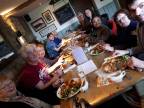
I’ve also been to various annual social events like afternoon tea at the Clevedon House in Ilkley and Christmas dinners in Leeds, as a member of the ASBAH Association. One Sunday, we even went to lunch at the Cow and Calf in Ilkley.
I appreciate this and feel it was beneficial to me because I know what it is like to live in a country that does not provide these services. I’ve learned a lot from this charity, like how to approach interviews and applying for benefits. I also feel that my social skills have improved. This charity is definitely needed and a great asset to the community especially for the expectant families and parents with Spina Bifida and Hydrocephalus. When I grew up I didn’t have access to these services. I went to private nursery and preschool because not everyone was willing to take on a child with a disability.




You must be logged in to post a comment.