By: Daniella Jade Lowe
The Association for Spina Bifida and Hydrocephalus is a charity that was founded in 1967. ASBAH is the local association and does peer support, activities and events to bring the Spina Bifida and Hydrocephalus community together.
Katy Raven is the Project Manager for ASBAH. This charity is comprised of volunteers, parents/carers, children, adults and committee members.
This organisation covers North and West Yorkshire which includes Cheshire, East Riding of Yorkshire, Greater Manchester, Halton-Runcorn, Halton-Widnes, Kingston Upon Hull, Lancashire, Merseyside, Middlesbrough, North East Lincolnshire, North Lincolnshire, North Staffordshire, North Yorkshire, Redcar/Cleveland, Shropshire, South Yorkshire, Wakefield, Warrington, West Yorkshire, Wigan and Wirral.
‘Supporting you to flourish and thrive’ is the slogan for the ASBAH foundation. By supporting, informing, and campaigning, North & West Yorkshire ASBAH is continuing to help promote individual choice, control, and quality of life for all the people who use their services.
It is very important for people who are born with a developmental disability to have a good support network through peer support and befriending, especially if they are excluded from mainstream education and employment and always have to push for inclusion. It helps them to thrive and flourish.
For the past 13 years, I have been a recipient of this charity’s services. They’ve helped me with medical support, educational advice, Spina Bifida clinics, job-searching assistance, interviews, companionship, advocacy, applying for financial support and wheelchair services. They also played a role in helping me get my first electric wheelchair during my first year of college.
It all started back in the summer of 2009, when I originally moved to Bradford to start college. Upon arriving at the student accommodation, I met Miss Joan Pheasant, a chairman from the board of the ASBAH foundation. I found out about this charity through online research while still living in Bermuda. My case was slightly unusual because, I think I am the only international ASBAH member.
For the sake of awareness, this organisation has decided to start an initiative called ASBAH Ambassadors and I’ve chosen to join in to advocate for others with Spina Bifida and Hydrocephalus.
For example, one way that they do this is by celebrating Spina Bifida Week from October 25th to the 29th annually. During this week, they have campaigns and forums to educate people on the subject.
In my opinion, being an ASBAH Ambassador is about disability representation, not just sharing information and advocating. It’s also about raising awareness. For me, being an ASBAH Ambassador is also about networking. This is why we have a befriending initiative too.
I strongly feel that this charity has helped me to mature and properly manage my disability related issues. I definitely found it difficult to prioritise my medical affairs, finances, social life and education, especially during my first year of college.
When I first started college, I remember participating in the Go Folic Campaign with ASBAH for Spina Bifida Week (https://www.totalhealth.co.uk/blog/importance-folate-prior-conception-go-folic-you-frolic). These campaigns and forums taught me how to improve the way I take care of myself, especially in diet and personal hygiene. ASBAH has definitely helped me to flourish and thrive in my health, education, social life and finances.
Joan Pheasant has even helped me with transportation to and from appointments and legal advice (https://www.keighleynews.co.uk/news/12965951.keighley-group-takes-taxi-overcharging-campaign-district-wide/.)
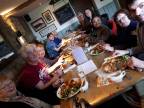
I’ve also been to various annual social events like afternoon tea at the Clevedon House in Ilkley and Christmas dinners in Leeds, as a member of the ASBAH Association. One Sunday, we even went to lunch at the Cow and Calf in Ilkley.
I appreciate this and feel it was beneficial to me because I know what it is like to live in a country that does not provide these services. I’ve learned a lot from this charity, like how to approach interviews and applying for benefits. I also feel that my social skills have improved. This charity is definitely needed and a great asset to the community especially for the expectant families and parents with Spina Bifida and Hydrocephalus. When I grew up I didn’t have access to these services. I went to private nursery and preschool because not everyone was willing to take on a child with a disability.
For more information, you can check out their Facebook page: https://www.facebook.com/ASBAHNWY.
You can also log onto their website: https://www.nwyasbah.org/?fbclid=IwAR3GIzZsOSyRXiRwD7l-qiVaDIle0ezgXHk7puKhBNDnh_PEPTT6cuVuBP4.


You must be logged in to post a comment.