Disability has a negative connotation that extends beyond its definition, which includes impairments, activity limits, and participation restrictions. Disabled people’s attitudes and the degree of social exclusion they experience are manifested in actions that vary greatly depending on the kind of impairment and various social, community, and familial factors. The impact of an individual’s position, as well as the type and degree of his or her handicap, and, in particular, his or her gender, can be tremendous.
People with Disabilities have been fighting for their right to be heard, both in their own lives, as well as in the greater community. This fight continues to this day, and I want to bring their voices and needs to the forefront. Having direct input in one’s life has a clear effect on overall health, well-being, and quality of life.
People don’t come with labels.
‘You don’t look ill’! Just because you can’t see it doesn’t mean it isn’t there. A diagnosis should never define anyone.
The skills of handicapped individuals are generally undervalued in society.
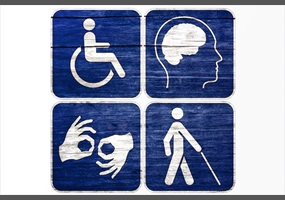
Why is the wheelchair the only emblem used to represent disability?
This gives a distorted view of disability. We need self respect and mutual respect.
Wheelchair Privilege
It is hard to acknowledge our own privilege because privilege is the other side of oppression. Some people are against talking about privilege because they don’t want to be framed as the aggressors or complicit in a system that gives them an advantage at the expense of others. Other critics of the word ‘privilege’ mistake it for a blanket term that suggests that, if you have a privilege, your whole life has been easy.
Ultimately, privilege is not a concept designed to make people feel guilty or to diminish their achievements. Instead, waking up to how you may have certain privileges is an essential first step towards being able to decisively act, in small and large ways, to use your privilege and make the systems we were born into fairer. One example of this is wheelchair privilege.
For example, some taxis are only equipped for manual wheelchairs, not electric ones. The physically impaired may be entitled to more benefits than any other disability group.
In order to use your own privilege for good and to be a good ally you have to be aware, listen and speak up. Focus on equity instead of equality so that everyone is given what they need to be successful. https://www.hivelearning.com/site/resource/diversity-inclusion/5-main-types-of-privileges/
What about the speech impaired?
Just because you can’t speak doesn’t mean you don’t have anything to say. The Purple Vote Campaign in Wales is good at doing this. Advocating for yourself is important. Speak with me, not for me!
Freedom of speech
Article 21 – Freedom of expression and opinion, and access to information
People with disabilities should be able to exercise the same rights to freedom of expression and information as other people and through all forms of communication of their choice. The UN Convention on the Rights of Persons with Disabilities (CRPD) also protects freedom of expression and the right to information. https://www.article19.org/resources/disability-and-information-what-are-your-rights/#:~:text=People%20with%20disabilities%20should%20be,and%20the%20right%20to%20information..
States Parties shall take all appropriate measures to ensure that persons with disabilities can exercise the right to freedom of expression and opinion, including the freedom to seek, receive and impart information and ideas on an equal basis with others and through all forms of communication of their choice, as defined in article 2 of the present Convention, including by:
a) Providing information intended for the general public to persons with disabilities in accessible formats and technologies appropriate to different kinds of disabilities in a timely manner and without additional cost;
b) Accepting and facilitating the use of sign languages, Braille, augmentative and alternative communication, and all other accessible means, modes and formats of communication of their choice by persons with disabilities in official interactions;
c) Urging private entities that provide services to the general public, including through the Internet, to provide information and services in accessible and usable formats for persons with disabilities;
d) Encouraging the mass media, including providers of information through the Internet, to make their services accessible to persons with disabilities;
e) Recognizing and promoting the use of sign languages. https://www.un.org/development/desa/disabilities/convention-on-the-rights-of-persons-with-disabilities/article-21-freedom-of-expression-and-opinion-and-access-to-information.html.
The colour purple is used to represent the disabled community because it means royalty, status and importance.
Purple Tuesday and the Purple Pound are business initiatives to improve customer service for people with disabilities.
Paralympic Games is a global sports competition for people with disabilities. It is a modified version of the Olympics for people with disabilities. Highlighting abilities and maximising potential.
International Day of People with Disabilities showcases wheelchair access, history of disability in education, disabled icons, disabled political figures and celebrates diversity. Celebrated on 3rd December every year, the International Day of Persons with Disabilities aims to promote an understanding of disability issues and to mobilise support for the dignity, rights, and well-being of persons with disabilities. Each year the day focuses on a different issue.
Advocacy
Advocacy includes speaking up on other people’s behalf. This could also cover unemployment amongst people with disabilities.
‘Disability equals diversity not disadvantage.’
We should be accepted without having to ‘fit in’.
Tips for Advocacy
- Build Effective Coalitions
Self-Advocacy Skills
- Be assertive vs Aggressive
- Emotional Needs- Social Isolation
Advocacy usually includes petitions, protests, lobbying, placards, propaganda, elections, party politics, and pressure groups. Being an advocate makes you an agent of change.
The importance of rejecting society’s toxic value system
It’s about dignity. This is important especially when fighting microaggressions. https://www.bustle.com/articles/186060-13-microaggressions-people-with-disabilities-face-on-a-daily-basis.
At the heart of it, representation matters because people matter. Disabled persons exist in every nation and community across the world. It is essential that we respect human rights for all humans no matter their abilities or disabilities.

You must be logged in to post a comment.