Bermuda played a crucial, though often overlooked, role in the American Revolution by supplying gunpowder and other resources to the Continental Army through covert operations and sympathetic local merchants.
Strategic Importance and Economic Context Bermuda, a small British colony in the Atlantic with limited lush land, relied heavily on trade with the American colonies for food and essential goods. The island’s population of around 12,000 could only grow enough food for about two months of the year, making trade vital for survival. Bermudian merchants had long been integrated into Atlantic trade networks, moving goods such as salt from the Turks and Caicos Islands to North America and returning with American products.
This economic interdependence created a natural alignment of interests with the American colonies, despite Bermuda’s official status as a British Crown Colony.
The Gunpowder Plot of 1775 One of the most significant contributions of Bermuda to the American Revolution was the raid on the gunpowder magazine near St. George’s. By mid-1775, George Washington’s Continental Army faced a severe shortage of gunpowder, with only enough for nine bullets per man.
Henry Tucker, a prominent Bermudian merchant sympathetic to the American cause, coordinated with Benjamin Franklin and other revolutionaries to secure gunpowder from Bermuda. On the night of August 14, 1775, Tucker’s conspirators removed over 3,100 pounds of gunpowder from the magazine and transported it to Tobacco Bay, where it was loaded onto the American ship Lady Catherine and eventually supplied to Washington’s troops in Boston.
This operation was critical in sustaining the Continental Army during the early stages of the war.
Local Support and Risks The Tucker family, influential in Bermuda, openly opposed British policies and supported the American cause, though the island’s residents had to balance their sympathies with the risk of British retaliation. The raid involved careful planning to avoid detection by Governor George James Bruere, who remained loyal to the Crown. While the operation relied on the cooperation of local Bermudians, enslaved persons likely played a key role in physically transporting the gunpowder.
Broader Contributions Beyond gunpowder, Bermuda’s maritime expertise and fast sloops facilitated the transport of essential supplies, including salt from the Turks Islands, which was crucial for preserving meat rations for the Continental Army.
Bermudian resources also supported battles such as the 1776 defense of Sullivan’s Island in South Carolina, where gunpowder from Bermuda was used.
These contributions highlight Bermuda’s role as part of an international network supporting the American Revolution, demonstrating that the conflict extended beyond the thirteen colonies.
Legacy Bermuda’s involvement in the American Revolution illustrates the island’s strategic and economic significance. The cooperation between Bermudian merchants and American revolutionaries, particularly the Tucker family’s efforts, provided critical resources that helped sustain the Continental Army during its formative campaigns.
Today, historical tours and museum exhibits in Bermuda commemorate these contributions, emphasizing the island’s often-overlooked role in the broader struggle for American independence.
Walking onto the beach, feeling the sand between your toes and as you step into the ocean you can see your feet through the clear blue water. What a wonderful experience for many, but for some of us who can’t walk, going to the beach may not be such a joyous occasion.
First of all when it comes to accessibility, there are the barriers to get into the beach and in order for a wheelchair to get through it takes two or three people to lift it over.
Also, sometimes because of various disabilities, some of us have no sensation in our feet, the waist down or even the neck down. So consequently, we don’t have the luxury of feeling the sand between our toes or the ocean on our feet, which makes it even harder to enjoy.
But aside from that, there are many swimming tools that we can use to enhance our swimming experience like rubber rings, life jackets, and other devices. There are also beach chairs available for wheelchair users to sit in while in the water.
One summer I worked as a junior counselor at an inclusive camp at Wind Reach Recreational Village. While working there, there was one little boy named Dylan who needed to use a trachea and I remember when the camp had Water Day every Friday he was not able to participate with everyone else because if he got his trachea wet it would be harmful to him.
There was also a girl there who had a problem where she had to be constantly monitored in the water and all counselors had to make sure that she didn’t fall asleep because if she did she could end up having a seizure in her sleep which is life threatening for her. Working at the camp was such an eye opener to the vast range of disabilities that are in Bermuda.
Do you think disability awareness should be more commonly taught in schools?
Here are five reasons why I believe it should be part of the educational curriculum:
Promotes Inclusion and Acceptance: Teaching disability awareness helps students understand and appreciate the diversity of abilities and experiences among their peers. This promotes an inclusive environment where everyone feels accepted and valued.
Reduces Stigma and Prejudice: Education about disabilities can challenge and change negative stereotypes and misconceptions. By demystifying disabilities, students are less likely to develop prejudiced attitudes and are more likely to treat everyone with respect.
Fosters Empathy and Compassion: Learning about the challenges faced by individuals with disabilities can cultivate empathy and compassion in students. This can lead to more supportive and understanding peer relationships.
Prepares Students for Real-World Diversity: The world outside of school is diverse, and students will inevitably encounter individuals with disabilities in various contexts throughout their lives. Understanding disability helps prepare students to interact positively and effectively with people of all abilities.
Encourages Advocacy and Allyship: When students are educated about disability issues, they are more likely to become advocates for disability rights and allies to people with disabilities. This can lead to broader societal changes and improvements in accessibility and equality.
Disability, belonging, fitting in, and inclusion are all important concepts that relate to creating a more equitable and inclusive society. While they are related, they each have distinct meanings.
Disability refers to a physical or mental impairment that limits a person’s ability to perform certain tasks or activities. It is important to recognize that disability is not a personal failing, but rather a natural part of human diversity. This usually makes people ‘stand out’ by default.
Belonging, fitting in, and inclusion are all important aspects of creating a positive and productive work environment. According to a report by Bain & Company, building inclusive teams improves performance and is the right thing to do. It also pays off in recruitment, retention, and better teamwork. People describe what being included looks and feels like in remarkably similar ways. Helping everyone feel included is deceptively difficult, but organizations can navigate the complexities by marrying systemic change with more inclusive behaviours.
In summary:
Fitting in means conforming to group norms.
It can lead to suppressing one’s true identity to gain acceptance.
People may prioritize conformity over individuality.
Being included celebrates diversity and uniqueness.
It promotes a sense of belonging based on shared values of respect and empathy.
Allows individuals to feel valued for their authentic selves.
It’s been six years since I graduated from University. As I reminisce on this milestone, navigating College and University Life independently, as a disabled student, was tricky. The British education system is quite competitive compared to Bermuda. Essex and London was my original goal and preference but it didn’t work out. Therefore, Bradford became my stomping ground.
My High School G.P.A wasn’t good enough to go straight to University, so after I moved to England I went to College first then University. I never completed G.C.S.E’s. I attempted A Levels but failed. This can be discouraging for an Audio-visual Learner.
As soon as I got here, the Bradford College International Office insisted on meeting me just to make sure that this was something I wanted to do. They expressed concerns about me getting homesick. They seemed more nervous than me.
Before I officially pursued Higher Education, the Bradford College told me that I needed an electric wheelchair because Bradford is very hilly. I was also notified that if I wished to receive any help from Learning Support, I would have to pay for it, because I was seen as an International Student and not a Home Student. Later on I found out that this wasn’t true and I was able to receive Learning Support without the extra charge.
While advocating for myself, I felt that I was talking a lot more to get what I needed. I tried not to be vocal and vulgar, but it was frustrating. This didn’t help with my organisational skills either. After the first four months I wanted to quit, but my parents wouldn’t let me.
By January, the head of A Levels Department and head of Learning Support met with me to discuss and express concerns about my academic progress within the first four months. They predicted that I would fail the course before the year was out. A Levels required loads of self study and unstructured study skills. I even got personal online tutorials in addition to College lectures.
A Level Lecturers were allowed to pick, choose and refuse to put students forward for a mock or final exam, regardless of academic progress and results.
Exams were answered in essay format and not one line answers. For A-Levels, answers were marked based on quantity. They did word and line count. University lecturers didn’t do that.
However, my degree was heavily coursework based and essays were marked based on quality of answer. They were also written in essay format and not one line answers. Spelling, grammar and punctuation also contributed to your exam results.
Learning support provided specialist equipment, extra exam time, essay structuring and preparation, as well as exam scribes or lecture scribes.
I found referencing and bibliographies confusing at times, especially when writing my dissertation. In University, I had to use the Harvard Referencing System for essays and the Numeric Referencing System showing footnotes for my dissertation.
To make matters worse, referencing a book is different to referencing an e-book and the list goes on. Then I submitted my coursework through Turnitin, a plagiarism detector. If Turnitin processed your coursework and found 50% of it was copied from other sources and not written in your own words, then you automatically failed without the teacher marking it.
Freshers Fair vs. Student Orientation
In the UK, the first couple of weeks of university are referred to as “freshers week” or “welcome week”. This is because the first-year students are fresh to the university. It’s a great time to make new friends, get started on your classes, join clubs and societies and find your way around your campus and local area. Most universities start freshers week around the end of September when the students arrive for the new academic year.
Some universities may have two weeks of “freshers” and so may start a little earlier in the middle of September. Throughout the week (or two) your university will offer activities, meet and greets, and other events to allow students to socialise and get to know their university. This is also the time when students can sign up to the local health centre, register for their library card and apply for their student cards.
Halls of residence will host events to help you settle into your living space and meet other students living in the building. The local off-campus restaurants, pubs and nightclubs often offer discounts, deals and themed nights to help students settle into the area.
Even though Bermuda doesn’t have Universities, the rest of the school system provides Student Orientation at the beginning of the year. I feel that Student Orientation in Bermuda’s schools actually prepared you for your course. England, on the other hand, gives you a list of school supplies needed for each subject and then you are left to figure it out on your own.
Student Finance and Benefits
I feel that students who claim disability are well funded. This helped me, especially since I chose not to work while studying. You can apply for:
Disabled Student’s Allowance
Disabled Living Allowance
This also makes things a little easier while living independently, studying, managing my health and finding the time to have a social life. All of these experiences taught me to believe in myself, encourage myself and not give up even when it seemed like the lecturers doubted me. Even though navigating the education system was tricky, I am proud of myself for pursuing and persevering.
Medical House’s Managing Director is Mickey Robinson. Mickey started Medical House in 1995.
Mickey’s greatest joy is when our customers of all ages communicate how Medical House staff have helped them get through and overcome challenges in their homes or workplaces.
Medical House is a reliable and caring company that provides the very best products and services in the industries we represent. We are leaders in Medical Supplies, Home Health care, PPE supplies, Uniforms and Footwear; and Restaurant, Janitorial and Safety supplies. Our established and professional team are here to serve you. They are similar to BACES in Bradford.
SERVICES
We offer skilled consultation with our occupational therapy, physiotherapy and nursing team.
Assessments, CPAP and Oxygen services by self referral or health care provider
For example, as a disabled customer, I’ve also purchased other items from them like Urine Off spray to clean my wheelchair and new wheelchair cushions.
They also encourage Compression Therapy. Compression therapy is an effective treatment used to help increase blood circulation in the lower legs, ankles, and feet. The elastic in the stockings helps provide compression to prevent blood from pooling up and fluid from building up in the legs, ankles, or feet. There are different categories of pressure depending on the condition of the individual and how much compression they require.
Sherrie-Lynn Lilley is the Founder/Director of Inspire Bermuda.
This week Inspire Bermuda is celebrating women with disabilities for Women’s History Month!
Today we would like to honour the wonderful and inspiring Kathleen Margaret Carter.
She was the founder and long-time chairperson of the Bermuda Physically Handicapped Association, Kathleen Margaret Carter championed the cause of people with disabilities.
She was herself disabled, and one of only a handful of Bermudians of her generation with a disability to receive access to a formal education. That, along with her talents as an organizer and writer and her media savviness, combined to make her a formidable spokeswoman.
It was largely because of her activism that the needs of handicapped Bermudians were placed on the national agenda. It led to more employment opportunities for the disabled and heightened public awareness of the need to make buildings and streets in Hamilton more accessible to people in wheelchairs.
Without her influence, Summerhaven, the residence for the physically handicapped in Smith’s, would not have been built, and the Human Rights Act would never have been amended to include people with disabilities.
Carter was the only child of George Caswell Carter, a British engineer who came to Bermuda to work for the Bermuda Electric Light Company, and Margaret Daisey (born Taylor) Carter. She was born with muscular dystrophy, a degenerative disease that put her permanently in a wheelchair by age 11.
She received her early schooling at Mount St. Agnes Academy. When she was 13, she left the island to receive rehabilitation at Pinderfields Hospital in Yorkshire, England. Carter remained in the United Kingdom for three years and relied on her sense of humour to cope with her loneliness and isolation.
On her return to Bermuda, she completed a correspondence course in creative writing and began to develop her talents as a writer and a doll maker.
By the 1960s, she had written a novel based on her experiences in the rehab hospital, but despite favorable reviews from publishers, it never made it into print.
She self-published two pamphlets “1609 was a Very Funny Year”, a satirical account of Bermuda’s settlement, and “Bermuda Joe”, about a talking sea horse with the secret for world peace.
She began laying the groundwork for university education when she completed Colin Benbow’s G.C.E. history course, which he taught on television. Courses taken through Queen’s University Extension in Bermuda followed, which led to her receiving a Bachelor of Arts with a major in psychology from Queen’s in 1983.
Carter’s life as an activist began when she took out a newspaper ad, asking people who were disabled to contact her. The result was the formation of the Bermuda Physically Handicapped Association (BPHA) in 1970. It became the forum through which Carter, working with a team of disabled and able-bodied members, led the fight for jobs and greater access to transportation and the integration of children with disabilities into the regular school system.
By 1991, the BPHA could claim success in a number of areas. There were nine hydraulic buses on the roads, where there were none in the 1970s, providing transportation for residents and tourists with disabilities.
A swimming pool had also been built at St. Brendan’s Hospital for use by the disabled for physical therapy, and amendments to the building code, requiring all new buildings to be accessible to the handicapped were on their way to Parliament. Hamilton City Hall had led the way, installing ramps and later an elevator.
Carter served on a number of boards including Summerhaven’s and Government’s Human Rights Commission and the Rehabilitation Council. Her activism extended to the anti-Apartheid Group, which she helped found.
She was a member of the Bermuda Writers’ Collective, and her short stories were included in two of its collections, Palmetto Wine, published in 1990, and An Isle So Long Unknown, which was published in her memory in 1993.
In 1992, while attended a creative writing workshop led by Barbadian writer George Lamming, Carter suffered a stroke from which she never recovered.
Her funeral, which was held at the Anglican Cathedral, was attended by artists and activists, Government and Opposition figures, clergy from different denominations and a host of friends.
I never knew what pressure ulcers were until I got one for almost all pressure points. I am currently facing possible amputation. If this happens what am I gonna do?
24 hour support will be needed. I don’t like the idea of amputation. The problem is, I’ve been having pressure ulcers, foot x-rays and MRIs/CTIs. I’ve had a series of meetings about my right foot. I’ve got antibiotics to take. Blood sugars, protein levels, blood circulation, feet pulses and kidneys all contribute to the feet. I also got to see photos from MRI scans. I got permission to take photos of them. The heel bone is infected. I know what it’s like to be cured of pressure ulcers, but they keep returning, especially on my feet. What’s going on?
As a result, I have chosen to join the fight against pressure ulcers.
During my first year of college, the pressure ulcers started. When this happened, I got a social worker, carers, District Nurses from the Chelsea and Westminster Hospital in London while studying. I also have a Tissue Viability Nurse and a Podiatrist. Before the pandemic, I visited the doctor’s office for appointments. Now I get home visits.
One day, the wound on my right foot seemed smelly to the nurse as if it’s infected so I was on antibiotics for 7 days. Sensation and movement is limited from the ankles down as a result of lower spine damage due to Spina Bifida. Pressure ulcers can also be caused by bed mattresses or wheelchairs. Bermuda has a lack of resources and a lack of information. There are no Spina Bifida clinics/specialists in Bermuda. Lived with parents. Swimming in the salt ocean in Bermuda beaches has contributed to the healing process. Before England and College, I had no pressure ulcers.
Podiatry and District Nurses tend to clash from time to time. District Nurses visit three times a week while Podiatry only visited once. District Nurses know how to dress my foot correctly. Which one is more important?
Pressure Sores (also called bedsores or decubitus ulcers) Pressure sores, also called bedsores or decubitus ulcers, are areas of broken skin and underlying tissues that have been damaged by pressure. Pressure (such as sitting in the same position for too long) restricts blood being supplied to the area, so the tissues become deprived of oxygen and toxins build up, which causes the skin and tissue cells to die. People with Spina Bifida may not feel this damage beginning because of reduced feeling in parts of their body.
PURSUN GROUP IN LEEDS Prevention is better than cure! You must have tough skin. Pay attention to pressure points. Additionally, make sure you have good quality, well-fitting shoes that do not cause red marks on your feet. You may want to ask your GP to refer you to an orthotics centre to have shoes made especially for you. The styles are much better than they used to be!
Make sure you have a well-fitting wheelchair with a pressure-relieving/ reducing cushion. Pressure mapping in the wheelchair cushion. Always use your footplates to support your feet and stop your legs from ‘hanging down’, which is bad for the circulation. Ergonomic Assessment required.
Feet must be elevated above the head, especially in bed, for good circulation. Check your wheelchair does not leave red marks on your legs or body. When you see a reddened area of skin, tell your GP straightaway. Don’t wait to see if it improves on its own. If left untreated they can take a lot longer to heal. If you do have a skin breakdown, make sure your health professionals look at the reasons why it happened, and don’t just apply dressings. Change your sitting position frequently throughout the day and have a chair at home to sit in other than your wheelchair. Try to spend part of each day off your bottom. Check your skin regularly for pressure sores using a mirror to see areas of your body you cannot see otherwise. Pay particular attention to areas of skin where you have little or no feeling.
Massage is now advised against as recent evidence suggests that it is not beneficial for pressure areas and may be harmful.
Hygiene: Access to Showering facilities instead of bathing facilities in England. District nurses clean and dress wound 3x a week maximum, in addition to personal daily showering. Skin care included Aqueous cream. No scented creams are allowed on broken skin. I shower daily but due to pressure ulcers and a PICO, I also use a LIMBO to cover my damaged foot to keep it clean and dry.
Why does immobility cause pressure ulcers? Poor mobility/immobility: Patients who are unable to independently change position are at increased risk of developing a pressure ulcer, due to pressure exerted over bony body parts which results in reduced blood flow to the tissues and subsequent hypoxia.
CURE
I also use a Profile bed, I prefer loose clothing vs tight clothing like dresses or sweat suits. Compression socks/stockings/orthopaedic shoes/socks because sensation and movement is limited from my ankles down.
Incontinence can also contribute to pressure ulcers. Pressure ulcers must be kept clean and dry. Previously during the first four months of my first year in college, I skipped meals for the sake of my studies. I was also given a Dietician who put me on a high protein diet. My meal plan looks something like this:
Unplanned weight loss is a major risk factor for malnutrition and pressure ulcer development. Suboptimal nutrition interferes with the function of the immune system, collagen synthesis, and tensile strength.
Pressure Ulcer Prevention at Home
Treat your skin gently to help prevent pressure ulcers.
When washing, use a soft sponge or cloth.
Use moisturizing cream and skin protectants on your skin every day.
Clean and dry areas underneath your breasts and in your groin.
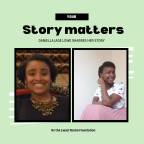
I was given another wonderful opportunity to be interviewed by another disability oriented organisation called the Lwazi Ncube Foundation. The Lwazi Ncube Foundation is an organisation created to build, encourage and inspire others with disabilities.
Hello,Introduce yourself – Name and what you do.
My name is Daniella Jade Lowe. I do not work for anyone, but I am working on marketing myself as an Accessibility Consultant. Journalism and Politics are my passion. I have a BA degree in History and Politics.
What type of disability do you have?
At birth, I was diagnosed with Spina Bifida and Hydrocephalus which are neurological conditions. As a result, I use a wheelchair for mobility.
What is disability to you?
The only disability is a bad attitude. I have a disability. It doesn’t completely define me; it just enhances me in a way which differentiates and strengthens me. My disability should be viewed as an ability: to see the world in a different way. I don’t really like the term because sometimes it indirectly implies someone is dysfunctional or helpless. The most important thing is to never make assumptions. Someone with a disability can be very, physically, fit and strong, highly intelligent and articulate.
What has been your experience from the time you remember till now? – positive and negative experiences.
My life as a wheelchair user has been generally okay. Wheelchair Accessibility is frustrating. I was teased a little in school. Other than that, life is great.
How do you cope with: -daily activities – your disability, do you have times when you are down – people’s reactions towards you.
I have carers, a Social worker, District Nurses, a GP, and extended family in this country. I am also in contact with a local disability charity in Yorkshire. I also have a friendly landlord.
How do you keep yourself motivated?
I must stay organised and practice good time management. I also prioritise my plans.
When it comes to religion, what is your belief in terms of how you were created? – do you blame God – do you trust God?
No, I do not blame God for the way that I was born/created. Yes I’ve been prayed over before about healing but I do love my life.
When it comes to the African society what has been your experience – if you have visited Africa what has been your experience?
No experience
Compare the UK experience with the Caribbean experience.
The weather is warmer in Bermuda than the UK. The UK is bigger than Bermuda. Wheelchair Accessibility and Disability Rights is better in the UK than Bermuda.
What is your word or advice to those with disabilities?
Don’t let people put you in a box. You have a voice, use it.
What is your word or adviceto the society?
Don’t give up on people with disabilities. Give them a chance at life. Don’t discriminate, neglect and push them to the side. Strive for inclusion for all.
On December 3, 2020, I was a panelist for a Virtual Conference hosted by the WindReach in Bermuda. This virtual conference was held in honour of ‘International Day of People with Disabilities’.
Conference objective:
Due to COVID-19, but even before, the needs and voices of People Living with Disabilities were often not made a priority in our social world, in our workplaces, in our schools or even in their own care and goals. Focusing our main topics of understanding on the history of disability, employment, accessibility, stigma, people’s misperceptions, and encouraging self-advocacy, we hope to address many of the issues facing Bermudians living with disabilities.
This conference is meant to shine a light on the disability community as a whole, give space for their voices to be heard and to work on solutions to better the lives of all individuals. Everyone benefits when we collectively move towards a more inclusive society. There were ASL interpreters present throughout the whole conference. It was well organised and things went smoothly.
During the conference, I shared the subject of Disability & Accessibility in Bermuda (Panel) alongside Chris Bulley, Vince Godber from Vision Bermuda & Keith Simmons.
This discussion was between Panelists on the state of accessibility in Bermuda, what are the issues facing individuals accessing public and private establishments, transportation, and health care from an access perspective. Examine what laws are in place to address this, how they are used and how we can move forward to create a more accessible Bermuda.
I also discussed how I’ve explored the option of marketing myself as an Access Consultant, and how we could do with more in Bermuda.
I have always advocated and written articles on the subject of Wheelchair Accessibility, especially while growing up in Bermuda. This has been a longstanding issue in Bermuda, at least since 2006. I’ve even attended a ‘Brown Bag Lunch’ with Bermuda’s former Premier Dr. Ewart Brown, to discuss subjects like Wheelchair Accessibility amongst other things.
This is a photo of former Premier Dr. Ewart Brown’s first Brown Bag Lunch.
Accessibility can be viewed as the “ability to access” and benefit from some system or entity. The concept often focuses on people with disabilities or special needs (such as the Convention on the Rights of Persons with Disabilities) and their right of access, enabling the use of assistive technology.
Bermuda is not wheelchair-friendly. But in the City of Hamilton, some roads have disabled-friendly sidewalks. Bermuda’s sidewalks are often very busy with pedestrians, can be steep, are not always on both sides of the road and traffic on the main road between sidewalks is often dense. It is a very hilly, with few flat places, not good for disabled people confined to a wheelchair who are not accompanied by a spouse or caregiver with the strength to lift them. Main roads are very narrow and almost always busy during the weekday especially. There are now sidewalks with sloping ramps uniformly throughout the most frequently traveled tourism and international business areas of the city. The Town of St. George is slowly improving. It is semi-rural. http://www.bermuda-online.org/disabledinBermuda.htm.
Wheelchair Accessibility and mobility issues are additional problems that wheelchair users face daily. I experienced this many times in Bermuda, especially at school. Access alleviates the amount of limitations and restrictions on wheelchair users. Failing to ensure wheelchair accessibility is neglecting to provide reasonable adjustments. It is like functioning in dysfunction. Fortunately AccessAdvisr helps to tackle this in England. I still think that people must be mindful.
Accessibility Consultation and Disability Services (ADS) provides inspections, assessment, and consultations for accessibility requirements like ramps, door sizes, for new buildings and renovations. The purpose of this service is to help ensure and promote accessibility for all. The Accessibility Officer reviews planning applications, upon the request of the Department of Planning or the applicant, to help ensure buildings meet accessibility requirements. For more information about the Building Codes in Bermuda visit The Department of Planning Website: https://www.gov.bm/accessibility-consultation.
The Department of Planning has Building Control. Building Control consults with other government agencies, reviews building permit applications for compliance with Building Codes and may require professional engineer certification of structures before issuance of building permits.
Building Control building and electrical inspectors visit the sites where construction is underway to inspect work and determine if work is in accordance with the planning approval and the building permit. It is the responsibility of the property owner to ensure inspections are requested and the owner may be required to obtain a professional engineer certification of works which have not been inspected. Requests for Certificates of Completion/Occupancy, whether partial or final, must be made in writing: https://planning.gov.bm/index.php/building-control/.
Additionally, Bermuda businesses are taking steps to improve accessibility. In 2019, Bermuda joined the UK’s business initiative called ‘Purple Tuesday’. Companies and individuals can register in advance using an online form or can speak with accessibility advocates in Hamilton, where sign-up details are taken in-person and additional information is available.
This initiative is part of a National Tourism Plan effort to ensure Bermuda becomes a more accessible destination for people with disabilities, an effort that will not only set the island apart but also benefit Bermudians, too.
However, I get really annoyed with drivers who park across dropped kerbs. Dropped kerbs are meant to make it easy for wheelchairs to enter and exit sidewalks. Some drivers even park on top of the sidewalks blocking the walkway. We need to clamp down on this with a fine both in the UK and Bermuda.
One solution to resolve this is through installing ramps and lifts.
Having this event is one good way to make some noise about Wheelchair Accessibility. The purpose of this virtual conference is to find a common ground on this relentless issue so that we can move forward together as a community. Finding a solution might mean compromising things for the greater good to move Bermuda forward.
But we need more help. We need more allies, pressure groups, focus groups and need to get more people with disabilities in Parliament and The Human Rights Commission.
I am very thankful and happy that I was given the opportunity to be a panelist for this virtual conference. I hope this virtual conference can encourage positive change and bring about a ‘new reality’ for disabled Bermudians and disabled tourists.




You must be logged in to post a comment.