Category: The Purple Vote Campaign

  • Disabled People’s Forum in Bradford

    The Disabled People’s Forum in Bradford has officially relaunched. This is a forum which allows disabled people to have their voices heard. The forum also has a Steering Group, which I am a member of. The forum and Steering Group exist in conjunction with the Equality Together Bradford organisation. This comes after the government released its Disability Strategy, and the Bradford and District Disabled People’s Forum wants disabled people to have their say on the governments priorities, what they have missed out and any concerns they have.

    Constitution

    AIMS/OBJECTS
    1. To link disabled people and disability groups together to ensure that they have a stronger voice in the district.
    2. The forum is led by disabled people, of disabled people, for disabled people.
    3. To establish an inclusive partnership of groups bringing together representation from the widest definition of disability including people who are physically disabled, have a sensory impairment, a learning disability, who have experienced a mental health problem and people who have a long-term illness and/or limiting condition.
    4. To publicise the Forum and establish accessible ways of communicating, including a website, that will allow groups to share and exchange information and ideas.
    5. To seek to ensure that disabled people are represented on a wide range of strategic, ‘decision making’ bodies across the district.
    6. To ensure that disabled people who are ‘experts by personal experience’ are able to have a say in the
    development of services.
    7. To create a district where all disabled people can participate fully as equal citizens.

    POWERS
    1. To raise and hold funds.
    2. To obtain or lease equipment and premises.
    3. To employ staff and recruit voluntary workers.
    4. To work with other organisations.
    5. To do any other such lawful things as are necessary to achieve the aims.

    MEMBERSHIP
    Membership is open to:

    All groups of disabled people and individual disabled people who live or are based in the Bradford District and who support the aims of the Forum.

    Who have paid any annual subscription laid down from time to time by the Management Committee. Membership is currently free.
    Additionally:

    • Applications shall be made in to the Management Committee
    • Groups will nominate a named person to be their representative in all dealings with the Organisation
    • Every member shall have one vote
    • Attendees shall declare at the beginning of the meeting whether they are attending as an individual or a representative.
    • It may be that groups will have more than one representative at forum meetings – should a vote be taken groups will have only one vote,
    • The Secretary shall keep an up-to-date record of both individual and group membership

    Termination of Membership

    Membership may be terminated by the Management Committee on the grounds of a member or group acting against the objects of the Organisation or bringing the Organisation into disrepute.

    Annual General Meeting

    An annual general meeting shall be held within 15 months of the previous Annual General Meeting, the date, time and place to be determined by the committee.

    Each annual general meeting shall be convened by the Secretary who shall notify all members in writing at least 21 days before the date of that meeting.

    Any motion for consideration at the annual general meeting must be in the Secretary’s hands no later than 14 days prior to the date of the meeting.

    The business of the annual general meeting shall include:

    • adoption of annual report and accounts
    • election of the committee and its officers
    • appointment of an independent examiner

    Nominations for the committee should be submitted to the Secretary 24 hours before the annual general meeting. If there are more nominations than there are vacancies to be filled, an election will be held.

    • Every member shall be entitled to one vote.
    • Members unable to attend the Annual General Meeting

    https://www.thetelegraphandargus.co.uk/news/19647850.disabled-peoples-forum-bradford-re-launch/

  • Disability Representation

    Disability Representation

    Disability has a negative connotation that extends beyond its definition, which includes impairments, activity limits, and participation restrictions. Disabled people’s attitudes and the degree of social exclusion they experience are manifested in actions that vary greatly depending on the kind of impairment and various social, community, and familial factors. The impact of an individual’s position, as well as the type and degree of his or her handicap, and, in particular, his or her gender, can be tremendous.

    People with Disabilities have been fighting for their right to be heard, both in their own lives, as well as in the greater community. This fight continues to this day, and I want to bring their voices and needs to the forefront. Having direct input in one’s life has a clear effect on overall health, well-being, and quality of life.

    People don’t come with labels.

    ‘You don’t look ill’! Just because you can’t see it doesn’t mean it isn’t there. A diagnosis should never define anyone.

    The skills of handicapped individuals are generally undervalued in society.

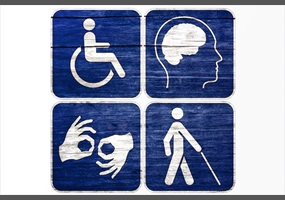
    Why is the wheelchair the only emblem used to represent disability?

    This gives a distorted view of disability. We need self respect and mutual respect.

    Wheelchair Privilege

    It is hard to acknowledge our own privilege because privilege is the other side of oppression. Some people are against talking about privilege because they don’t want to be framed as the aggressors or complicit in a system that gives them an advantage at the expense of others. Other critics of the word ‘privilege’ mistake it for a blanket term that suggests that, if you have a privilege, your whole life has been easy.

    Ultimately, privilege is not a concept designed to make people feel guilty or to diminish their achievements. Instead, waking up to how you may have certain privileges is an essential first step towards being able to decisively act, in small and large ways, to use your privilege and make the systems we were born into fairer. One example of this is wheelchair privilege.

    For example, some taxis are only equipped for manual wheelchairs, not electric ones. The physically impaired may be entitled to more benefits than any other disability group.

    In order to use your own privilege for good and to be a good ally you have to be aware, listen and speak up. Focus on equity instead of equality so that everyone is given what they need to be successful. https://www.hivelearning.com/site/resource/diversity-inclusion/5-main-types-of-privileges/

    What about the speech impaired?

    Just because you can’t speak doesn’t mean you don’t have anything to say. The Purple Vote Campaign in Wales is good at doing this. Advocating for yourself is important. Speak with me, not for me!

    Freedom of speech

    Article 21 – Freedom of expression and opinion, and access to information

    People with disabilities should be able to exercise the same rights to freedom of expression and information as other people and through all forms of communication of their choice. The UN Convention on the Rights of Persons with Disabilities (CRPD) also protects freedom of expression and the right to information. https://www.article19.org/resources/disability-and-information-what-are-your-rights/#:~:text=People%20with%20disabilities%20should%20be,and%20the%20right%20to%20information..

    States Parties shall take all appropriate measures to ensure that persons with disabilities can exercise the right to freedom of expression and opinion, including the freedom to seek, receive and impart information and ideas on an equal basis with others and through all forms of communication of their choice, as defined in article 2 of the present Convention, including by:

    a) Providing information intended for the general public to persons with disabilities in accessible formats and technologies appropriate to different kinds of disabilities in a timely manner and without additional cost;

    b) Accepting and facilitating the use of sign languages, Braille, augmentative and alternative communication, and all other accessible means, modes and formats of communication of their choice by persons with disabilities in official interactions;

    c) Urging private entities that provide services to the general public, including through the Internet, to provide information and services in accessible and usable formats for persons with disabilities;

    d) Encouraging the mass media, including providers of information through the Internet, to make their services accessible to persons with disabilities;

    e) Recognizing and promoting the use of sign languages. https://www.un.org/development/desa/disabilities/convention-on-the-rights-of-persons-with-disabilities/article-21-freedom-of-expression-and-opinion-and-access-to-information.html.

    The colour purple is used to represent the disabled community because it means royalty, status and importance.

    Purple Tuesday and the Purple Pound are business initiatives to improve customer service for people with disabilities.

    Paralympic Games is a global sports competition for people with disabilities. It is a modified version of the Olympics for people with disabilities. Highlighting abilities and maximising potential.

    International Day of People with Disabilities showcases wheelchair access, history of disability in education, disabled icons, disabled political figures and celebrates diversity. Celebrated on 3rd December every year, the International Day of Persons with Disabilities aims to promote an understanding of disability issues and to mobilise support for the dignity, rights, and well-being of persons with disabilities. Each year the day focuses on a different issue.

    Advocacy

    Advocacy includes speaking up on other people’s behalf. This could also cover unemployment amongst people with disabilities.

    ‘Disability equals diversity not disadvantage.’

    We should be accepted without having to ‘fit in’.


    Tips for Advocacy

    • Be Persistent
    • Build Effective Coalitions

    Self-Advocacy Skills

    • Be assertive vs Aggressive
    • Be direct
    • Be intentional
    • Be accurate
    • Healthcare
    • Relocating
    • Emotional Needs- Social Isolation

    Advocacy usually includes petitions, protests, lobbying, placards, propaganda, elections, party politics, and pressure groups. Being an advocate makes you an agent of change.

    The importance of rejecting society’s toxic value system

    It’s about dignity. This is important especially when fighting microaggressions. https://www.bustle.com/articles/186060-13-microaggressions-people-with-disabilities-face-on-a-daily-basis.

    At the heart of it, representation matters because people matter. Disabled persons exist in every nation and community across the world. It is essential that we respect human rights for all humans no matter their abilities or disabilities.

  • What is the difference between a Disability Minister and a Disability Commissioner?

    By: Daniella Jade Lowe

    Ministers and commissioners are both important for ensuring fairness in human rights. They also reinforce diversity. They are appointed by the Queen. The UK has both.

    However, the difference between a minister and a commissioner, is that a minister is a person who is commissioned by the government for public service, while a commissioner is a member of a committee.

    Disability Minister


    Responsibilities

    The minister’s responsibilities include:

    • responsibility for the departmental strategy on disability and disability employment
    • cross-government responsibility for disabled people
    • Employment and Support Allowance
    • Personal Independence Payment
    • Disability Living Allowance and elements of Universal Credit that relate to disabled people, including severe disability premium
    • work and health strategy including sponsorship of the joint Department for Work and Pensions and Department for Health and Social Care Work and Health Unit
    • disability benefit reform
    • devolution framework
    • Carer’s Allowance
    • future relations with the EU
    • Motability
    • arms-length compensation schemes

    Disability Commissioner

    Responsibilities
    The Commissioner conducts visits to help raise the standards of human rights protection in all Council of Europe member states, in accordance with his mandate.

    Visits aim at pursuing a direct dialogue with the authorities and looking into one or several specific issues. The Commissioner is currently carrying out more targeted country visits focused on specific topics. A report may be published, containing conclusions and relevant recommendations to help redress shortcomings. Some of these reports may also relate to crisis situations and human rights in conflict areas.

    Based on my research, I think it is more effective and beneficial to have a Disability Minister to help advocate for disability rights because their role is multifaceted and unrestricted. They have more legislative privileges.

    https://petitions.senedd.wales/petitions/244164

    https://www.coe.int/en/web/commissioner/the-commissioner

    https://www.disabilitynewsservice.com/new-disabled-commissioner-astounded-and-offended-by-ehrc-treatment/

    https://www.coe.int/en/web/commissioner/mandate

  • Democracy in the UK

    By: Daniella Jade Lowe

    How does democracy work in the UK?

    The United Kingdom (UK) is a democracy. In the UK there are too many people to all discuss all the decisions about how the country is run. Therefore, representatives are elected to make decisions.


    Representatives include Members of Parliament (MPs), Members of the Scottish Parliament (MSPs) and local councillors.

    The UK Parliament meets in Westminster, London. It has three parts:


    The Crown- the Queen – Head of State, approves laws
    The House of Lords – Check proposed laws, make amendments
    The House of Commons – Debate proposals and make laws


    When did the UK become a democracy?


    Britain did not become a democracy until the Representation of the People Acts of 1918 and 1928 that gave the vote to all men and women over the age of 21.


    Is UK a representative democracy?

    Nearly all modern Western-style democracies are types of representative democracies; for example, the United Kingdom is a unitary parliamentary constitutional monarchy, France is a unitary semi-presidential republic, and the United States is a federal presidential republic.

    How do democracies work?

    Democracy is government in which power and civic responsibility are exercised by all adult citizens, directly, or through their democratically elected representatives. Democracy rests upon the principles of majority rule and individual rights. … Fair, frequent, and well-managed elections are essential in a democracy.

    Democracy and Disability

    Only 6 British MPs identify as disabled. In a world where 1 in 7 people have a disability, this lack of representation is a serious threat to the inclusion of disabled people in UK policy matters.

    The UK Parliament has been a vocal promoter of disability inclusion and the leave no one behind agenda. There are several All Party Parliamentary Groups focused on disability and of the 0.7% of GNI ringfenced for international development, disability is a priority issue. https://www.add.org.uk/disability-and-democracy-uk

    The Purple Vote Campaign in Wales hope to do the same.

  • DISABILITY AND VOTING IN WALES

    By: Daniella Jade Lowe


    Welsh Parliament
    There are 60 Members of the Senedd (MSs) of the Welsh Parliament.
    To vote in the Welsh Parliament elections you must:

    • be registered to vote
    • be 16 or over on the day of the election (‘polling day’)
    • live in Wales
    • not be legally excluded from voting


    MSs are elected using the Additional Member system. You vote once for your constituency MS and once for an MS to represent the wider region.


    Wales is in the west of Great Britain and is part of the UK. It has a population of 3 million. The capital city of Wales is Cardiff. People in Wales speak English and many people also speak Welsh which is quite different and older than English. Street signs in Wales are written in both languages. Wales has been politically linked with England since 1542. Wales was an independent country until it was defeated by the English army. Wales has some independence in making its own laws, but it is still very much part of the UK political system.

    Inaccessibility and stereotyping are barriers for people with disabilities in politics. https://www.bbc.co.uk/news/uk-wales-42167892


    An estimated 20% of the population are disabled, but only 1.5% of councillors are known to have a disability.


    About 600,000 people in Wales have a disability, but very few councils hold data on how many councillors are disabled.


    BBC research showed of the 1,254 councillors elected in May, just 19 are known by local authorities to be living with an impairment or long-term health condition.


    According to disabled politicians,’You have to be quite strong’: https://www.bbc.co.uk/news/uk-wales-politics-42826002.

    The Legacy International Group alongside The Purple Vote Campaign hope to change this within the Welsh Assembly during the May 2021 elections.

  • The Equality Act: What has changed 10 years later?

    By: Daniella Jade Lowe

    What is Equality?

    Equality is the state of being equal, especially in status, rights, or opportunities. Equality is a human right. It prevents discrimination. It’s all about inclusion.

    The Equality Act 2010

    It was created in 2010. It is comprised of 115 sections, which includes the DDA. Inclusion is a key theme of this Act. It covers the workplace and society.

    Example of Unconscious bias in the Workplace 

    Historically, there has been a gender pay gap. However, this has changed, at least since 2017, according to the gender pay gap factsheet. file:///C:/Users/Daniella%20Lowe/Downloads/Gender-Pension-Gap-Factsheet.pdf. This factsheet shows evidence that people (women in particular) are now encouraged to discuss salaries with each other. This will definitely expose and clamp down on discrimination.

    For more information on how to beat the Gender Wealth Gap visit- https://www.hl.co.uk/free-guides/thank-you?SQ_DESIGN_NAME=ppc&guide=https://www.hl.co.uk/__data/assets/pdf_file/0009/16042734/Gender-Pension-Gap-Factsheet.pdf&pub=TGWG&name=on%20how%20to%20beat%20the%20gender%20wealth%20gap.

    What stayed the same?

    • Still paying lip service.
    • Disability Employment gap still remains high. But there are some improvements to this such as the Access to Work for the Self Employed. This covers disability.
    • Benefit changes have disadvantaged disabled people.

    Also, taxi drivers still overcharge wheelchair users despite the Equality Act 2010 Taxi Annexa. Well, at least that’s what my experience has been.https://www.legislation.gov.uk/ukpga/2010/15/contents.

    What does the future hold?

    • We expect more action instead of information and promises.
    • Intersectionality must be focus of progress.
    • Culture of organisations must be inclusive.
    • Inclusion cannot be bias – it means all, not our favourite parts. 

    As an overview, this means that there is still work to be done. Law reinforcement and accountability must take place. Hopefully ten years from now we can expose all inequalities and have disparities resolved.

  • Access to Work Grant 

    By: Daniella Jade Lowe

    Self employment is a form of independence for the disabled. Self employment is a form of freedom and self reliance. Many people like the idea of working for themselves because they have no one to be held accountable to. However, there are many challenges to self employment, especially for a person with a disability.

    Challenges of Self Employment

    The challenges above and beyond for a disabled self employed person:

    • Fluctuating conditions
    • Business hours affected
    • Accessing finance
    • Solutions are not always possible
    • Accessing the right advice
    • Accessing transport


    The term ‘disabled’ has the same meaning as in the Equality Act 2010. This defines disability as ‘a physical or mental impairment which has a substantial and long-term adverse effect on one’s ability to carry out normal day-to-day activities’.

    The term disabled can also include disabilities that only become apparent in the workplace. An example of this might be where you started work and found that your eyesight was affected by computer screens but had not noticed this problem before you started work.

    1.What is Access to Work?

    Access to Work is a government programme aimed at supporting disabled people to take up or remain in work. Access to Work is a discretionary grant scheme that provides personalised support to disabled people who are:

    • in paid employment
    • self-employed
    • apprentices
    • trainees
    • supported interns
    • doing self-directed work experience
    • on Jobcentre Plus promoted work trials
    • going to a job interview
    • You can also apply if you have:
    • a job offer letter
    • a job start date
    • a letter confirming your interview

    There have been changes to Access to Work due to the coronavirus outbreak.

    2.Who can get help?

    The Self Employed can apply for the Access to Work grant if they earn £6000. They can also apply if:

    • are disabled, have a mental health condition or have a long-term health condition that impacts on your ability to work;
    • are aged 16 or over; and
    • live in England, Scotland or Wales – there’s a different system in Northern Ireland
    1. What help is available?

    Access to Work support covers a wide range of interventions beyond ‘reasonable adjustments’ associated with overcoming work-related barriers resulting from disability. The support package is agreed based on individual need.

    Examples of the kind of help available through Access to Work are:

    • A communicator, advocate or BSL interpreter for a job interview, if you’re D/deaf or have communication difficulties.
    • a support worker, such as a reader for somebody with a visual impairment; communicator for a hearing impaired person; a specialist job coach for a person with a learning difficulty; or a helper for personal care needs at work
    • Specialist equipment (or alterations to existing equipment) to suit your particular need.
    • Help towards the additional costs of taxi fares if you cannot use public transport to get to work
    • Support via Access to Work’s dedicated Mental Health Support Service.
    • Young people who start a work placement with an employer as part of the Department for Education supported internship programme or a traineeship will be able to apply for Access to Work support for the time of their work placement only.

    Access to Work will fund additional travel, job coach and other support, including costs of equipment if appropriate, and promote the smooth transition into paid employment.

    No other types of unpaid internships or traineeships will qualify for Access to Work support.

    1. Help available for people with long-term mental health conditions

    A free and confidential ‘Mental Health Support Service’ is available to anyone with a mental health condition through Access to Work.

    The scheme offers:

    • Work-focused mental health support for up to nine months tailored to your needs
    • An assessment of your needs to identify suitable coping strategies
    • A personalised support plan, detailing the steps needed for you to remain in, or return to, work
    • Ideas for adjustments in the workplace or of working practice

    Support for Apprentices

    This free service supports apprentices who are feeling low, upset and struggling to keep up with their apprenticeship. It is completely confidential and run by fully trained professionals with expertise in mental health.

    To qualify for this service, you must:

    • be in an apprenticeship (attending or signed off sick); and
    • have a mental health condition that has resulted in absence, or is causing difficulties to remain in your apprenticeship
    • What help is available?

    An expert will provide you with emotional well-being support and advice for nine months; they will help you to cope better so you can concentrate on your apprenticeship; develop a step-by-step support plan to keep you on track; advice on workplace adjustments; and help an employer understand how they can best support you if you are experiencing a mental health condition.


    How to access the supporting apprentices scheme:

    Tel: 0300 456 8210
    Email: apprentices@remploy.co.uk
    https://www.remploy.co.uk/employers/mental-health-and-wellbeing/supporting-apprentices-service.

    1. Amount of grants

    There is no set amount for an Access to Work grant. How much you get depends on your specific case. The grant will only cover the support needed to let you stay in work or in self-employment.

    There is an annual cap on the total amount of support that can be provided under Access to Work; this is currently set at £60,700.

    Access to Work will pay 100 per cent of the approved costs (subject to the cap):

    • for travel to work, for a support worker/reader or a communicator for support at job interviews;
    • if you are unemployed and starting a new job;
    • if you have been working for an employer and have been in the job for less than six weeks; or
    • if you are self-employed or setting up your own business through the New Enterprise Allowance.
    • If you have been in your job for six weeks or more when you first apply for help, Access to Work will pay a proportion of the costs of support as follows: (As the employer, you will contribute 100% of costs up to the threshold level and 20% of the costs between the threshold and £10,000.
    • Employers with less than 50 staff: Access to Work can pay 80% of the approved costs.
    • Employers with 50 to 249 staff: The employer will have to pay the first £500 and Access to Work can then pay 80% of the approved costs up to £10,000.
    • Large employers with 250 or more staff: The employer will have to pay the first £1,000 and Access to Work can then pay 80% of the approved costs up to £10,000.
    • Access to Work would normally cover all additional costs over £10,000, subject to the cap.
    1. What Access to work cannot cover

    The Equality Act 2010 places a duty on an employer to make reasonable adjustments for disabled employees. Access to Work funding cannot be used to support these adjustments.

    Access to work will also not fund items which are regarded as standard equipment, standard business costs or standard health and safety requirements. This means that any item which would normally be needed to do the job, whether a person is disabled or not, will not be paid for.

    1. Students

    If you need communication help for a job interview before graduation, you should be able to access this service, even though you’re still studying.

    If you have a disability or specific learning difficulty and are studying in higher education, you may be eligible for Disabled Students’ Allowances.

    1. Employers and Access to Work

    When you’re applying for jobs, you should mention to your potential employer, either at the application stage or in your interview, that Access to Work may be available to you.

    Access to Work information for employers is available at http://www.gov.uk/government/publications/access-to-work-guide-for-employers.

    Access to Work also has an eligibility letter, which you can give to your employer or take to a job interview.

    1. How to apply?

    You can apply online.

    Telephone: 0800 121 7479

    Textphone: 0800 121 7579
    Monday to Friday, 9am to 5pm
    Find out about call charges

    British Sign Language (BSL) video relay service

    To use this, you must:

    • first check you can use the service
    • go to the video relay service
    • Monday to Friday, 9am to 5pm

    Alternative formats

    Call the Access to Work number to ask for alternative formats, such as braille, large print or audio CD.

    If you need an alternative way of contacting Access to Work to discuss your needs, you can write to:

    Access to Work
    Operational Support Unit
    Harrow Jobcentre Plus
    Mail Handling Site A
    Wolverhampton
    WV98 1JE

    Supported Internships and Traineeships

    The application process for those on supported internships and traineeships wishing to apply to Access to Work includes:

    • The provision for a supported employment provider to make an application on behalf of an education provider (education providers can still make the claim if they would like to do so)
    • One placement per month for each student
    • The ability to make applications up to three months in advance.
    • For a flowchart setting out who may be eligible for Access to Work funding and the form for applying for Access to Work funding go to:

    https://www.preparingforadulthood.org.uk/downloads/supported-internships/access-to-work-fund.htm

    Completed applications should be sent to the dedicated Access to Work team at: Atwosu.london@dwp.gsi.gov.uk.

    Northern Ireland, the Isle of Man or the Channel Islands

    You cannot get Access to Work support if you live in the Isle of Man or the Channel Islands. There is a different system in Northern Ireland.

    Forms

    Access to Work uses a specific medical form in connection with claims for travel to work. The form can be completed by someone who knows you well, giving a clear indication why you need support with travel to work. Once completed, this then needs to be signed by a medical professional to verify that the information is accurate.

    This could be your GP, Practice Nurse, Psychiatrist, Psychologist or Learning Disability Nurse, but it can’t be signed by a non-medical person such as Social Worker or Support worker.

    1. How long is Access to Work funding available for?

    Access to Work funding agreements can cover up to three years. Reviews normally take place annually to assess if continued or further funding is needed. As long as you need the funding, you should continue to get it.

    1. What if I disagree with an Access to Work decision?

    You cannot appeal against an Access to Work decision, but you can ask for it to be reconsidered by a different Access to Work Adviser. To arrange this, use the contact details at the top of your award letter.

    If your circumstances change, such as if you change employer or your job role, you can ask for your award to be reviewed.

    If you have a complaint about the service you have received from Access to Work staff, you can use the DWP complaints procedure.

    1. Where can I get more help or information?

    For general information on Access to Work, go to http://www.gov.uk/access-to-work.

    You can get help and information at your local advice centre, such as Citizens Advice. https://www.disabilityrightsuk.org/access-work.
  • Voting with a Disability in the UK

    By: Daniella Jade Lowe

    Voting with a disability can be quite a tedious but rewarding experience. We often suffer marginalised politics for a marginalised people.

    The Electoral Voting Commission in the UK offers Accessible Voting for all. They endorse voting through accessibility videos: https://www.gov.uk/guidance/accessible-voting-for-all.

    First of all, you must register to vote, but only once you’re 18 years old or older on the day of the election. In Scotland and Wales you can vote at age 16 or over.

    You can register online or by post. However, you cannot vote online in any elections.

    Physically challenged voters and wheelchair users can vote in person because all polling stations are wheelchair accessible. They also have the option of voting by post. As a wheelchair user, while living in Bradford as a student, I voted in person. I’ve also voted in person at the St. John’s Anglican church in Ilkley.

    Vision Impaired Voters

    Vision Impaired voters can vote through Tactile Audio Device Voting. The TAD is easy to use and utilize your hearing and touch senses to vote without assistance: https://bernews.com/2020/09/tad-voting-demonstration-on-saturday/?fbclid=IwAR0i7UY4PXPDUJ1uF95-w_F3QBogRtqDwOWq8jDPpgJqHn_ZmBiWyA8wF4k.

    There’s also Proxy Voting in Wales. You can do this by asking someone to vote for you. https://assets.publishing.service.gov.uk/government/uploads/system/uploads/attachment_data/file/898774/Apply-to-vote-by-proxy-due-to-a-disability-Welsh.pdf.

    Hearing Impaired Voters

    Unfortunately, according to my research, the hearing impaired want to be included in voting at the European Parliamentary Elections, through subtitles and sign language but are still fighting for recognition. https://www.eud.eu/news/real-rights-persons-disabilities-vote-european-parliament-elections/.

    Deaf voters are demanding improvements. ‘No captions, no vote’, they say! https://inews.co.uk/opinion/no-captions-no-vote-why-deaf-voters-are-calling-for-more-accessible-campaigning-this-general-election-368084. This indicates that there is more work, by way of advocacy, to be done.

    According to statistics, one in five British voters are disabled. So why does politics ignore us?

    Austerity has been bruttal for disabled people. https://www.theguardian.com/commentisfree/2019/nov/13/disabled-people-politics-brexit-election. This is why we need elections and voting.

    Most politicians like to say ‘don’t vote, don’t complain.’

    However the disabled community has every right to complain if they’ve asked for reasonable adjustments but get ignored every time.

    Voting is about getting your voice heard. Voting is the starting point for political action. It’s about sharing political concerns, expectations and solutions. Disability voting is about tackling and dismantling oppressive systems of injustice. It is also about holding our politicians accountable. Voting should reimagine law enforcement, as well as reinforce disability justice, disability rights and disability advocacy.

    The next step after campaigning and voting would be debating disability related issues. Canvassing is about relationship building. Canvassing will most likely highlight voters concerns. It is very difficult to debate sensitive subjects that you are passionate about like Euthanasia, without letting your emotions run high.

    During my high school years, I had the privilege of participating in a political group called ‘Youth Parliament Bermuda.’ While on this team, I got a chance to debate various topics in the House of Assembly with other students. http://www.royalgazette.com/article/20070517/NEWS/305179917.

    The Disability Union is also good at doing this for legal support (https://disabilityunion.co.uk/).

    Netflix even has a disability revolution movie entitled, ‘Crip Camp’, which is a documentary about a groundbreaking summer camp which galvanizes a group of teens with disabilities, to help build a movement forging a new path towards greater equality. It also shows great impacts on disability rights and advocacy.

    Also, voting and elections is about power. Purple is also associated with royalty. The reason why the colour purple is used to represent disability is because it’s about identity : https://www.bbc.co.uk/news/blogs-ouch-25767082. As a member of the Purple Vote Campaign, this is important to know.

    Disability representation is important for inclusion, equality and identity. ‘DISABILITY VOTE MATTERS!’

    Voting might be more difficult this year than at any other point in history due to global pandemic and lack of access to voting options. This is why we are raising awareness about voting resources, rights, and the importance of the disability vote. We need everyone involved to make positive change in our communities.