Any crime can be prosecuted as a hate crime if the offender has either demonstrated hostility based on race, religion, disability, sexual orientation or transgender identity Or
been motivated by hostility based on race, religion, disability, sexual orientation or transgender identity Someone can be a victim of more than one type of hate crime.
These crimes are covered by legislation (Crime and Disorder Act 1998 and section 66 of the Sentencing Act 2020) which allows prosecutors to apply for an uplift in sentence for those convicted of a hate crime.
The reason for failed investigation is ineffective reporting.
Be more specific. Provide more details.
victim vs perpetrator- responsibility falls on the victim
It’s the first day of Hate Crime Awareness Week and we are encouraging victims of hate crime to speak out.
What is being done to fight this?
Monday, 11th October
Bradford District’s Hate Crime Strategy 2021-24 Launch Event
The event will bring together key partnership organisations, groups identified as one of the 5 ‘Protected characteristic’ groups, community and faith representatives.
Tuesday, 12th October
Hate Crime Conference
Hate Crime Awareness Week is week of actions to encourage local authorities, key partners and communities affected by hate crime to work together to tackle local hate crime.
Wednesday, 13th October
Coffee and Cake Morning
The Equity Centre is a Hate Crime Reporting Centre, however this event provides people with a chance to meet others over a hot drink and some cake/biscuits.
Eastern European Community Hate Crime Awareness
Several of the Districts main organisations working in the hate crime space such as Bradford Council, Bradford Hate Crime Alliance, West Yorkshire Police and Victims Support will be there to explain their roles, explain what is hate crime, where and how it can be reported and Q&A session
Thursday, 14th October
Hate Crime Question Time
The Panelists will explain what type of hate crime-related work they are undertaking and will answer questions from the online audience.
Hate Crime Awareness event for the Bradford African Community
Several of the Districts main organisations working in the hate crime space such as Bradford Council, Bradford Hate Crime Alliance, West Yorkshire Police and Victims Support will be there to explain their roles, explain what is hate crime, where and how it can be reported and Q&A session.
Friday, 15th October
Make Sure It Adds Up – Bradford District Anti Rumour Strategy
A chance to learn more about the Bradford For Everyone campaign to reduce rumours and increase critical thinking with the aim to reduce hate crime overall. Find out more about our online resources and forthcoming pledge.
Saturday, 16th October
Bradford City Football Club
BCFC have invited 30 members from the ‘emerging communities’ to attend the match, take the Root Out Racism banner onto the pitch before the game, players will be supporting the hate crime awareness week in the days leading up to the game. For more information on reporting hate crime check out this website at: https://www.cps.gov.uk/crime-info/hate-crime.
Being different is not a crime. Victimisation is prejudice!
Pressure ulcers (also known as pressure sores) occur when the skin and surrounding tissue is damaged by medical devices or the weight of the body pressing down. This restricts blood flow and the delivery of oxygen and nutrients to the area. They often develop where bones are close to the skin such as on the lower back/spine, hips, heels and elbows. Having a poor nutrient and fluid intake can increase the risk of pressure ulcers.
The risk increases in those who are underweight or overweight. Maintaining a healthy weight and eating a balanced diet can reduce the risk of developing pressure ulcers. You should try to adopt a meal plan like this:
This is because being overweight can reduce mobility and increase the weight bearing load through pressure areas such as the bottom. Being underweight can mean there is less natural padding on bony areas such as the bottom and hips. The skin needs a good supply of fluid and nutrients to maintain its circulation and keep it supple.
Nutrition and pressure damage Once a pressure ulcer has developed, nutrition plays a vital role in the healing process. This is because the body needs protein, energy (calories), vitamins and minerals (such as vitamin C, iron and zinc), and plenty of fluids to support the wound healing process.
Protein Your body may need more protein if you have a pressure ulcer. Foods that are high in protein include meat, fish, eggs, dairy products, nuts, beans and pulses. Try to have at least one of these foods at each meal. Aim to have one pint of milk per day or a variety of milk and dairy foods such as milk puddings, cheese or yoghurts.
If you are overweight choose low fat versions. They contain the same amount of protein as full fat versions but are lower in calories. There are also some yoghurts, ice cream and milks available that contain higher amounts of protein.
If you use milk substitutes, soya milk contains a similar amount of protein as cow’s milk. Oat, rice, hemp and nut based milks contain significantly less protein.
Iron Iron is important for the healing process by helping to maintain adequate blood haemoglobin levels. Foods that are good sources of iron include meat, fish and eggs. Iron is also found in other food such as beans, pulses, green vegetables and dried fruit, but these are less easily absorbed.
Vitamin C Vitamin C helps with the absorption of iron from your food and also directly with the healing process. Vitamin C is found in a wide variety of fruit and vegetables. It is not stored in the body so a daily supply is needed. Vitamin C is destroyed during the cooking process, so it is important not to overcook your vegetables, or if possible, steam them. Drinking a small glass of fruit juice (150ml) with your meal is a good way to improve your intake. If your vitamin C intake remains low you may need to take a supplement.
Zinc Zinc is important for the formation of new skin tissue and to help pressure ulcers to heal. Good sources are lean red meat, shell fish, milk, cheese, bread, lentils, beans and cereal products such as wheatgerm.
Vitamin and mineral supplements If you cannot eat enough foods containing key vitamins and minerals then you may need to take a supplement. If you are unable to manage a varied diet, or have a poor appetite, an “A to Z” type vitamin and mineral supplement may be necessary and these are available from many high street chemists. If you are managing to eat a full and varied diet then there is no benefit in taking high levels of vitamins and mineral supplements – in fact, this can be harmful.
Fluid Dehydrated skin can become dry and fragile. It is important that your skin is kept moist from the inside. You should aim for 1.5 to two litres per day (six to ten mugs). This could include any liquid (tea, coffee, milk, water, juice) but not alcohol. If you are overweight avoid drinks that contain sugar, choosing sugar free alternatives or using low-calorie sweeteners in hot drinks.
Body weight If you are overweight, losing weight could help to reduce the risk of pressure ulcers and protect a newly healed pressure ulcer. However, if you restrict your intake too much whilst a pressure ulcer is healing it could delay the healing process.
It is important that you maintain a balance to your diet so that your body continues to get all the nutrients it needs. Simple changes that you could make to your diet if you are overweight are:
Cutting out sugar from hot drinks or using a sweetener.
Using low fat cooking methods such as grilling, baking, microwaving or steaming rather than frying.
Opting for snacks that are lower in energy and fat such as low fat yoghurts and fruit.
Remember to have meals that are balanced. Try not to miss meals.
Aim to lose an average of no more than 0.5 to 1kg a week.
If you are underweight, pressure ulcers need a lot of nutrients to help them heal. If you are underweight you may not have enough nutrient stores in your body so you will need extra nutrition from your diet. Without nutrients the healing process may take longer. Some changes that could help to increase your intake are:
Ensure that you have regular meals. If you find it difficult to prepare and cook meals then there are a wide variety of tinned, chilled or frozen ‘ready meals’ available. Frozen or tinned vegetables can also be useful. Try to have three small meals and two to three nourishing snacks throughout the day (such as yoghurts, cheese, nuts and biscuits). If your appetite is poor, try to also include two nourishing drinks each day such as: milk, malted milk drinks, fruit juice or powdered supplement drinks which are available from your local chemist or supermarket. Oral Nutritional Supplements (sip feeds) If your food intake remains low, it may not be enough to help heal the pressure ulcer. If this is the case, it may be necessary for you to have some prescribed oral nutritional supplements. These types of drinks provide a rich source of energy, protein and other nutrients. A dietitian may be available to discuss with you the most appropriate one and how many you will need. You should not take additional vitamins and mineral supplements if you are taking three or more oral nutritional supplements per day.
If you have diabetes, poorly controlled diabetes can delay healing. Diet and medication may need to be adjusted to achieve good diabetic control. Speak to your GP, nurse or dietitian if you require help with this.
Eating a balanced diet and having a healthy body weight will help to reduce the risk of developing a pressure ulcer. If you have a pressure ulcer, eating and drinking well will help it to heal. If you are overweight then it would be beneficial to try to lose weight gradually. If you are underweight then weight gain will help improve the padding over the bones. This can be best achieved by eating small and frequent meals and snacks.
Ministers and commissioners are both important for ensuring fairness in human rights. They also reinforce diversity. They are appointed by the Queen. The UK has both.
However, the difference between a minister and a commissioner, is that a minister is a person who is commissioned by the government for public service, while a commissioner is a member of a committee.
Disability Minister
Responsibilities
The minister’s responsibilities include:
responsibility for the departmental strategy on disability and disability employment
cross-government responsibility for disabled people
Employment and Support Allowance
Personal Independence Payment
Disability Living Allowance and elements of Universal Credit that relate to disabled people, including severe disability premium
work and health strategy including sponsorship of the joint Department for Work and Pensions and Department for Health and Social Care Work and Health Unit
disability benefit reform
devolution framework
Carer’s Allowance
future relations with the EU
Motability
arms-length compensation schemes
Disability Commissioner
Responsibilities The Commissioner conducts visits to help raise the standards of human rights protection in all Council of Europe member states, in accordance with his mandate.
Visits aim at pursuing a direct dialogue with the authorities and looking into one or several specific issues. The Commissioner is currently carrying out more targeted country visits focused on specific topics. A report may be published, containing conclusions and relevant recommendations to help redress shortcomings. Some of these reports may also relate to crisis situations and human rights in conflict areas.
Based on my research, I think it is more effective and beneficial to have a Disability Minister to help advocate for disability rights because their role is multifaceted and unrestricted. They have more legislative privileges.
Bradford Hate Crime Alliance is working on identifying key priorities for a revised Hate Crime Strategy.
Hate is learned behaviour.
A Hate Crime is defined as:
‘Any criminal offence which is perceived by the victim or any other person, to be motivated by hostility or prejudice based on a person’s race or perceived race; religion or perceived religion; sexual orientation or perceived sexual orientation; disability or perceived disability and any crime motivated by hostility or prejudice against a person who is transgender or perceived to be transgender.’
However, Equality Together Bradford knows that there is a lack of understanding and under-reporting across all hate crime. We also know that there a particular barriers to understanding disability hate crime.
Disability: A victim of any crime will have psychological and mental health impact. “…the more someone feels targeted by racist actions and behaviours, the greater the damage to their mental health. This includes increased likelihood to develop chronic depression, anxiety and psychological distress.”
“Citizens who experience hate crime and incidents can suffer stress, anger and distress for longer than a crime that is not related to their characteristics. Survivors are likely to feel more vulnerable after the experience and see the world as more dangerous, unpredictable and hostile.”
Equality Together Bradford has organised a focus group to take place where disabled people can have their say on what the new Hate Crime Strategy should prioritise.
The focus group will aim to understand:
People’s experience of abuse and harassment (this could be verbal, physical or emotional)
If it was reported and who it was reported to
What was the support/response people got
Reasons for not reporting
What would help to make people feel more confident about reporting
How we can make people feel more safe
Ideas to reduce hate crime in the district
Ideas to make our communities get on better together
Challenges to reducing hate crime and how to overcome them
Q: Tell us a little bit about yourself. A: My name is Daniella Jade Lowe. I am a university graduate with a BA degree focused on History and Politics from the University of Bradford, England. Journalism and Politics are my passion. I am an emerging Journalist, Politician and Disability Advocate. My motive behind doing this was to be an advocate for people with disabilities. I am also marketing myself as an Access Consultant.
Q: What is your experience of life as a disabled person? A: I have advocated for Wheelchair Accessibility in Bermuda, by writing various articles for numerous publications on the subject. In fact, one of the reasons why I pursued further education and started my career in England was due to Wheelchair Accessibility. During Middle School and High School, I used a Garaventa StairTrac for navigating the school for classes. I have even represented Bermuda at the London 2012 Paralympic Games as a reporter for Bermuda’s Paralympian Jessica Lewis. During the games I also assessed the level of Wheelchair Accessibility at the event.
Q: How would you describe your disability? A: I was diagnosed with Spina Bifida and Hydrocephalus at birth. This condition is neurological. It comes with mobility issues and learning difficulties. As a result, I use a wheelchair for mobility.
Q: What is accessibility like where you live? A: Accessibility is terrible in Bermuda. Accessibility is much better in England.
Q: Where is your favourite place for accessibility & why? A: Bradford and Ilkley are great for Wheelchair Access because there are plenty of ramps, lifts, and flat surfaces. Leeds has Disability Confident companies too.
Q: What is one accessibility improvement that you would like to see? A: Travelling around London can be improved especially when using the Tube or the Underground. Gatwick Airport is better for WheelchairAccessibility than Heathrow Airport is.
The Association for Spina Bifida and Hydrocephalus is a charity that was founded in 1967. ASBAH is the local association and does peer support, activities and events to bring the Spina Bifida and Hydrocephalus community together.
Katy Raven is the Project Manager for ASBAH. This charity is comprised of volunteers, parents/carers, children, adults and committee members.
This organisation covers North and West Yorkshire which includes Cheshire, East Riding of Yorkshire, Greater Manchester, Halton-Runcorn, Halton-Widnes, Kingston Upon Hull, Lancashire, Merseyside, Middlesbrough, North East Lincolnshire, North Lincolnshire, North Staffordshire, North Yorkshire, Redcar/Cleveland, Shropshire, South Yorkshire, Wakefield, Warrington, West Yorkshire, Wigan and Wirral.
‘Supporting you to flourish and thrive’ is the slogan for the ASBAH foundation. By supporting, informing, and campaigning, North & West Yorkshire ASBAH is continuing to help promote individual choice, control, and quality of life for all the people who use their services.
It is very important for people who are born with a developmental disability to have a good support network through peer support and befriending, especially if they are excluded from mainstream education and employment and always have to push for inclusion. It helps them to thrive and flourish.
For the past 13 years, I have been a recipient of this charity’s services. They’ve helped me with medical support, educational advice, Spina Bifida clinics, job-searching assistance, interviews, companionship, advocacy, applying for financial support and wheelchair services. They also played a role in helping me get my first electric wheelchair during my first year of college.
It all started back in the summer of 2009, when I originally moved to Bradford to start college. Upon arriving at the student accommodation, I met Miss Joan Pheasant, a chairman from the board of the ASBAH foundation. I found out about this charity through online research while still living in Bermuda. My case was slightly unusual because, I think I am the only international ASBAH member.
For the sake of awareness, this organisation has decided to start an initiative called ASBAH Ambassadors and I’ve chosen to join in to advocate for others with Spina Bifida and Hydrocephalus.
For example, one way that they do this is by celebrating Spina Bifida Week from October 25th to the 29th annually. During this week, they have campaigns and forums to educate people on the subject.
In my opinion, being an ASBAH Ambassador is about disability representation, not just sharing information and advocating. It’s also about raising awareness. For me, being an ASBAH Ambassador is also about networking. This is why we have a befriending initiative too.
I strongly feel that this charity has helped me to mature and properly manage my disability related issues. I definitely found it difficult to prioritise my medical affairs, finances, social life and education, especially during my first year of college.
When I first started college, I remember participating in the Go Folic Campaign with ASBAH for Spina Bifida Week (https://www.totalhealth.co.uk/blog/importance-folate-prior-conception-go-folic-you-frolic). These campaigns and forums taught me how to improve the way I take care of myself, especially in diet and personal hygiene. ASBAH has definitely helped me to flourish and thrive in my health, education, social life and finances.
I’ve also been to various annual social events like afternoon tea at the Clevedon House in Ilkley and Christmas dinners in Leeds, as a member of the ASBAH Association. One Sunday, we even went to lunch at the Cow and Calf in Ilkley.
I appreciate this and feel it was beneficial to me because I know what it is like to live in a country that does not provide these services. I’ve learned a lot from this charity, like how to approach interviews and applying for benefits. I also feel that my social skills have improved. This charity is definitely needed and a great asset to the community especially for the expectant families and parents with Spina Bifida and Hydrocephalus. When I grew up I didn’t have access to these services. I went to private nursery and preschool because not everyone was willing to take on a child with a disability.
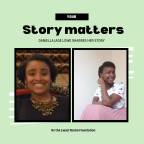
I was given another wonderful opportunity to be interviewed by another disability oriented organisation called the Lwazi Ncube Foundation. The Lwazi Ncube Foundation is an organisation created to build, encourage and inspire others with disabilities.
Hello,Introduce yourself – Name and what you do.
My name is Daniella Jade Lowe. I do not work for anyone, but I am working on marketing myself as an Accessibility Consultant. Journalism and Politics are my passion. I have a BA degree in History and Politics.
What type of disability do you have?
At birth, I was diagnosed with Spina Bifida and Hydrocephalus which are neurological conditions. As a result, I use a wheelchair for mobility.
What is disability to you?
The only disability is a bad attitude. I have a disability. It doesn’t completely define me; it just enhances me in a way which differentiates and strengthens me. My disability should be viewed as an ability: to see the world in a different way. I don’t really like the term because sometimes it indirectly implies someone is dysfunctional or helpless. The most important thing is to never make assumptions. Someone with a disability can be very, physically, fit and strong, highly intelligent and articulate.
What has been your experience from the time you remember till now? – positive and negative experiences.
My life as a wheelchair user has been generally okay. Wheelchair Accessibility is frustrating. I was teased a little in school. Other than that, life is great.
How do you cope with: -daily activities – your disability, do you have times when you are down – people’s reactions towards you.
I have carers, a Social worker, District Nurses, a GP, and extended family in this country. I am also in contact with a local disability charity in Yorkshire. I also have a friendly landlord.
How do you keep yourself motivated?
I must stay organised and practice good time management. I also prioritise my plans.
When it comes to religion, what is your belief in terms of how you were created? – do you blame God – do you trust God?
No, I do not blame God for the way that I was born/created. Yes I’ve been prayed over before about healing but I do love my life.
When it comes to the African society what has been your experience – if you have visited Africa what has been your experience?
No experience
Compare the UK experience with the Caribbean experience.
The weather is warmer in Bermuda than the UK. The UK is bigger than Bermuda. Wheelchair Accessibility and Disability Rights is better in the UK than Bermuda.
What is your word or advice to those with disabilities?
Don’t let people put you in a box. You have a voice, use it.
What is your word or adviceto the society?
Don’t give up on people with disabilities. Give them a chance at life. Don’t discriminate, neglect and push them to the side. Strive for inclusion for all.
On December 3, 2020, I was a panelist for a Virtual Conference hosted by the WindReach in Bermuda. This virtual conference was held in honour of ‘International Day of People with Disabilities’.
Conference objective:
Due to COVID-19, but even before, the needs and voices of People Living with Disabilities were often not made a priority in our social world, in our workplaces, in our schools or even in their own care and goals. Focusing our main topics of understanding on the history of disability, employment, accessibility, stigma, people’s misperceptions, and encouraging self-advocacy, we hope to address many of the issues facing Bermudians living with disabilities.
This conference is meant to shine a light on the disability community as a whole, give space for their voices to be heard and to work on solutions to better the lives of all individuals. Everyone benefits when we collectively move towards a more inclusive society. There were ASL interpreters present throughout the whole conference. It was well organised and things went smoothly.
During the conference, I shared the subject of Disability & Accessibility in Bermuda (Panel) alongside Chris Bulley, Vince Godber from Vision Bermuda & Keith Simmons.
This discussion was between Panelists on the state of accessibility in Bermuda, what are the issues facing individuals accessing public and private establishments, transportation, and health care from an access perspective. Examine what laws are in place to address this, how they are used and how we can move forward to create a more accessible Bermuda.
I also discussed how I’ve explored the option of marketing myself as an Access Consultant, and how we could do with more in Bermuda.
I have always advocated and written articles on the subject of Wheelchair Accessibility, especially while growing up in Bermuda. This has been a longstanding issue in Bermuda, at least since 2006. I’ve even attended a ‘Brown Bag Lunch’ with Bermuda’s former Premier Dr. Ewart Brown, to discuss subjects like Wheelchair Accessibility amongst other things.
This is a photo of former Premier Dr. Ewart Brown’s first Brown Bag Lunch.
Accessibility can be viewed as the “ability to access” and benefit from some system or entity. The concept often focuses on people with disabilities or special needs (such as the Convention on the Rights of Persons with Disabilities) and their right of access, enabling the use of assistive technology.
Bermuda is not wheelchair-friendly. But in the City of Hamilton, some roads have disabled-friendly sidewalks. Bermuda’s sidewalks are often very busy with pedestrians, can be steep, are not always on both sides of the road and traffic on the main road between sidewalks is often dense. It is a very hilly, with few flat places, not good for disabled people confined to a wheelchair who are not accompanied by a spouse or caregiver with the strength to lift them. Main roads are very narrow and almost always busy during the weekday especially. There are now sidewalks with sloping ramps uniformly throughout the most frequently traveled tourism and international business areas of the city. The Town of St. George is slowly improving. It is semi-rural. http://www.bermuda-online.org/disabledinBermuda.htm.
Wheelchair Accessibility and mobility issues are additional problems that wheelchair users face daily. I experienced this many times in Bermuda, especially at school. Access alleviates the amount of limitations and restrictions on wheelchair users. Failing to ensure wheelchair accessibility is neglecting to provide reasonable adjustments. It is like functioning in dysfunction. Fortunately AccessAdvisr helps to tackle this in England. I still think that people must be mindful.
Accessibility Consultation and Disability Services (ADS) provides inspections, assessment, and consultations for accessibility requirements like ramps, door sizes, for new buildings and renovations. The purpose of this service is to help ensure and promote accessibility for all. The Accessibility Officer reviews planning applications, upon the request of the Department of Planning or the applicant, to help ensure buildings meet accessibility requirements. For more information about the Building Codes in Bermuda visit The Department of Planning Website: https://www.gov.bm/accessibility-consultation.
The Department of Planning has Building Control. Building Control consults with other government agencies, reviews building permit applications for compliance with Building Codes and may require professional engineer certification of structures before issuance of building permits.
Building Control building and electrical inspectors visit the sites where construction is underway to inspect work and determine if work is in accordance with the planning approval and the building permit. It is the responsibility of the property owner to ensure inspections are requested and the owner may be required to obtain a professional engineer certification of works which have not been inspected. Requests for Certificates of Completion/Occupancy, whether partial or final, must be made in writing: https://planning.gov.bm/index.php/building-control/.
Additionally, Bermuda businesses are taking steps to improve accessibility. In 2019, Bermuda joined the UK’s business initiative called ‘Purple Tuesday’. Companies and individuals can register in advance using an online form or can speak with accessibility advocates in Hamilton, where sign-up details are taken in-person and additional information is available.
This initiative is part of a National Tourism Plan effort to ensure Bermuda becomes a more accessible destination for people with disabilities, an effort that will not only set the island apart but also benefit Bermudians, too.
However, I get really annoyed with drivers who park across dropped kerbs. Dropped kerbs are meant to make it easy for wheelchairs to enter and exit sidewalks. Some drivers even park on top of the sidewalks blocking the walkway. We need to clamp down on this with a fine both in the UK and Bermuda.
One solution to resolve this is through installing ramps and lifts.
Having this event is one good way to make some noise about Wheelchair Accessibility. The purpose of this virtual conference is to find a common ground on this relentless issue so that we can move forward together as a community. Finding a solution might mean compromising things for the greater good to move Bermuda forward.
But we need more help. We need more allies, pressure groups, focus groups and need to get more people with disabilities in Parliament and The Human Rights Commission.
I am very thankful and happy that I was given the opportunity to be a panelist for this virtual conference. I hope this virtual conference can encourage positive change and bring about a ‘new reality’ for disabled Bermudians and disabled tourists.
This weekend I had the wonderful privilege of interviewing a substitute teacher named Sarah Alley who also happens to have Spina Bifida like me. Here is what she had to say:
1. What is your profession?
I am a substitute teacher, and my degree is in the Family Science (counseling) field, although
2. What is your educational background?
I also have about 2 years of education credits.
3. Where do you work?
I work at a small, private special education school that specializes in language learning differences like dyslexia, dysgraphia and dyscalculia (math).
4. What sparked your passion for it?
I have always loved children and have worked with them in multiple ways over the years (nursery/children’s ministry at church, daycares and schools on Latin American mission trips, volunteering at a Spanish immersion school in my city, subbing, etc.), and all of that confirmed that I want to do something in this field to help kids.
5. What is the difference between adaptations made for disabled teachers vs adaptations made for disabled students?
I think the main differences between the two are that for students there are actual educational support services (tutoring, technology services–hearing devices and technology programs/platforms, etc.), but for teachers, while there may be technology services like headphones/microphones or walking aides to help navigate classrooms or hallways, there are not official support services like with students. I may not be aware of all that there is available for each, since I am only a substitute teacher working at one school. I do not see what is available at public schools or other school systems.
6. What is the difference between substitute teaching and fully accredited teaching?
Substitute teaching is only “as needed”, so it isn’t even part time. Also, as far as accreditation, one thing that I have learned from the specific school that I work at is that they do not require their subs to be accredited/licensed or even to have the special training that all accredited teachers are required to have in order to teach students who have dyslexia (Orton-Gillingham, a hands-on, multisensory approach). It is highly encouraged because it really helps the sub to relate better to students, but they don’t have to have it. Also, we are not required to have a teaching license, whereas accredited teachers are.
7. Are you training to be a fully accredited teacher?
I am not training right now to be a fully accredited teacher, although I have thought about it. If God leads me down that path, I might do it in the future, but for now I’m not sure I want to spend more time in school to get that degree/accreditation, and I feel that I can make the most difference as a substitute teacher.
8. What is it like being a substitute teacher with Spina Bifida and Hydrocephalus?
For me, being a substitute teacher with Spina Bifida and Hydrocephalus has been a good experience. I have not had problems with Hydrocephalus, and although I do occasionally have a hard time with comprehension or processing the information that I am asked to review or with questions I am asked, it isn’t usually a problem.
Also, in my specific school, I have a lot of support from the faculty and staff, as well as students, so if I need help with anything I don’t have a problem getting it. I often even have students offer to help me carry my lunch to my room or pass out papers/assignments.
One really good example of this support was one time when I got a call from a teacher at about 7am to sub for her that day because she had a family emergency. I told her I would love to, so I got to school by the time school started and went to look at the plan and figure out what we were doing.
However, because the teacher had a family emergency and had to leave town at the last minute, she did not have time to leave lesson plans for me. I spent some time trying to think of activities and looking through books to figure out what the class was working on. When I could not come up with much, I walked next door and told another teacher, who has always been very supportive of me, about my dilemma and asked him what I should do. He told me to go back to my room and he would write something up with “some activities”. He ended up writing up an entire lesson plan for the day! It was easy for me to follow, and I don’t remember having much trouble even with comprehension.
9. How do you cope being a teacher with Spina Bifida and Hydrocephalus while substitute teaching students with Dyslexia?
When I was in school (all throughout grade school and college), my favorite subjects were reading, English/grammar and spelling. The reason for this is because I am much more right-brained (creative/speech/etc.) than left-brained (logic/reasoning). I have always been good at those subjects and love to read.
Wow Sarah Alley! I’ve really learned alot. Thank you for your time.
The United Kingdom (UK) is a democracy. In the UK there are too many people to all discuss all the decisions about how the country is run. Therefore, representatives are elected to make decisions.
Representatives include Members of Parliament (MPs), Members of the Scottish Parliament (MSPs) and local councillors.
The UK Parliament meets in Westminster, London. It has three parts:
The Crown- the Queen – Head of State, approves laws The House of Lords – Check proposed laws, make amendments The House of Commons – Debate proposals and make laws
When did the UK become a democracy?
Britain did not become a democracy until the Representation of the People Acts of 1918 and 1928 that gave the vote to all men and women over the age of 21.
Is UK a representative democracy?
Nearly all modern Western-style democracies are types of representative democracies; for example, the United Kingdom is a unitary parliamentary constitutional monarchy, France is a unitary semi-presidential republic, and the United States is a federal presidential republic.
How do democracies work?
Democracy is government in which power and civic responsibility are exercised by all adult citizens, directly, or through their democratically elected representatives. Democracy rests upon the principles of majority rule and individual rights. … Fair, frequent, and well-managed elections are essential in a democracy.
Democracy and Disability
Only 6 British MPs identify as disabled. In a world where 1 in 7 people have a disability, this lack of representation is a serious threat to the inclusion of disabled people in UK policy matters.
The UK Parliament has been a vocal promoter of disability inclusion and the leave no one behind agenda. There are several All Party Parliamentary Groups focused on disability and of the 0.7% of GNI ringfenced for international development, disability is a priority issue. https://www.add.org.uk/disability-and-democracy-uk
The Purple Vote Campaign in Wales hope to do the same.





You must be logged in to post a comment.